Huge developments set to transform five 'forgotten' Birmingham neighbourhoods as schemes take huge step forward
Communities across Birmingham, from Digbeth to Druids Heath, are to be transformed in the coming years, with major schemes taking crucial steps forward recently.
2025 was another year in the ever-changing Brum that saw some huge developments get the green light from council planners.
In the heart of the city, controversial plans to demolish the Bull Ring Indoor Market building for housing got permission to go ahead following a successful appeal by developers.

Further out in the south of Birmingham is Druids Heath, which is set to be completely transformed through a recently-approved regeneration project – but the proposals have proved deeply divisive among residents.
Perhaps the most significant scheme which has sparked interest this year was Birmingham City FC’s Sports Quarter plans which, if approved, includes plans for a new 62,000-capacity stadium.
“There will be a modern-day, accessible colosseum [at the heart of the Sports Quarter],” Blues chairman Tom Wagner said at stadium reveal event. “It will be a beacon of excellence for Birmingham on the global stage – attracting the very best sporting and entertainment events.”
As this year draws to a close, here’s a look at the some of the biggest Birmingham developments which have made the headlines in 2025.
1) Sports Quarter
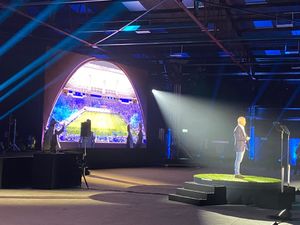
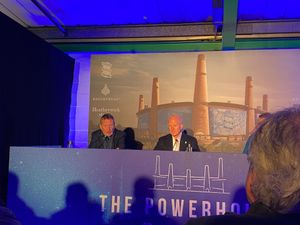
In a milestone moment for Brum, the striking design for Birmingham City’s new 62,000-capacity stadium was revealed at a launch event at Digbeth Loc Studios back in November.
“Birmingham is a city that at times is under-appreciated,” Blues chairman Tom Wagner told gathered political leaders, dignitaries and football players.
“Not anymore.”
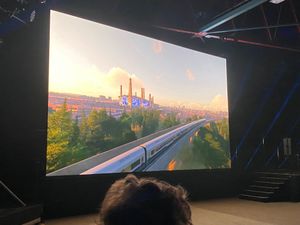
The new stadium, christened The Powerhouse, is proposed to be part of the wider Sports Quarter project in the Bordesley Green area, which has plans to include a “world-class” training centre, women’s stadium, arena and mixed-used development.
Pending approval, the project could also bring improved transport to the area, alongside the new homes and ‘modern-day colosseum’.
“This is a city of innovators, of creativity, of resilience, and of course of strength,” Wagner said as he brought his speech to a close.
“It is a city that is writing a new story and we’re proud to be playing our role.”
2) Druids Heath
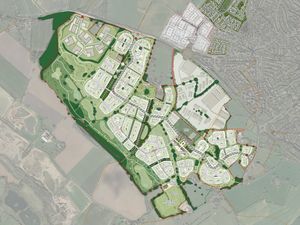
The city council’s huge regeneration scheme for Druids Heath was approved this year despite furious outbursts during a planning meeting.
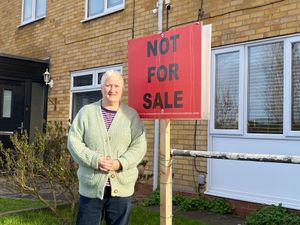
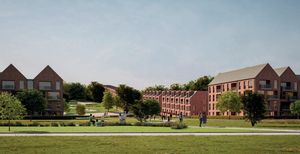
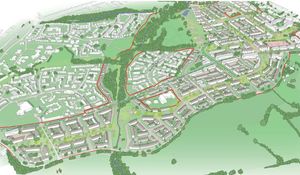
The Labour-run authority has a vision of transforming the estate into a green oasis, complete with 3,500 new homes, new infrastructure, transport links and more.
But the plans have also sparked concerns over the potential impact on the community and fears that existing residents will be priced out of the area.
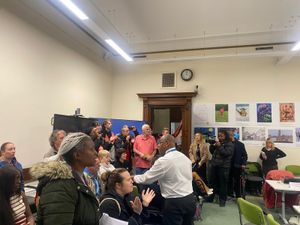
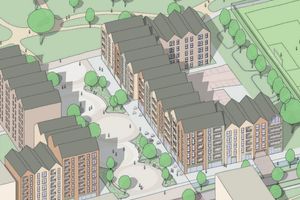
After residents in the area spoke to the Local Democracy Reporting Service about their concerns, the council acknowledged that homeowners are “particularly concerned” about being priced out of the area.
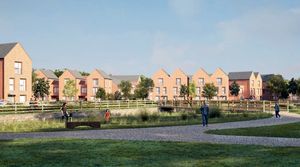
“In response, the council has committed to delivering a shared equity scheme to prevent this from happening,” the spokesperson said.
“It is already running an early acquisitions programme for residents who do want to leave the estate, of which 22 residents have decided to within the last 12 months.”
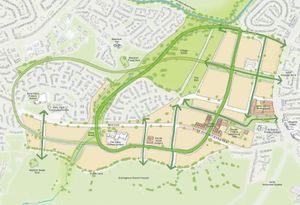
“We have worked closely with the community […] to develop a masterplan for the regeneration of Druids Heath, one that meets the needs of the people who live and work there,” they added.
The council has also said that the levels of demolition were necessary as “most homes in Druids Heath require millions of pounds in investment to bring them up to only minimum standards”.
3) Edgbaston Street Gardens
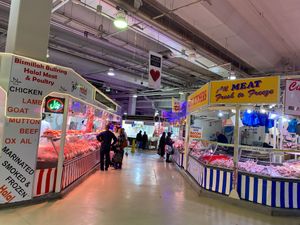
Divisive plans to demolish the Bull Ring Indoor Market building to make way for housing were given the green light in 2025.
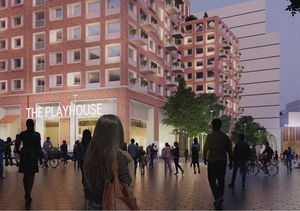
The controversial proposals for the site will see the city centre market building replaced by up to 745 apartments or up to 1,544 student bedrooms – or a blend of the two.
Those behind the Edgbaston Street Gardens scheme have said there are also plans for new green spaces, amenities and commercial uses alongside public realm improvements.
But fears over what could happen to the traders have been a recurring worry, despite plans to provide replacement markets for them.
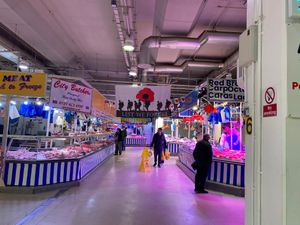
Trader Hasan Masaud Khan, of MK Fabrics, told the Local Democracy Reporting Service in November that he was anxious about the market’s future, adding that the temporary site may be “too far out”.
“Give us an answer,” trader Usman, from the Street Talk stall, said in November. “Where do we stand?”
Amid such concerns, a council spokesperson said recently: “We remain committed to supporting the market community throughout this period of transition.
“While the current site requires redevelopment to meet the city’s long-term needs, we recognise the importance of maintaining a thriving market presence in the city centre.
“We will actively engage with traders to ensure that the temporary market site is accessible, well-promoted, and capable of attracting footfall.”
4) Phoenix Yard
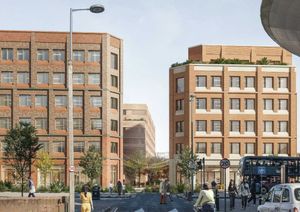
Huge plans to redevelop an entire city block and create a “key gateway” in a Birmingham neighbourhood were approved in November.
The developers behind the Phoenix Yard development are set to transform a plot of land next to Digbeth high street.
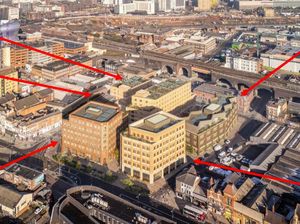
The application site is an important location in the city’s creative quarter, close to projects such as the Smithfield scheme and HS2.
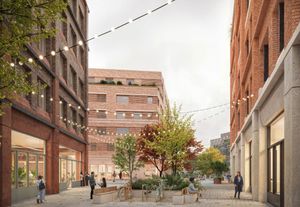
Developers secured permission to build two blocks, one up to six storeys and another up to four storeys, which are proposed to be used for commercial and education purposes.
Meanwhile outline planning permission was obtained for up to 205 residential units, up to 576 student bedspaces, up to 228 co-living private bedrooms and up to 450 hotel rooms across two other blocks.
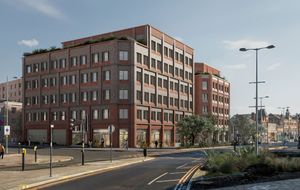
The scheme could bring several benefits, including homes and commercial floorspace; the potential delivery of a hotel; high-quality ‘public realm’ and the reuse of brownfield land.
Coun Lee Marsham, chair of the planning committee, described the proposals as “maybe the best scheme we’ve seen in quite a while”.
5) Northfield Lidl
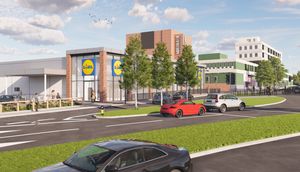
Proposals to demolish part of Northfield Shopping Centre to make way for a new Lidl store are set to go ahead after initially being refused.
The supermarket chain’s plans are for a site which is currently vacant and most recently occupied by Wilko.
The planning application also included a new pedestrian walkway and ‘public realm improvements’ between the retained part of the shopping centre and the store.
But Birmingham’s planning committee previously expressed concern about landscaping, the potential impact on Victoria Common and why demolition was necessary before voting to refuse the proposals
Lidl went on to launch a successful appeal however, with the planning inspectorate writing: “The proposed development would be a significant improvement on the building it would replace.
“The car park and pedestrian link would provide a visual and physical link to Victoria Common, strengthening the local sense of place.
“Further improvements could be secured through planning conditions.”