Plans for safe centre for vulnerable Birmingham children narrowly approved
Proposals for a safe centre to provide accommodation for highly vulnerable children have been narrowly approved.
Birmingham Children’s Trust has been given permission to build a children’s home in Gravelly Hill North, Erdington, which will support those in need across the region.
The scheme, named the West Midlands Safe Centre, will provide 20 bedrooms for boys and girls aged from 10 to 17-years-old, as well as healthcare, educational and sports facilities.
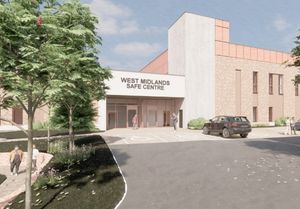
Its aim is to provide support for children who are likely to have suffered trauma; have unmet emotional needs or experienced instability in their lives.
But at a council planning meeting today, numerous councillors raised heritage concerns amid plans to demolish three buildings on the application site.
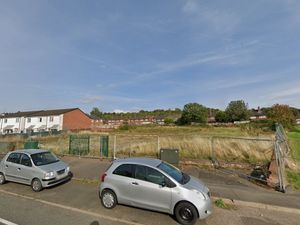
The site is currently occupied by a three-storey villa by notable Birmingham architect JJ Bateman and a complex of buildings, including a chapel.
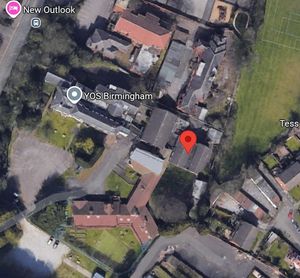
The latter was used by Birmingham Children’s Services youth offending team until it was closed in September 2023 and fully vacated in January 2024.
A conservation officer had previously objected to the proposals, arguing that it had not been sufficiently shown why a current building could not re-used instead of demolished.
“I’m not against in principal the kind of facilities that are being provided,” Coun Martin Brooks said this morning. “But I think if an architect can’t incorporate a heritage building which is of some value, another architect or another site [should be looked at].”
“I appreciate there is a need for this type of accommodation and support for vulnerable children,” Coun Gareth Moore said. “But we have some heritage assets here.
“I appreciate they’re not listed, that’s unfortunate, but they are still heritage assets.
“I see no reason why the buildings cannot be retained and re-purposed.”
Coun Jane Jones added: “Whilst I know we desperately need these secure places […] I’ve been completely convinced about the need to relook at this.”
But Coun Colin Green argued that he “much more concerned with looking after vulnerable people than preserving a building.”
“These buildings may be heritage assets but they’re not important enough that they’ve been listed so far,” he said.
Coun Lee Marsham, chair of the planning committee, said the committee had to consider the benefits of providing accommodation for vulnerable children versus the loss of a heritage asset.
“The scheme would enhance an untidy and underused site bringing it back into a much needed and viable long-term use,” a council officer said in a report.
“It is my opinion that significant weight should be attributed to the public and economic benefits of the proposed scheme.”
Speaking at the meeting, an officer said: “I think it’s important to note that this is an application for vulnerable children.
“The city currently doesn’t have a facility like this to house its children.
“It’s costing us around £30k per day at the minute to go and house our children elsewhere.”
Referring to the objections, he added: “We need to take into account what they’re saying but also your [council] officer has set out all the benefits of the scheme.
“[The buildings] are not listed so the weight we can give that is very limited.”
The planning committee ultimately approved the plans by five votes to four.
‘Safe environment’
A planning document previously described the proposed children’s homes as ‘bespoke, fit-for-purpose and modern’.
“The building will provide specialist and tailored residential care for highly vulnerable children in a safe environment,” it said.
“The West Midlands Safe Centre will provide welfare placements; whereby local authorities can place children to keep them safe.”
Explaining the reasoning for the plans, those behind the project said there was a “severely limited number” of such facilities across the country.
“On average, there are 60 children nationally waiting for a secure bed at any one time to keep them safe,” they continued.
“For Birmingham and the West Midlands, there is no such facility nearby, hence children must be sent at a high cost to Birmingham City Council and Birmingham Children’s Trust elsewhere.”
The council officer’s report concluded that the proposed redevelopment of the site will “not only provide a safe, high-quality living, leisure, and education facility but would also enhance the quality and character of the area”.
“The proposed development would not result in any significant impact upon neighbour amenity, landscape features, highway safety or infrastructure,” they said.
A planning document said the beds would all be for welfare, adding it’s possible the beds might be used for young people in the justice system.
“This would depend on use and vacancies, as the primary need is for additional welfare secure beds,” it said.