Battery energy storage site approved for South Staffordshire farmland just 50 metres away from a similar facility
Another battery energy storage site has been given the green light for South Staffordshire – just 50 metres from land where a similar facility is set to be installed.
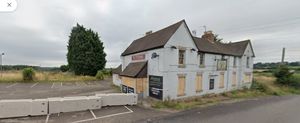
South Staffordshire District Council approved proposals for a battery energy storage system (BESS) on a former beer garden at The Hollybush Inn north of Trysull in November 2024.
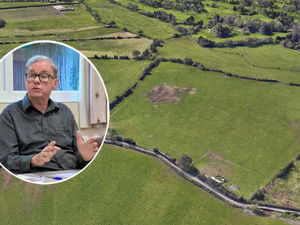
A year later, the planning committee considered plans for another proposed BESS on neighbouring farmland off Ebstree Road at a meeting on Tuesday (November 18). The committee was told the development would result in the temporary loss of best and most versatile (BMV) agricultural land and it is earmarked for a 2.8 hectare (6.9 acre) site.
A report to Tuesday’s meeting said: “The distance between the siting of the approved BESS units and those proposed here is approximately 50m, with an existing hedgerow and proposed tree planting in the intervening space. Planning permission is sought for the erection of storage containers, support infrastructure and security fencing along with landscaping and associated works for the creation of a battery energy storage facility.
“The facility would provide a means of allowing electricity from the grid to be imported and stored within the batteries at times of low demand and exported back into the grid at times of system stress/demand. A battery energy storage facility does not itself generate renewable energy, but provides storage capacity.
“The point of connection for the facility would be into the Penn substation, sited approximately 271m south-east and will be connected via an existing overhead line. The proposed development would be temporary and time-limited to 40 years, after which time all infrastructure would be removed from the site.”
Committee member Councillor Chris Steel, who has raised concerns about BESS proposals across the district on a number of occasions, described the former beer garden site as “a location that is possibly ideal for this sort of installation” during the November 2024 meeting. He added: “My only regret is losing a pub to gain a BESS, but that’s life.”
But on Tuesday he spoke of potential cumulative noise impact on the area, including the Staffordshire and Worcestershire Canal Conservation Area, if another BESS was allowed on neighbouring land. The site is 200 metres from the canal, on ground raised above the height of the canal.
Speaking on Tuesday Councillor Steel said: “When I first arrived (on the site visit) I thought it was probably the best site we’ve had for a BESS site – 400m away one way and 500m away the other from the nearest houses. But when I look at the report, I’m not quite so sure.
“While battery storage infrastructure plays an important role in delivering a low-carbon energy system, our Local Plan is very clear that renewable energy development is only acceptable where the environmental and amenity impacts are fully assessed and outweighed by the benefits. This proposal fails that fundamental test.
“The planning noise model does not yet reflect the full suite of equipment will be present on site and this means there is a potential under-assessment of noise, particularly low frequency fan noise and intermittent noise from safety systems. There is no cumulative noise assessment with the adjacent BESS, there is no modelling showing the combined noise of both BESS sites operating simultaneously.”
Fellow committee member Councillor Victor Kelly said: “We’ve got one by the pub, this one being proposed, one about 500m down the road at Dimmingsdale. Doesn’t that really impact the countryside?
“You will be seeing commercial, commercial, commercial and it has a knock-on effect for people’s health and wellbeing, being able to use the amenities. Has that been taken into account?”
Councillor Steel proposed the application should be refused permission. But his proposal failed to gain enough support from fellow committee members and went on to be approved by nine votes.