Proposal for Birmingham student accommodation on site of city pub refused
Birmingham’s planning committee has voted to refuse proposals to build a student accommodation block on the former site of a city centre pub.
Developers were seeking permission for a 16-storey building with 263 student bed spaces at the old Golden Eagle site in the heart of the city.
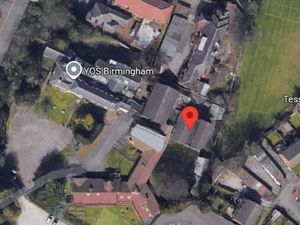
The pub, on the corner of Swallow Street and Hill Street, was once a well-known and beloved music venue that closed in 1984 before being later demolished.
Those behind the student accommodation plans previously said the scheme would “respect the site’s historic, existing and emerging context”.
A council officer’s report, published last week, recommended the scheme for approval and acknowledged it would provide economic, environmental and social benefits, such as the “efficient use of brownfield land”.
But it also said it could cause “less than substantial/low level” harm to heritage assets such as the Town Hall and The Former General Post Office.
“The designated heritage assets hold considerable historic significance,” it stated.
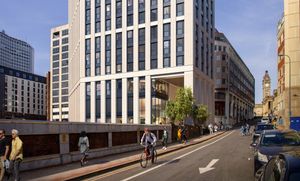
“The less than substantial harm which would be caused to their significance by the development is considered by conservation colleagues to reach low levels in all cases.
“In my view, I consider there are enough benefits associated with this proposal to outweigh the heritage harm.”
But at a council planning meeting this week, Coun Philip Davis said he was troubled by the heritage concerns.
“I’m torn about it because I think it’s probably a perfectly good development in its own terms,” he said.
“But the difficulty is impact in that area is a very sensitive matter.
“I think the height of it is the problem so I’m not particularly keen to see the development go ahead without some further changes.”
Coun Gareth Moore echoed the concerns about “heritage harm”.
“That harm would be mitigated if this actually delivered something the city needs, something that contributed to helping the many people who are desperate for a home in the city,” he said.
“What this provides is more student accommodation which we have plenty of already.”
The chair of the planning committee, Coun Lee Marsham, said that those behind the scheme had done “the best they can” and argued there was a “clear need” for purpose-built student accommodation.
A council officer confirmed that the developers had demonstrated a need for student accommodation.
“We have to consider what’s in front of us,” he continued. “We can’t theorise about whether a residential scheme would or wouldn’t be viable.
“This scheme, when it came to us, was 45-storeys tall and the scheme in front of you now is very much led by minimising as much as we possibly can to a point where we still have a viable scheme.
“Yes, there is heritage harm […] and officers have been mindful of that all the way through this.”
Birmingham Council’s planning committee ultimately voted to refuse the proposals.
“I propose we bring this back to a future meeting on those two issues that were discussed,” the council officer said afterwards.
The report previously said the scheme would have contributed “towards the regeneration aspirations for this part of the city centre” if approved.
Developers also proposed shared internal amenity spaces and “commercial use” at the ground floor.