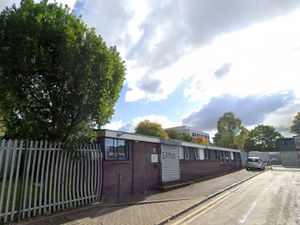
'We’ve been struggling with rent' - Traders fear for future of Birmingham indoor market
Enter the labyrinth of stalls and shops that is Birmingham’s indoor market and you’ll discover a link to the city’s heritage that dates back nearly 900 years.
The Bull Ring Indoor Market is part of a trading tradition streching back to 1166 and remains a beloved part of Brum’s fabric, home to butchers, fishmongers, fabric sellers and more.
As I stepped foot inside the market building during a weekday lunchtime amid the lingering aroma of fish, I found there’s still a lively bustle and watched on as traders called out to passing shoppers.
But despite the buzz of activity, one trader I found myself speaking to grimly told me he doesn’t see a future for the market.
Uncertainty over the fate of the city centre landmark has cast a shadow, with major plans to demolish the market building to make way for housing being given the green light.
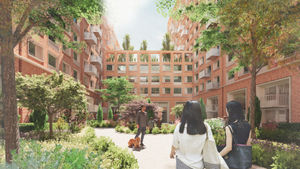
Fears over what could happen to the traders have been a recurring worry at council planning meetings this year, despite plans to provide replacement markets for them.
The local planning committee ultimately voted to refuse the proposals in July but developers Hammerson launched a successful appeal in response, meaning demolition of the building is set to go ahead.
Hasan Masaud, of MK Fabrics, is one of the traders who remains anxious over the market’s future and argued the city council had been neglecting it for many years.
“We’ve been struggling with rent and they [the council] were not maintaining the building,” he told the Local Democracy Reporting Service.
“There’s no communication and it’s poorly maintained – there’s lots of issues. The building is only around 20 years old but the council has run it down.”
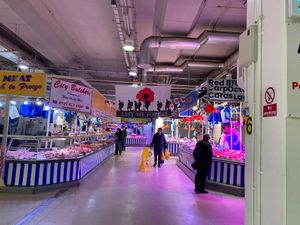
He continued he was concerned by the council’s plans for a temporary market site when demolition takes place, believing it may be “too far out”.
“Markets have always been around the church,” he told me.
But Mr Masaud has also seen the number of customers visiting his shop fall in recent years, which he blames on changing shopping habits.
“The next generation is all online”, he said. “I don’t see a future for the market.”
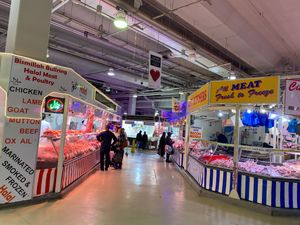
Trader Usman, from the Street Talk stall, echoed similar concerns, arguing the council has “let the place down” amid decreasing footfall.
He went on to say that he was worried about the city’s history being put at risk.
“Every major city you go to has a big market and Birmingham is the second city,” he said.

Asked what his message to the city council is, he said: “Give us an answer – where do we stand?”
But Steven from Pearce’s Shellfish was more optimistic about the planned move to a new market site, saying it may be for the best.
“This building is really old and it’s not attractive when you walk in here,” he said. “It’s too big for the customers that come here.”
Market ‘means a lot to Birmingham’
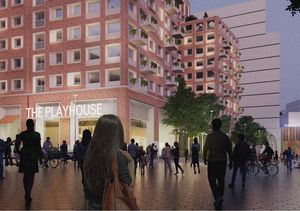
Fears over the market’s future were raised at a full council meeting this month after Hammerson’s plans were officially approved.
Conservative councillor Gareth Moore asked: “Can the [planning committee] chair outline what steps are being taken to ensure the market continues to trade and that almost 900 years’ worth of history does not end?”
Labour councillor Lee Marsham, chair of the planning committee, acknowledged the indoor market “means a lot” to Birmingham.
“There is cabinet approval for transition arrangements for the market,” he said. “Myself, and I’m sure the rest of the planning committee, will be holding them to account to ensure these markets trade in our city for many more years to come.”
On the future plans for the market, a council spokesperson said this week that the authority is working with developers Lendlease on plans to provide a temporary market facility on the Smithfield site.
“This will allow current traders to be relocated whilst the new permanent markets are being constructed as part of the Smithfield development,” they continued.
“The permanent markets will be located between St Martins Church and the new Manor Square – and will therefore be a central part of the development.”
They continued: “In terms of existing or new traders, we are at least five years away from the new permanent markets, so any decisions will be based on the situation at that time.
“Nevertheless, the intention is that all existing traders will have the opportunity to relocate to the new markets.”
‘We recognise the importance of city’s market presence’
The city council also acknowledged that the market has played a “vital role” in Birmingham’s cultural and economic life for decades.
“We remain committed to supporting the market community throughout this period of transition,” its spokesperson continued.
“While the current site requires redevelopment to meet the city’s long-term needs, we recognise the importance of maintaining a thriving market presence in the city centre.
“Our goal is to ensure that Birmingham’s market community emerges stronger from this transition.”
Addressing recent concerns raised by traders, they said: “We will actively engage with traders to ensure that the temporary market site is accessible, well-promoted, and capable of attracting footfall.
“Providing continuity of business for traders is a key concern for us and we are committed to providing regular updates to all market stakeholders as plans progress.
“The council continues to invest in the maintenance of the existing market and will maintain this investment for the next two years, until the move to a temporary site.”
Hammerson also said this month that it has worked with local stakeholders to grant an extended lease of the indoor market until late 2027.
This would allow time to “consolidate the markets to a new single, purpose-built market”, it said.
Following the successful appeal, Harry Badham, chief development and asset repositioning officer at Hammerson, said: “This planning consent is a great outcome given the city’s needs and priorities, especially around housing.
“As long-term backers of Birmingham, we know the potential growth that is achieved with targeted investment and regeneration.”
In its latest update, Hammerson said that detailed plans will be determined ahead of the start of demolition in late 2027, with potential construction from 2028 onwards.