What will happen to Birmingham market traders amid demolition plans
Birmingham traders at the Bull Ring Indoor Market building are set to move to a new home after demolition plans were recently approved.
The divisive proposals for the city centre site will see the historic market building replaced by up to 745 apartments or up to 1,544 student bedrooms – or a blend of the two.
There was widespread shock when it was revealed last year that the building faces being bulldozed after being part of the city’s fabric for years, as well as anxiousness among the traders.
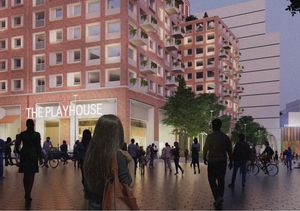
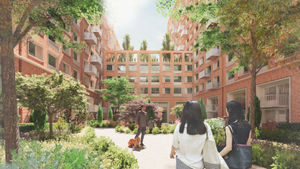
Those behind the Edgbaston Street Gardens scheme have said there are plans for new green spaces, amenities and commercial uses alongside public realm improvements.
But concerns over what could happen to the market traders repeatedly emerged at three council planning meetings this year, despite plans to provide replacement markets.
At the third meeting in July, the application was deferred, minded to refuse, amid uneasiness over the feared harm arising from the potential loss of the historic markets.
However, developers Hammerson launched a successful appeal and confirmed this month that the regeneration plans are set to go ahead.
Harry Badham, chief development and asset repositioning officer at Hammerson, said: “This planning consent is a great outcome given the city’s needs and priorities, especially around housing.
“As long-term backers of Birmingham, we know the potential growth that is achieved with targeted investment and regeneration.”
“This has been evident through our investment since 2021 in the Bullring itself and a programme of attracting the best brands and experiences to the city.”
Amid the concerns over the traders’ futures, Birmingham City Council has previously insisted that there are plans for a temporary market on the former wholesale market site.
It added that this would be ahead of the transition into a new permanent market building on the site of the Smithfield scheme, a huge city centre regeneration project approved last year.
Hammerson also confirmed this month that it has worked with local stakeholders to grant an extended lease of the indoor market until late 2027.
This would allow time to “consolidate the markets to a new single, purpose-built market”, it says.
Speaking to the Local Democracy Reporting Service last year, Mr Badham said Hammerson would be working “very closely” with the council regarding the timelines for both this project and the Smithfield development.
Asked if there would also be efforts to update the market traders, Mr Badham said: “Absolutely – as we go through that process of consultation through the planning, we are very familiar with making sure we deal with the stakeholders and we manage that through the process.”
He was also questioned about concerns over the loss of the historic market in the heart of Birmingham.
“Look, we understand the purpose of Birmingham as a retail centre,” he said. “Markets are clearly an absolute integral part of that.
“I should say the markets are not our direct relationship – that’s not to dismiss them at all.
“But it’s just to say that when we looked at this, we worked closely with the city. The city’s plan on how to consolidate the markets have been a key part of planning Smithfield.”
In its latest update, Hammerson said that detailed plans will be determined ahead of the start of demolition in late 2027, with potential construction from 2028 onwards.