Extension to allow a million extra tonnes of sand and gravel to be extracted from Staffordshire quarry approved
A Staffordshire quarry is set to be extended to allow more than a million tonnes of extra sand and gravel to be extracted.
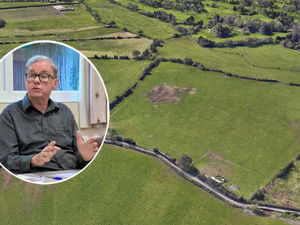
Members of Staffordshire County Council’s planning committee unanimously approved the proposed extension at Hints Quarry, Tamworth, which will involve an extra 4.2 hectares (10.4 acres) of mainly farmland, at their meeting on Thursday (October 2)
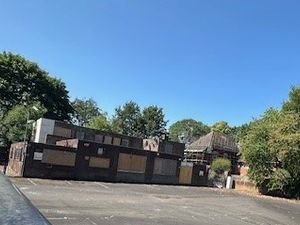
The Watling Street site includes two disused cottages, which are set to be demolished along with a number of outbuildings. And the route of the HS2 railway line is located to the west of the quarry, which is jointly operated by Tarmac and Cemex.
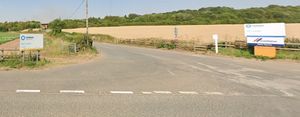
A report to the committee said: “Sand and gravel would continue to be transported to the plant site using the already established haul road and field conveyor network. It is proposed that the mineral would be worked in the same manner as existing, using similar plant and equipment, at the same rates of activity as existing.
“The applicant confirms that there are no proposals to change the current intensity of operations. This means that there would be no change to existing operational practices, such as the number of lorry movements or working hours.
“The excavations would be restored in accordance with current methods – which involve placing the ‘rock sand’ overburden into the quarry. Wherever possible, the backfilling operation would take place so that there is immediate placement of the rock sand to achieve progressive restoration.
“The proposed restored landform would need to be in keeping with the surrounding landscape. Regarding biodiversity net gains, the proposed restoration scheme is intended to deliver an overall 24% gain, as well as enhancements in terms of linear habitats such as native hedgerows and drains.”
Committee member Councillor Neil Parton asked: “How far along is the restoration to the other parts of the site and would the land in question be returned back to farmland? How many trees are affected by the proposed demolition?”
Planning officer Matt Griffin responded: “The final completion will be further into the future because there is more mineral to be worked out if this is to go ahead. Bear in mind there is a progressive restoration, so some parts of the quarry are already restored.
“The method of extraction allows for progressive backfilling, so once the rock sand’s put in place they can put the soil back and those parts of the site can be restored. In terms of farming, it’s an important part of the proposals that agricultural land is restored and there’s a legacy of returning the farmland.
“In terms of trees, there might be a hedge line to be taken out but as part of the biodiversity net gain there’s replacement involved and enhancement in terms of the hedge line that would be removed. The trees around the cottages are trees that wouldn’t count for much in terms of biodiversity benefits because they’re evergreen trees that have been planted as part of the garden.”
Councillor Jack Rose said: “The applicant has stated it is being used for HS2 progress, but with much of HS2 being abandoned I was wondering how the communication between HS2 Ltd and the applicant has been in terms of how much more aggregate and resources they are going to need. Or is it likely the resources are going to another business rather than HS2?”
Mr Griffin replied: “In terms of market for the material, Tarmac have contracts very specifically on HS2 construction that is under way. They’re utilising another quarry up the A38 to fulfil that demand.
“Hints is there in the background to cover for production that is required, but then Hints is also there to cover for the markets that Alrewas can’t fulfil because it is being utilised for HS2. The location of Hints is ideal for the West Midlands conurbation – there is a big market for sand and gravel within the county, but also the conurbation can’t provide its construction aggregate so it fulfils markets that are there in terms of concrete and mortar.”