Councillors reject plans for battery box on public open space in Penkridge
Plans to install a “battery box” on public open space in Penkridge have been rejected by councillors – by just one vote.
The application for the micro-energy storage facility on land on the east side of Wolgarston Way and north side of Saxon Road had been recommended for approval by planning officers at South Staffordshire Council.
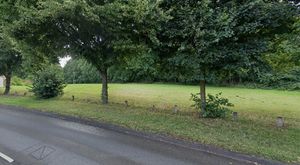
But ward councillor Victor Kelly, who did not take part in the vote at Tuesday’s planning committee meeting, raised concerns the battery storage facility would be installed on protected public open space. He added: “Local authorities are not allowed to give up public open space for financial gain.
“Placing a micro-battery storage facility some three metres near wooded and bushed area would add fuel to a potential fire added risk. In the event of a fire the further issue would be its proximity of the M6 and the smoke of the fire.
“A suitable site must be within 50 metres of an existing substation or a large Phase 3 low voltage cable to allow for the electrical connection. I have measured the nearest connection and that is 75 metres away.
“It states in the paperwork the public open space is not used. Yet neighbours walk their dogs and kids play on there.”
Staffordshire Fire Service has raised no objections to the proposal however. And a report to the committee said the site would be partially screened from view of the road by the mature trees along Wolgarston Way.
The installation would take up a 3.92m by 5.89m space, the meeting heard. It would consist of four batteries, an electrical cabinet on a concrete plinth and 2.4m high paladin fence and gate for access.
Applicant Ashleigh Boyce from AMP Clean Energy, who spoke in support of the proposal at Tuesday’s meeting, said: “Solar and wind are intermittent sources. There are times when we have too little power, when it’s not windy enough, and there are times when we have too much and we are paying wind farms to stop generating.
“A solution is to capture the excess energy and use it at times when we don’t have enough – that’s where battery storage comes in. Battery boxes are unique to other products in the UK in that they are micro and connected at low voltage.
“We are storing electricity next to homes and businesses where the demand and need is. This scheme will benefit the local area, strengthen the grid and improve resilience. However it is very difficult to find space for this vital infrastructure retrospectively in an already built environment.
“We need these schemes everywhere, near the demand, and consider tens of thousands of sites every year for these schemes. These sites aren’t only built in industrial areas, we need them where houses are.
“In this case the area proposed is on the edge of a small green space, tucked away. It won’t obstruct anyone using the open green space for dog walking and picnics – in fact it’s more out of the way than the current air quality system – and does not pose a fire risk.”
Councillor Christopher Steel proposed the application should be refused. He said: “This application is about principles – for once it’s not about safety or something we don’t like.”
Councillor Sam Harper-Wallis, who seconded the proposal, said: “The first objection I have is loss of public open space. Existing public open space should not be built on unless it’s surplus to requirement and I don’t believe it is surplus to requirement.
“That goes in conflict with another core strategy, which expressly states the council will not permit the loss of open space. That open space is utilised quite a lot by dog walkers and it’s near a residential area, so you can imagine kids play on it.
“If we’re setting the precedent using open space in our villages for sites like this, we’re setting a dangerous precedent. This is coming from someone who has approved renewable energy and voted in favour on many occasions for solar panels and BESS (battery energy storage systems) in my own patch, but this one doesn’t sit right with me.”
Six committee members voted for refusal and six against. Committee chair Bob Cope used his casting vote to refuse permission.