Critical hearing to determine future of Birmingham Indoor Market to be held this year
A critical appeal hearing over plans to demolish Birmingham’s historic Bull Ring Indoor Market building is set to be held later this year.
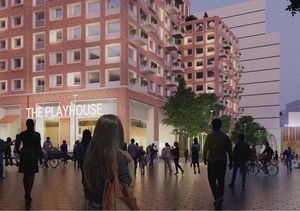
The divisive proposals for the city centre site would see the building replaced by up to 745 apartments or up to 1,544 student bedrooms – or any combination of those uses.
If they end up being given the green light, the plans would also provide new public realm works, a private central courtyard and roof-top terraces as well as commercial space.
But anxiety over what could happen to the market traders was a recurring concern at three council planning meetings this year, despite plans to provide replacement markets.
At the last of those meetings in July, the controversial application was ultimately deferred, minded to refuse, amid uneasiness over the feared harm arising from the potential loss of the historic markets.
Following the decision last month, developers Hammerson revealed it was pursuing an appeal in a bid to “maintain the timetable for the project”.
A new council report has now confirmed that the appeal is set to be heard at a hearing taking place on October 7 and 8 this year.
On how the council can defend the appeal, it said: “Officers understand the main concern of [committee] members is the lack of certainty surrounding future replacement market provision if the application were to be approved.
“If there is no continuity in provision, there would be serious implications for the existing market traders as well as impacting adversely on the range of retail facilities available within the city centre.”
It continued that a council policy provides “detailed criteria” on the redevelopment of the Southern Gateway area, which includes the site of the indoor market.
“The policy indicates that development will be supported where it diversifies the city’s offer as a retail and leisure destination, including the provision of improved markets,” the report said.
“Without the certainty of a replacement facility, there could be a reduction in the amount and range of markets available within the locality.
“Any refusal reason will need to be framed around this policy.”
The Planning Inspectorate has confirmed that the council must submit a Statement of Case by September 5 ahead of the appeal hearing the following month.
Plans for replacement markets
Amid concerns over the traders’ futures, the council said there were plans for a temporary market on the former wholesale market site.
This would be ahead of the transition into a new permanent market building on the Smithfield scheme site.
It also said that the lease on the current indoor market would be extended until 2027, which the council said would provide the “necessary time” to deliver a temporary market.
But members of the planning committee remained troubled at last month’s meeting, with Coun Gareth Moore saying: “I welcome the extension of the lease until March 2027.
“But I remain concerned because that doesn’t guarantee a temporary site will be available by March 2027.
“I don’t think we have the guarantees that a 900-year-old market will be continuing.”
The council has previously said there is a plan which would provide a “credible pathway” towards providing the future markets as well as continuity for traders, which would include “relevant support”.
On the decision to pursue an appeal, a spokesperson for Hammerson said last month: “We have worked closely with the planning officers at Birmingham City Council to create a project that aligns with the city’s future plans, including around housing, the environment, public realm and green spaces.
“We have had three consecutive highly positive recommendations for the scheme and are working closely with the council’s team to extend the term of the market until 2027.
“This deadline means the planning process is now on its critical path to ensure there is time to prepare the major investment needed for this project.
“In this particular circumstance, therefore, we have chosen to pursue an appeal to maintain the timetable for the project.”
Those behind the scheme said its benefits would include new housing, the potential of creating a ‘gateway’ development, public realm enhancements and the use of brownfield land in a ‘highly sustainable’ location.