Stafford Borough’s new Local Plan not expected to be in place until end of 2027
Stafford Borough’s new Local Plan is not expected to be in place until the end of 2027, it has been revealed.
The latest version of the legal document, which sets out a blueprint for future development of new homes and workspace across the borough, was previously expected to be formally adopted last year under a previous timetable set by the authority’s former Conservative administration.
But since then there has been a change in council administration and a major shake-up of national planning policy and the Local Plan process. Last year also saw a change in national Government – and new housing targets have been massively increased – leading to several years of Local Plan work being stopped in Stafford Borough.
Earlier this year it was announced that a fresh process would begin to prepare a new Local Plan. The latest document will cover the years between 2025 and 2045 and a proposed project plan, known as the Local Development Scheme, has indicated that public consultations could be held in late 2026 and early 2027, with examination of the plan taking place later on in 2027 and formal adoption of the document at the end of the year.
In recent months the borough council’s current administration – a mix of Labour, Green Party and Stafford Borough Independents – has come under fire from the Conservative group which is now in opposition for delays in bringing forward the latest Local Plan. The delays have led to fears it would become “open season” for developers looking to build in the borough.
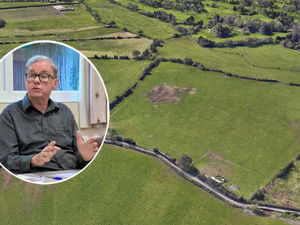
A number of proposals for large housing developments have come forward this year, including schemes earmarked for farmland on the edges of Stone and Eccleshall. The council is currently using the Plan for Stafford Borough adopted in June 2014 and the Plan for Stafford Borough Part 2 adopted in January 2017 when considering planning applications.
Speaking at a recent Economic Development and Planning Scrutiny Committee meeting, the council’s planning policy manager Alex Yendole said: “There’s been some not insignificant changes over the last two to three years that relate to local plan work in terms of the plan context and also how the plan is prepared. We continue to have an adopted plan and that continues to be used for determining planning applications.
“We need to make sure the Local Plan is fit for purpose and it’s an important process. It is a significant resource for the council to get right and that’s why a lot of work has been put into that to make sure that we are meeting all our requirements.
“Because of the significant policy change that happened, we had to look at the implications of that and our local plan process, and then consider the best way forward. Cabinet took the decision in March that based on the national context, it was important to use the evidence that we have prepared to date and then do a significant update on that to make sure we were match fit for what’s to come next – we all want to make sure we have a Local Plan that gets through the examination process.”
At the end of December a new mandatory housing target was set, the committee heard. And in the same month the English Devolution White Paper was published, setting out plans for local government reorganisation.
Mr Yendole said: “Our (annual housing target) number more than doubled in December, from 358 to 751. As a result of that, we found ourselves in the position of losing our five-year housing land supply.
“One of the elements (of the Local Plan) that fell away in December was the settlement boundaries. Therefore, if we are now in a position in which we haven’t got a five-year supply and planning applications come forward beyond a settlement boundary, these will be considered firstly in the context of the Local Plan and secondly in the context of presumption in favour of sustainable development in the national policy.
“That means the bar is set higher regarding whether planning applications can be approved or refused. Bluntly, the principle of development now goes beyond settlement boundaries, so it is really important people are aware of that.
“Clearly there are developers and landowners who know that we don’t have a five-year supply, and will now be putting in – or considering putting in – planning applications within that new context, ie putting in planning applications beyond settlement boundaries on green fields to see how those applications fare. Those applications will still be considered as they always have been on a case by case basis, and they will be looked at in principle of where development should and shouldn’t happen, but also there is a whole range of other factors which they will need to consider.
“It’s not simply opening the floodgates. Those planning applications need to be very carefully considered.”
Committee chair Councillor Frances Beatty said: “The vulnerability for this authority is going to be there for the next two to three years presumably. It will be there as long as it takes us to produce a new Local Plan – we’ve got a worrying time.”