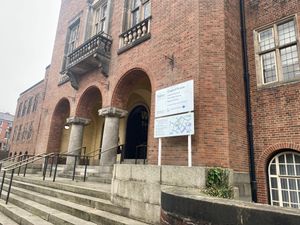
How much council tax will Birmingham residents set to pay amid price hikes
Council tax is set to rise across Birmingham – but some residents face paying more compared to others.
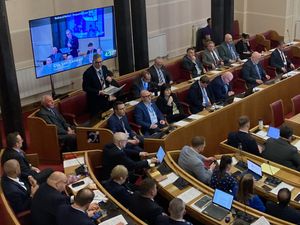
The increase of just under 5% was given the green light following a dramatic budget meeting which saw fury over recent turmoil from the council’s financial crisis and the bins strike.
Despite ongoing disruption from the bins dispute, the new council tax rise of 4.99% for Birmingham in 2026/27 was agreed and will come into effect from this April onwards.
The government caps the amount most councils can increase their precepts by, with the cap being 5% for councils such as Birmingham.
But permission can also be obtained from the government to bust the cap without a referendum – which is what happened in Birmingham in the past two years.
It means this latest rise follows two recent council tax hikes following the Labour-run council’s ‘bankruptcy’ – one of around 10 per cent and another of about 7.5 per cent.
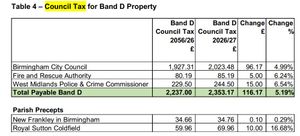
With the new increase being approved by full council on Tuesday, council tax for a Band D property is set to jump from £2,237 to £2,353.17 – a rise of just over £116.
But residents in two particular areas will also have to pay a precept along with the basic council tax.
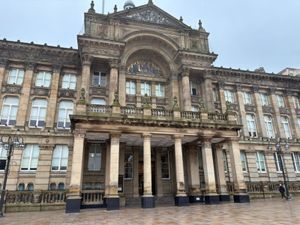
If their property is in the parish of New Frankley, the precept for a Band D property is rising by just 10p – from £34.66 to £34.76.
For Royal Sutton Coldfield, the parish precept for a band D property is increasing by £10 – from £59.96 to £69.96 (a rise of 16.68%).
This particular precept funds the Conservative-run Royal Sutton Coldfield Town Council, responsible for many services in the area.
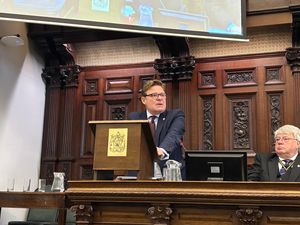
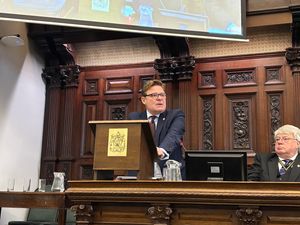
Speaking at the budget meeting, council leader John Cotton argued the era of ‘bankrupt Birmingham’ was over after closing a £300 million budget gap through drastic measures such as cuts to local services.
“Over the last two budgets, we were left with no alternative but to set above threshold council tax rises,” he told the council chamber.
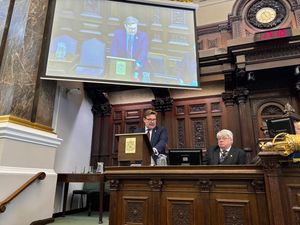
“We did so with heavy hearts and when I stood here last year, I promised there would not be a third. I have kept my word.”
He continued: “In 2026/27, this council is back in the mainstream of local government, with a proposed rise of 4.99 per cent – for the majority of Birmingham households.
“Despite the rises of the last two years, Birmingham council tax remains below the average of the core cities.
“Furthermore, with 82 per cent of Birmingham homes in Bands A, B or C – four in five homes with pay less than £2 extra each week.
“And bear in mind that we have protected our council tax support scheme for the most vulnerable, meaning a quarter of Birmingham’s 468,000 households are eligible for support and around 70,000 of our most hard-pressed families pay no council tax at all.”
The meeting also saw opposition councillors hammer Birmingham Labour over both the fallout from the financial crisis and the bins strike, now in its second year.
“This talk of fixing the council from the failed Labour administration is just that – talk,” Conservative group leader Coun Robert Alden said. “Do the Labour group really expect residents to thank them now they’ve claimed to have fixed the council after they effectively bankrupted it?”
Fellow Tory councillor Deirdre Alden argued: “14 years of Labour have transformed Birmingham into a city known across the country as one piled high with rubbish and litter, which is being picked through by rats as big as cats.”
Liberal Democrat councillor Roger Harmer meanwhile argued that a “full recovery” from the financial crisis is still “some time way away” amid major challenges such as the strike and Oracle.
“We are far from being out of the woods,” he warned.
Green Party councillor Julien Pritchard criticised Coun Cotton’s claims that the ‘bankrupt Birmingham’ tag had been ditched, saying: “Tell that to the residents in […] left behind neighbourhoods across the city.”
Coun Jane Jones, an independent councillor who quit Labour, suggested that Brum had turned into the “cesspit of Europe” and a “laughing stock” on the world stage.
Striking bin workers have previously claimed they face a pay cut of £8,000 – the council has disputed this figure and insisted that a fair offer had been made before negotiations came to an end last summer.
Birmingham specific-issues, such as the equal pay debacle and the disastrous implementation of an IT system, contributed to the council’s financial woes, while Labour councillors have also pointed the finger at cuts during the previous Conservative government.