Peaky Blinders creator Steven Knight hails ‘new revolution’ in West Midlands economy
Peaky Blinders creator Steven Knight said an ambitious plan to kick-start the economy represents a ‘new West Midlands revolution’.
The screenwriter, producer and director has thrown his support behind the West Midlands Growth Plan, launched in Wolverhampton on Monday (July 21).
At the launch, West Midlands Mayor Richard Parker said the plan will drive changes such as boosting the region’s £77 billion economy by £17bn, creating 100,000 jobs in fast-growing industries, building 120,000 homes and improving public transport.
It has also set out actions to reduce poverty and deprivation and make further progress towards net zero.
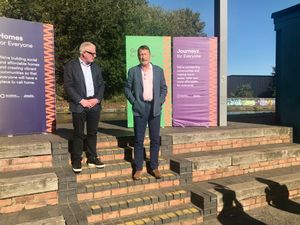
Mr Knight CBE wrote a prologue for the Growth Plan in which he said the region has a ‘lot to shout about’.
He was unable to attend the launch in person but his words were read out by award-winning spoken word artist Bradley Taylor, who is from Birmingham.
Mr Knight said: “Where other regions have made a song and dance about their attributes, the people of the West Midlands have been just getting on with it.
“Getting on with making things. Making things like trains (UK’s largest rail cluster), planes (Meggitt, Collins Aerospace), and of course automobiles (Jaguar, Land Rover, Aston Martin, BMW, even London’s black cabs).
“We make diggers and lifters (JCB), we make paints and plastics and glues and pharmaceuticals, armoured cars and tanks and rockets (BAE), we make machines that make machines, batteries that make vehicles run, and even stuff that makes people happy (like two-tone music and Cadbury’s chocolate – born, raised and thriving in Birmingham).
“Birmingham was once known as ‘the City of a Thousand Trades’. Well now it’s more than a thousand. Many times more.
“Coventry was the birthplace of the motor car, and the Black Country the home of ‘wenches’ werk’ forging iron into spikes and chains.

“And the sound you hear when you stop and listen on any street in any West Midland town is the sound of industry – not the sound of people shouting from the roof tops.
“But guess what? That is all about to change.
“This document represents the people of the West Midlands climbing up on our rooftops and shouting out the remarkable news about our region to the whole world.
“And we have lots to shout about. Because right now, this day, month, year, it’s our turn. It starts here.
“You might say the West Midlands had its turn once before, in the 19th century. Of course we don’t really talk about it much but the fact is that the first industrial revolution began here, with us, in the West Midlands.
“In a modest town house in a Birmingham suburb, a group of dreamers, thinkers, makers, creators, designers and scientists invented the modern world.
“They were known as the Lunar Men (perhaps because they aimed for the stars). With their radical inventions and manufacturing innovations Boulton, Darwin, Watt, Wedgwood, and Priestley revolutionised the way things were made and powered in a manner that was so fast and world changing it would put AI to shame.
“From then on, Birmingham and the West Midlands got to work providing the entire world with the goods it needed.
“Where the North of England had cotton and wool, we had iron and steel. By the end of the nineteenth century we were known globally as ‘the workshop of the world’.
"'So open a museum', some might say. Well, we actually do do museums (really good ones). But right now, we are busy doing other things, like starting another revolution.
“The West Midlands is the second biggest and second most populated conurbation in Britain after London. Birmingham is the second biggest city in Britain after London.
“We have the youngest demographic of any major city in Europe, and we are among the most diverse.
“In terms of connectivity, we are slap bang in the middle of the north and the south of England, reachable by both in two and a half hours by car.
“And when the new HS2 rail link is completed, Birmingham Curzon Street rail station will be 49 minutes from central London.
“We will be London commutable. But why commute when what you need is all here?
“This document lays out the case for the West Midlands, and be aware that the people reading this other than yourself will be investors, manufacturers, makers and creators from every corner of the globe.
“When we make the case for the West Midlands we are making the case for the UK, but with (Cadbury’s) icing on the cake.
“You will read about innovations and incentives. About cutting edge technologies which have already chosen to come to the region.
“Financial power houses such as Goldman Sachs, Deutsche Bank and HSBC have already set up their headquarters in Birmingham because smart money follows smart people.
“And we have lots of smart people who are making the new West Midlands revolution happen.
“We have six excellent universities with impeccable reputations for scientific innovation and cutting-edge tech research.
“The Oxford/Cambridge corridor is right on our doorstep and we are already a breeding ground for creative content responsible for a quarter of all the country’s games development.
“This region is once again the home of revolutionary new inventions, and the Lunar Men would be over the Moon.”