Birmingham businesses back controversial busker crackdown
Businesses in Birmingham city centre have backed controversial plans to crack down on busking amid claims of migraines, staff anxiety and customer complaints.
The city council is planning a Public Space Protection Order (PSPO) to combat ‘excessive noise levels’ in some streets in central Birmingham.
It wants to crack down on noise associated with busking, street entertaining, street preaching and public speaking.
It said the issue was impacting residents, landlords trying to let properties and businesses in the area.
Council documents have now revealed how businesses are being affected by city centre busking, with some suggesting it was taking a mental toll on staff and driving away customers.
One person, who works at a business in New Street, described the amount of buskers performing outside as “ridiculous”.
“This disturbs our everyday working due to the loudness,” they said. “Often we can just about hear customers engaging in conversation with us.
“Due to the heavy number of buskers, numerous colleagues suffer with headaches and migraines.”
Another city centre business claimed in their statement that they had lost revenue due to nearby street busking.
“We are not opposed to street entertainment,” it wrote. “In fact, we believe that busking – when well-managed – can enhance a city’s cultural appeal and vibrancy.
“Cities like London demonstrate how this can be achieved successfully.
“However, what is currently happening in Birmingham is not structured or regulated busking – it is, frankly, a free-for-all.”
One employee at a shop also claimed “prolonged exposure” to noise from a busker had led to headaches and stress among staff.
“The door is closed due to the excess volume meaning the shop is incredibly hot,” they said. “Our mental health is suffering immensely due to the constant noise pollution.”
A store manager at a city centre business said noise from buskers and open-air preachers meant staff could not hear store radios clearly for communication.
“The constant music […] means staff find it difficult to communicate to customers, to concentrate on their tasks and have increased stress and anxiety,” they said.
“Customers have left the store due to the loud noise, which naturally has negatively impacted our store sales and brand image.”
One individual, who said they had worked in the city centre for several years, said they had witnessed a “serious and deeply troubling decline” in its environment.
“I used to enjoy coming into the city but now it has become almost a nightmare,” they said. “Company regulations state that I must keep the shop door open and welcoming wherever possible.
“However, this has become impossible due to the excessive and constant noise from buskers, preachers and other individuals.”
Calls for compromise
During the council’s consultation on the PSPO plans, unnamed buskers suggested a number of “significant compromises” could be reached.
One said these could include busking being allowed where a specific busker was not causing any nuisance and a restriction of amplification.
“Without some sort of compromise with the busking community, Birmingham will become the least friendly city in the country (and arguably in Europe) for street performance,” the busker continued.
Another argued: “Rather than restricting all performers—many of whom are professional and committed to enhancing the city’s street culture—I propose that Birmingham Council considers adopting a model similar to that of Busk in London with respect to basic licensing.
“Their system has proven effective in raising the standard of street entertainment while addressing the concerns of local authorities and businesses.”
They said such a scheme would involve an audition process and agreement to a “reasonable yet clear” code of conduct.
“This approach allows the council to vet performers and encourage those who add genuine value to the city’s public spaces – musicians and artists who are proficient, courteous, and community-minded,” the busker added.
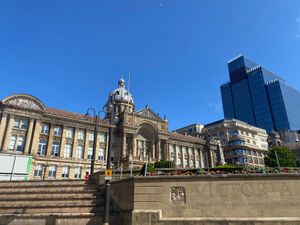
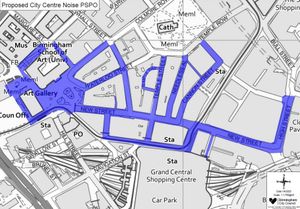
Areas covered by the proposed PSPO would include Victoria Square, New Street, Temple Street, Cannon Street, Needless Alley and part of Waterloo Street.
Within these areas, people would be banned from using amplification equipment, musical instruments or other items used as instruments.
The council said there had been an increasing number of complaints from residents and businesses about noise levels outside areas covered by two existing PSPOs, which are due to expire next month.
It acknowledged “existing enforcement arrangements” had failed to deal with the issue in those streets and that it received statements in support of declaring a “new, wider PSPO” from businesses.
It has been recommended that cabinet members at the council approve the declaration of the PSPO and that officers should also explore the feasibility of a ‘consent/permitting scheme’ for city centre busking.
Responding to concerns raised by unions earlier this year, a council spokesperson said: “The council is not considering introducing this PSPO without reason.
“We have received a significant and consistent number of complaints from both residents and businesses that there are too many people causing noise in the street and despite being asked to moderate their noise levels, there has been no respite for the affected people.”
The PSPO proposals will be considered at the council’s cabinet meeting on Tuesday, July 22.