
'As a woman with PCOS I welcome GLP-1 research - they changed my life beyond weight loss'
I was diagnosed with Polycystic Ovarian Syndrome (PCOS) when I was 17 and have struggled to manage it for years - but adding in a GLP-1 jab changed my life - and not just because of the weight.
Hormones - they control a lot of what our bodies do and everyone has a profile that is unique to them - even when they’re a little bit out of whack.
And when it comes to managing a disorder like Polycystic Ovarian Syndrome (PCOS) , there’s a whole cocktail of symptoms to manage and it can feel like everywhere you go for advice tries you with a one size fits all approach that doesn’t work for everyone.
I was diagnosed when I was 17, after struggling to manage symptoms from my very first period years before. Insulin resistance has long been my biggest struggle. I’ve been up and down every few years since puberty but seemingly never manage to stay a healthy weight for more than a few years at a time.
When the pandemic hit (I know - it’s been years - but I have a point), everything about my symptoms changed for the worse when I was no longer able to go out to work every day or go in the gym to lift weights daily and the stress of working in the news industry sent my hormones into a spin.
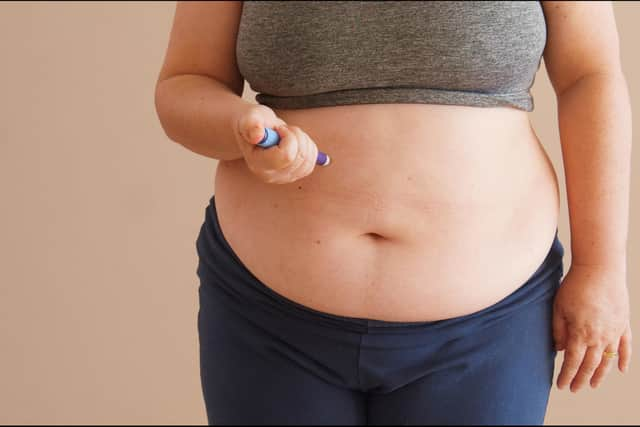

I went to the GP after shooting up to 17 stone within a matter of months and asked for medical intervention to deal with my insulin resistance. I was told my cortisol was high but not high enough to warrant medical help and my check for diabetes was fine so being “so young” I was told to just try harder (I was 22).
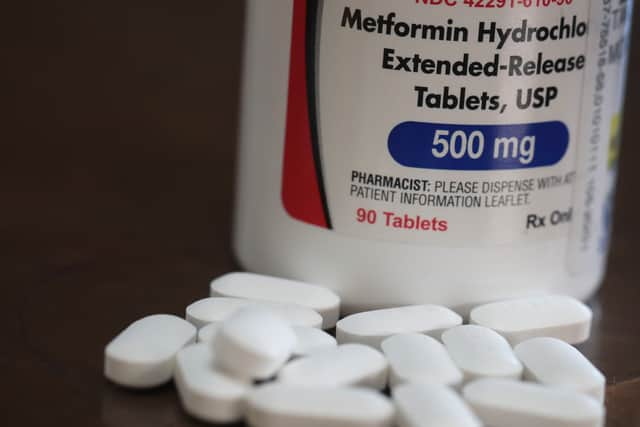
I went back again a few months later struggling to shift more than a few pounds but was told the usual treatment for insulin resistant PCOS - Metformin, a diabetes drug prescribed off-label for the condition - was “no longer used to treat is”. This was factually incorrect.
I gave up asking for help and by the end of the pandemic I was 21 stone and stayed that way for years. But when I wanted a baby, I went back and asked again. Metformin was prescribed in April 2025.
Between April and December last year, I lost and kept off almost 4 stone - more than I had managed to in years. It makes me think that had I been treated sooner when I had asked for help years ago it may have never gotten so far out of my control.
But there was one small problem with Metformin alone - it resulted in a persistent period from the first week of taking it - and all the hormonal rubbish that comes with that. Every woman who just read that sentence is looking at this in horror.
I had medical checks - including two biopsies, one on my cervix and uterus - all clear. Nothing was physically wrong other than my hormones being off kilter.
This went on until January 2026 when I went back to the GP and told him something needed to change because I was entering a dark place. He told me there was nothing the NHS could do for me as I just needed to continue to lose weight and that he would have recommended a GLP-1 injection to help but I would have to go privately as although my BMI was still over 40, I was not eligible as I had no health conditions that came under the criteria.
Of course I had heard of them - but I was scared of them. I didn’t want to end up with deadly pancreatitis like I’d seen in so many headlines but after reading the research and seeing how it has improved ovarian function, insulin resistance and fertility in women with PCOS when combined with Metformin treatment, I decided to try it.
My first week was a bit rough - nausea, headaches and the bleeding turned very heavy - but within a week it was all gone. I’m now 4 months in and have lost more close to two stone since January (almost 5 stone in total since April 2025) and thankfully, that prolonged bleeding never returned and I’m feeling happier and less of an emotional, hormonal puddle of tears that I was at the start of January.
It feels like it has changed my life and made me feel a sense of balance I had not felt since I was last a healthy weight. Even if I hadn’t managed to lose much more on them, the fact it sorted the bleeding was a huge relief and I wouldn’t go back and stop myself from adding it in now knowing it helped.
That’s why, as a woman with PCOS, I welcome the latest research into the affect of GLP-1 medications on women with this condition.
Researchers at Aston University and Sandwell and West Birmingham NHS Trust have will look at existing research to see what is already known about treating the condition with GLP-1 medications and what still needs to be studied.
If approved, they will use real-world data from fertility clinics, GP records, and weight-management services to see how well these medicines work for women with PCOS in everyday life.
While it may not be an answer for everyone, it’s a start in the search for better options than just one medication that not every woman can tolerate.
Comment Guidelines
Iconic Media encourages reader discussion on our stories. User feedback, insights and back-and-forth exchanges add a rich layer of context to reporting. Please review our Community Guidelines before commenting.