
New government laws will stop us protecting the green belt and restricting HMOs, says Dudley Council leader

New planning laws coming in on November 1 will make it harder for councils to protect the green belt and stop HMOs, says Dudley’s leader
A Black Country council leader says news laws coming in next month will reduce the planning process into a ‘tick box’ exercise, giving local people little say on developments in their area.
Councillor Patrick Harley, leader of Dudley Council, said the Government's latest planning reforms represented a direct challenge to local democracy, and risked stripping communities across Dudley of the ability to influence the future of the borough.
The new rules, which come into force on November 1, mean that all decisions on housing developments of fewer than 10 homes will be made by council officers rather than committees of elected councillors.
Larger schemes are also ‘assumed to be made by officers, by default’ unless certain criteria on local impact and planning significance are met, while the ability for councillors to automatically call-in plans for determination will be removed.


Instead, a ‘gateway test’ will be used to determine which applications go before a panel of councillors.
The Government hopes that this will speed up the planning process, helping it reach its target of 1.5 million new homes being built by 2029.
But Councillor Harley said the changes prevented councillors from properly representing the people who elected them.
He said the policy flew in the face of the Government’s talk about empowering communities and devolution.
Councillor Harley said his administration had consistently stood up for local people, championed the protection of the green belt, sought to tackle the increase of unsuitable houses in multiple occupation.
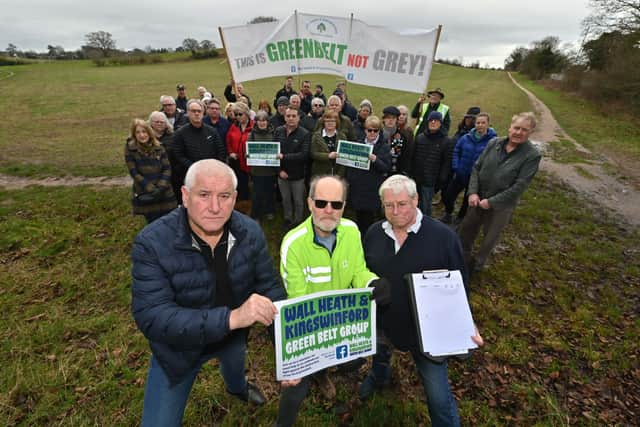
“These reforms make that significantly harder, in some cases impossible, and the impact will be lasting and detrimental to the future of our borough,” he said.
“At a time when residents are demanding a greater say over the future of their neighbourhoods, the Government is moving in the opposite direction by reducing the influence of elected councillors and increasing the likelihood that decisions will be determined through centralised rules and delegated processes.
“Local councillors are elected to represent the views of the communities they serve. They understand the character of their areas, the pressures on local roads, schools and health services, and the cumulative impact that development can have on established communities.
“Yet these reforms risk turning planning into a tick-box exercise where local knowledge counts for less and local voices carry less weight.”
Councillor Harley, who pulled out of the joint Black Country plan with neighbouring authorities over concerns about the development of green-belt land, said the authority had fought hard to protect precious open space from inappropriate development.
“Once Green Belt land is built on, it is gone forever,” he said. “It cannot simply be recreated for future generations.
“Residents across Kingswinford, Wall Heath, Sedgley, Gornal, Wombourne borders, Halesowen and other parts of the borough have repeatedly expressed their desire to protect these vital green spaces which help maintain the character of our communities and prevent urban sprawl.”
He said the authority had also taken a strong stance on the growing concentration of HMOs in certain communities.
“We understand the concerns residents have raised about the impact that excessive numbers of HMOs can have on neighbourhood balance, parking pressures, community cohesion and local services.” he said.
“The ability of locally elected members to intervene, challenge and scrutinise developments which residents believe will fundamentally change the character of their neighbourhoods is essential.”
Councillor Harley said the council was in favour of attracting investment and building new homes, but said people must also have a meaningful voice in how and where development took place.
“Planning is not simply about maximising numbers. It is about creating sustainable communities where people want to live, work and raise families.”
Comment Guidelines
Iconic Media encourages reader discussion on our stories. User feedback, insights and back-and-forth exchanges add a rich layer of context to reporting. Please review our Community Guidelines before commenting.