SsangYong's updated Tivoli XLV takes the fight to rivals
SsangYong has updated its Tivoli XLV for 2017. What have the changes done to improve the overall package? James Fossdyke finds out
What’s new?
SsangYong is pretty pleased with its Tivoli range, which has rapidly grown to account for a large proportion of the Korean brand’s sales.
In a bid to boost the car’s popularity, though, the manufacturer has brought a range of safety enhancements to its Juke-rivalling SUV for 2017. Quite apart from turning the car into a four-star safety-rated machine, the application of such technology is an impressive step forward for a brand that’s still relatively new to the European market.
Looks and image
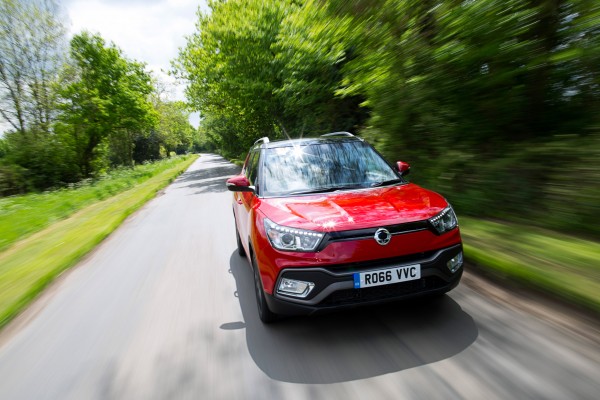
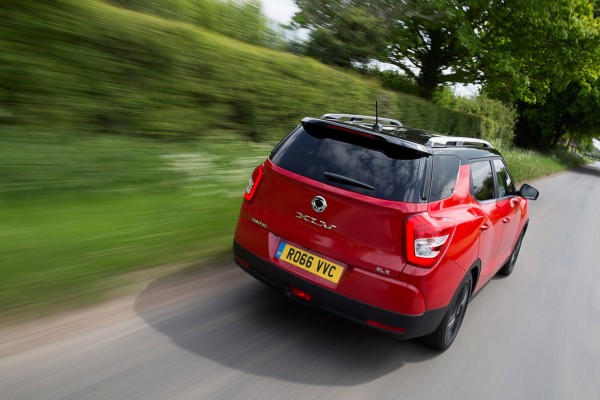
From the outside, the updated Tivoli looks much as it did before. It still balances some quirky looks with a relatively conventional silhouette, which will perhaps give it a little more appeal than rivals such as the Nissan Juke, but there’s nothing other than the number plate to mark it out as a 2017 car.
It looks the same inside, too, although there are a few new buttons for the fresh safety kit. Again, though, that’s no bad thing, because the Tivoli’s interior is a relatively stylish place to sit. It’s also surprisingly well appointed, considering the brand’s value price point. The cabin plastics are competitive for the segment, and everything feels like it has been bolted together properly.
Space and practicality
As well as fitting the extra safety equipment, SsangYong has also worked on the Tivoli’s practicality credentials. The steering wheel is now fully adjustable for both reach and rake, the ventilation system has been improved and the rear bench seats now recline for extra comfort on long trips.
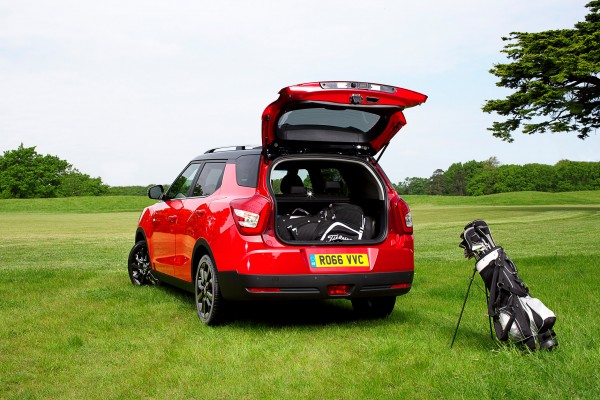
Further back, there’s a two-position base for the boot floor, which means you can choose between outright boot space or a flat boot floor, depending on your needs. And if you choose the full-volume option, you don’t half get a lot of room to play with. The basic Tivoli offers 423 litres, but the XLV estate version we drove serves up a whopping 720 litres of space even before you start folding the rear seats down. That’s more than you’ll find in the back of a Honda Civic estate.
Behind the wheel
The 2017 car conforms to all the usual Tivoli stereotypes when it comes to the driving dynamics. Four-wheel-drive models are comfortable thanks to their multi-link rear suspension, all variants roll a little too much through the corners and the steering is a bit numb, but the new features do change the way you’ll drive it.
The new lane-keeping assistance feature differs slightly from many other systems by being a little more proactive, constantly moving the steering wheel to keep you more or less in the centre of the lane.
It isn’t an especially refined system – it’s quite intrusive and there’s a temptation to just let the car steer itself, particularly on long motorway slogs – but that’s not to say it’s without its uses. You won’t turn it on all the time, but there’s something reassuring about having it there when you feel yourself getting tired and there’s a 30-mile run to the next services, or when you need to re-program the fiddly TomTom satellite navigation.
The traffic sign recognition system is good, too, offering a back-up for when you’re struggling to keep track of all the speed limit changes.
However, the high-beam assistance system is less competent, displaying all the usual fallibilities of such equipment. It’s too slow to drop the beam and too sluggish to raise it, and it still hasn’t cracked the art of detecting a glow around a corner and pre-empting the situation.
Value for money
Prices for the Tivoli start at £12,950 on the road, but you’ll need to spend £15,000 to get the 2017 upgrades, which only come with mid- and top-spec EX and ELX models. As well as getting you all these safety gizmos, that 15 grand buys you two-zone climate control, 18-inch alloy wheels and leather upholstery, as well as a seven-inch touchscreen, reversing camera and heated seats.
That’s pretty good value, and even if you go for a top-of-the range four-wheel-drive XLV estate with the diesel engine, automatic transmission and all the trimmings, you’ll still only pay £21,000.
Who would buy one?
If you’ve been tempted by a Tivoli but worried about the brand’s reputation and the three-star safety rating, SsangYong has fixed that with this 2017 version. It’s a practical, competent, left-field alternative to the likes of the Ford EcoSport and Nissan Juke, and now it has the safety credentials to back that up.
FACTS AT A GLANCE
Model: SsangYong Tivoli XLV 2017 ELX AWD Auto
Engine: 1.6-litre turbodiesel (113bhp)
Transmission: Six-speed automatic
Performance: 0-60mph in 12 seconds, 107mph top speed
Economy: 44.8mpg
Emissions: 164g/km