Long-term report: Long-distance trips prove easy to do with the BYD Seal 6 Touring
The new Seal 6 Touring brings long-distance prowess through its plug-in hybrid setup, but what else can it offer? Nigel Swan finds out.
Over the past few years, there’s been a noticeable shift taking place on British roads. The number of Chinese-built cars is steadily rising, and while it may have taken a while for them to establish themselves here, it’s becoming increasingly clear why they’re gaining traction.
There was a time when cars from China – and indeed Korea before that – struggled to resonate with European buyers. Their approach to design and engineering often felt somewhat removed from what drivers on this side of the world expected.
Interiors tended to use cheaper materials, build quality didn’t always match the established European brands, and while the styling was certainly eye-catching, it was often for the wrong reasons. As the saying goes, beauty is in the eye of the beholder, but early efforts from the region didn’t always win many admirers.

Fast forward to 2026 and the landscape looks very different. A wave of new manufacturers from China is arriving on the UK market with serious intent. Brands such as BYD, Jaecoo and Omoda are rapidly establishing themselves, bringing with them futuristic styling, generous equipment levels and – perhaps most importantly – pricing that undercuts many of the traditional European players.
It’s a compelling combination, and one that’s clearly resonating with buyers.
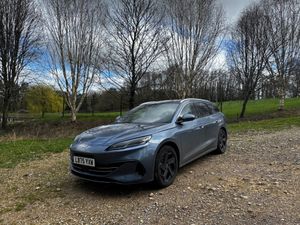
For me, this is the first time I’ve lived with a car from this new wave of Chinese manufacturers. Our long-term test car is the BYD Seal 6 M-i Touring Comfort Lite, and after a month behind the wheel, I’m starting to see both sides of the argument.
Let’s start with the positives.

Prior to the Seal, I’d been running the all-electric Renault Scenic E‑Tech Electric. On paper, it looked like an ideal choice – comfortable, practical and with a claimed range of around 380 miles. In reality, though, it proved less suited to someone regularly covering big distances. Real-world range often ended up being closer to half of that figure, which meant frequent charging stops and the inevitable frustration that comes with them – not to mention the growing cost of rapid charging on long journeys.
The Seal, by contrast, takes a different approach. As a plug-in hybrid, it combines a 1.5-litre petrol engine with a battery pack with twin electric motors, and when I first picked up the keys, the dashboard displayed something that felt refreshingly reassuring: a potential 750 miles of petrol range, plus an additional 77 miles on electric power.
Crucially, those numbers appear to be far closer to reality than many headline EV claims.
In the first month alone, the car has already handled trips from Southport in the north-west of England down to Portsmouth on the south coast – a journey of around 500 miles – without needing to stop for fuel. For someone regularly travelling the length of the country, that kind of convenience shouldn’t be underestimated.

Space is another area where the Seal scores well. Our car is the Touring variant, which swaps the saloon-style body for an estate-like layout with a far more generous boot. For work purposes, that’s been invaluable. When I’m heading out on shoots with cameras and equipment, the extra room makes life significantly easier.
With the rear seats in place, there’s 500 litres of luggage capacity, expanding to well over 1,500 litres when they’re folded flat. The boot floor sits nice and low too, which makes loading heavier kit less of a chore. It’s also proven useful for my Staffordshire Bull Terrier, who finds it much easier to hop in and out now he’s getting a little older.
Then there’s the price.
At just under £38,000, the Seal represents a lot of metal for the money. To put that into context, plug-in hybrid estates such as the Volkswagen Passat eHybrid typically start well into the £40,000-plus bracket, while something like the Peugeot 508 SW Hybrid or the Skoda Superb iV Estate can easily climb beyond £45,000 once options are added. Against that backdrop, the BYD begins to look like something of a bargain, especially when you consider how much standard equipment is included.
Of course, it’s not perfect.

From the outside, the Seal looks every inch the modern car. The styling is sleek, futuristic and distinctive, and much of that design philosophy continues once you step inside. The cabin layout is clean and largely clutter-free, dominated by a large central infotainment screen that controls everything from phone connectivity and audio settings to navigation and vehicle safety systems.
The problem is that almost everything lives within that screen, and accessing certain functions while on the move can feel more distracting than it really should be.
The steering wheel doesn’t help matters either. It’s peppered with buttons controlling various systems, but the layout isn’t particularly intuitive at first glance. That said, some of this may simply come down to familiarity. After only a month with the car, there’s still a learning curve involved, and it may well become second nature with time.
The other area where the Seal feels slightly less convincing is the way it drives.

It’s perfectly competent and comfortable, but it doesn’t quite deliver the solid, confidence-inspiring feel that you might associate with some European rivals. The steering in particular lacks the kind of feedback you’d expect from something like a Ford Mondeo or a Volkswagen Passat.
Make no mistake, this isn’t a car designed to encourage enthusiastic driving. Instead, it feels more like a highly capable tool – something built to quietly and efficiently get the job done rather than to make every journey memorable.
For many buyers, that will be absolutely fine.
But if you’re the sort of person who still enjoys the tactile side of driving, the Seal might leave you wanting a little more involvement.
That said, it’s still early days. In just the first month, we’ve already racked up more than 4,000 miles, travelling up and down the country, and there are plenty more journeys planned in the months ahead.