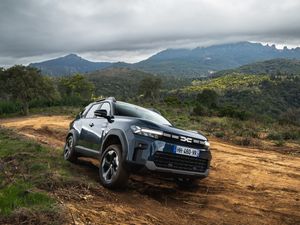
UK Drive: The Honda Prelude brings a breath of fresh air to a world of bland SUVs
After a 25-year absence, the Honda Prelude is back and brings Japanese flair to the two-door coupe market. Cameron Richards reports.
What is it?

Honda used to be a brand that innovated when it came to technology, design and engineering.
However, in recent years, the Japanese marque has lost its way, producing sturdy, sensible, yet forgettable cars that don’t stand out from the competition.
So, to shake things up, Honda – out of nowhere – has decided to shine some light on one of its most iconic nameplates and returned to the niche world of two-door coupes with the Prelude.
After 25 years, the Prelude is back, and it has big boots to fill if it wants to be a serious competitor to the BMW 2 Series. We’ve been driving it to find out.
What’s new?

The latest Prelude appears to be brand new on the face of it, though scratch beneath the surface and you’ll find the same underpinnings as the Honda Civic.
For the first time, the Prelude now comes as standard with a hybrid powertrain, Honda’s new ‘S+Shift’ simulated gearbox and ‘dual-axis strut’ suspension, for improved driveability.
There is just one specification to choose from, which is loaded with standard kit, and all models feature a sporty and driver-focused interior lifted from its hatchback sibling.
What’s under the bonnet?

The Prelude shares the same hybrid powertrain as the Civic hatchback, which is powered by a 2.0-litre four-cylinder petrol engine paired to an electric motor.
With 181bhp and 315Nm of torque, this setup can take the car to 60mph in eight seconds and a top speed of 117mph.
Power is sent to the front wheels only, via an e-CVT transmission, with no manual option available.
Honda claims that the Prelude can achieve up to 54.3mpg, though in our test car, we were averaging around 43mpg during mixed driving.
What’s it like to drive?
Thanks to its Civic underpinnings, the Prelude does not disappoint in the driving department.
The razor-sharp steering, linear power delivery and excellent throttle input make this a very driver-focused proposition.
The Prelude also uses the same ‘dual-axis strut’ suspension found on the Civic Type R, which does an excellent job of keeping the car flat and stable at higher speeds. The ride isn’t too firm over uneven road surfaces, either.
The Prelude is the first Honda to use the firm’s ‘S+Shift’ technology, which simulates an eight-speed automatic transmission by allowing the driver to control the car’s e-CVT gearbox via the steering wheel-mounted paddles. In essence, it’s a single-speed transmission made to feel like a conventional eight-speed automatic.
At a glance, the system sounds like a gimmick, but it makes the driving experience a lot more engaging and gives more feedback compared to a standard CVT transmission.
How does it look?

The Prelude provides a sporty silhouette by utilising Honda’s ‘Gliding Cross Stance’ design language.
At the front, the car features a narrow front grille with a black chrome louvre, while flush door handles help keep the side profile sleek and modern.
There are also blue accents complemented by blue brake callipers, which aim to highlight the car’s hybrid setup.
At the back, the sloping roofline flows seamlessly into the tailgate, which is met with a single rear light bar with Honda lettering.
We think the Prelude is a great-looking car, and definitely stands out from the crowd when it comes to style. Plus, our test car’s bright shade of ‘Racing Blue Pearl’ paint makes it a real head-turner.
What’s it like inside?

The Prelude’s interior features similar design elements to the Civic, with Honda referring to it as a ‘Gliding Cockpit’.
All the materials used throughout have a nice soft-touch feel, while the dashboard and centre console utilise a cloud-like design which is made from paper and aims to look like Alcantara.
There are lots of physical switches, while the driving position is spot on with the steering wheel angled perfectly towards the driver. The seating position is nice and low, too.
The Prelude also offers an impressive amount of storage with large front door bins, two cup holders, a glovebox, a wireless phone charger and an underneath centre storage bin.
Space in the back of the Prelude is a compromise as the front seats don’t automatically slide forward, which makes it harder to squeeze into the rear, and once you’re aboard, the sloping roofline and limited kneeroom makes it very uncomfortable for adults. The rear seats are best suited for very small children.
With four seats in place, the Prelude provides 264 litres of boot space, which is down on the BMW 2 Series’ 390-litre capacity; however, the Honda has an ace up its sleeve as it comes with a traditional hatchback tailgate, which makes it much more usable and allows for taller and longer items to be pushed to the back.
What’s the spec like?

When it comes to specification, the Prelude keeps things simple with just one trim level.
All cars come in flagship Advance trim, which boasts tons of standard kit including 19-inch alloy wheels, keyless entry with push button start, front and rear parking sensors, Brembo brakes, an eight-speaker Bose premium soundsystem, adaptive cruise control and heated front seats.
There are also several option packs, which can add a few subtle sporting touches such as a rear bootlid spoiler and dark chrome detailing.
Prices start at £40,995, which makes it more than £1,100 compared to the cheapest BMW 2 Series, though the Honda does come with more standard equipment.
Verdict
Honda is not projecting large sales numbers with the Prelude, but that doesn’t matter because the Japanese firm has done a great job in bringing back an old nameplate and turning it into something modern and exciting.
Its sharp driving dynamics, clever simulated gearbox, great looks and smooth powertrain make it a very tempting proposition next to its German rivals.
It’s not the cheapest car in its class, but if you enjoy driving and want a sporty, sleek and stylish coupe that offers a little bit of exclusivity, the Honda Prelude ticks all of the right boxes.