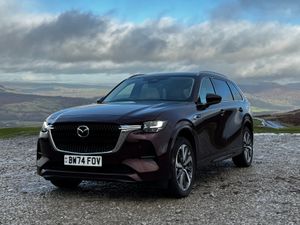
UK Drive: Has Toyota transformed the lacklustre bZ4X into a competitive electric SUV?
Can new batteries, better range, and overhauled styling make the bZ4X a competitive offering in the electric SUV class? James Batchelor finds out.
What is it?

Toyota didn’t exactly set the world on fire when it launched its first proper EV back in 2022. While the bZ4X was very competent and had a subtle kind of appeal, it gained criticism for its silly name and pretty subpar efficiency.
For 2026, Toyota has decided to give its electric SUV a small makeover to keep the car at least vaguely competitive in the fit-to-bursting electric SUV class.
What’s new?

A small make-over is actually not true. While the bZ4X may look rather similar at a quick glance, there are actually some pretty sizeable changes on the outside and, importantly, under the skin.
There’s a subtly reworked face, new interior and new batteries, with the larger one promising much-improved efficiency – an area that was the most disappointing aspect of the old car. The Wi-Fi password-like bZ4X name sadly remains, though.
What’s under the bonnet?

The previous bZ4X came with a sole 71.4kWh battery option, giving up to 318 miles of range. Trouble was, owners never saw anything like those figures, especially in the winter, resulting in the bZ4X being sidelined in favour of rivals.
Now, it’s all changed. For 2026, the updated bZ4X comes with two battery sizes – a 57.7kWh unit for the entry Icon trim, and a 73.1kWh pack for the Design and Excel trims. Toyota quotes 274 miles for the smaller battery and 352 for the larger one, with the dual-motor model (which uses the large pack) giving 292 miles. There are new ‘eAxles’ which are more compact, freeing up more interior space, and boosting power on the dual-motor car to 338bhp. Toyota also claims better efficiency than before, and, importantly, the Excel trim gets a 22kW AC on-board charger as standard. The maximum DC charging rate still stands at 150kW, and all cars get a heat pump as standard, just like on the old car.
What’s it like to drive?

There was never anything wrong with how the old bZ4X drove, but this new one drives even better. There’s a host of chassis and suspension tweaks that all help to make the bZ4X easily one of the better-balanced cars in the class – the ride is composed and well-judged, yet at the same time, the car feels engaging on a twisting road. The front-end feels especially pointy, and the power comes on in a smooth, consistent way. It’s a very easy and relaxing car to drive.
How does it look?

The bZ4X gets Toyota’s new ‘hammerhead’ styled headlights, and along with a new bumper and lower grille, the bZ4X looks sleeker than before.
The wheel arch trims are now gloss black rather than unpainted plastic, and there are new colours and wheel trims. It’s not a huge change, but it has made the bZ4X look a little bit less awkward than before.
What’s it like inside?

The changes to the interior initially look subtle, but Toyota has actually changed rather a lot. There’s a differently styled dashboard, a new, larger and crisper 14-inch touchscreen, an easier-to-read driver’s display, and a centre console that juts out from the fascia rather than being connected to it. The latter is a far better design as it incorporates the smartphone charging pad in a neater way, and the quality feels better than before.
Interior space remains enormous, with rear legroom being the highlight – six-footers can easily stretch out back there, although headroom could be better. Boot room remains at 452 litres – that’s down on a Skoda Enyaq, but is still more than respectable.
What’s the spec like?

Equipment levels are pretty good in the bZ4X. Entry-level Icon, at £40,675, gets the 14-inch touchscreen with sat-nav and wireless Apple CarPlay, heated front seats and steering wheel, a heat pump, and 18-inch wheels, but only comes with the smaller battery.
If you want the larger pack, you’ll need to step up to the Design and Excel models priced from £46,760 and £49,960 respectively, but even these look decent value compared to a Kia EV6 or a Tesla Model Y. Design doesn’t add much over the Icon, except the bigger battery, while Excel gets 20-inch wheels, electric front seats that are both heated and ventilated, heated rear seats, a digital rear-view mirror, synthetic leather upholstery, and a 22kW on-board charger.
Verdict
Efficiency was the old bZ4X’s Achilles’ heel, and while my test drive wasn’t exhaustive, it did reveal that the updated car is more efficient than before. On a chilly December day on rain-soaked roads with the air conditioning on full, I averaged 3.7 miles per kWh compared to the 4.0 that Toyota claims.
This is far better than anything the old car could ever manage, and coupled with the car’s fine driving dynamics and comfortable interior, the new bZ4X has elevated itself back into contention in the family electric SUV class.