First Drive: A hybrid powertrain has given the Toyota Aygo X a new lease of life
The Japanese firm’s cheeky little crossover has now been given the hybrid treatment, and Cameron Richards has been driving it.
What is it?
Small city cars have become a thing of the past for most car manufacturers, as electrification and SUVs are now in huge demand.
The Toyota Aygo first jumped onto the scene in 2005 as a no frills, cheap and cheerful small car that won the hearts of many first-time drivers due to its ultra-low running costs and bulletproof reliability.
In 2022, Toyota gave its beloved city car a makeover and turned it into a small crossover with the Aygo X, which offered chunky, rough-and-ready looks, with the same budget-friendly credentials from its 1.0-litre petrol engine.
Toyota is the trailblazer when it comes to hybrid technology, so for the Aygo X’s midlife facelift, it would only seem natural for the car to gain a petrol-electric setup, which it now has. So, is this little crossover a better all-rounder with hybrid power? Let’s find out.
What’s new?
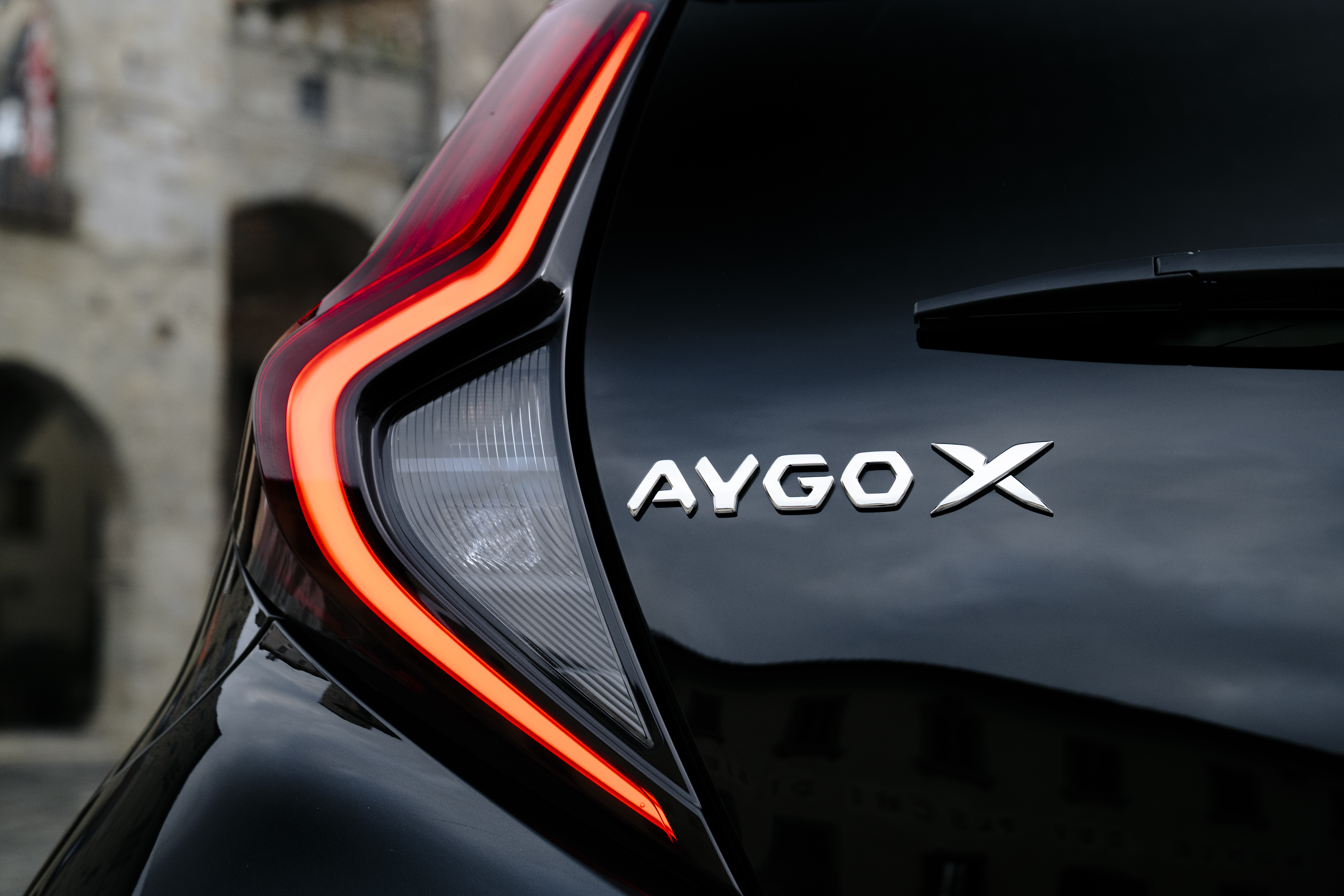
For the first time, the Aygo X now adopts Toyota’s petrol-electric hybrid setup, swapping out the ageing 1.0-litre naturally-aspirated unit, which promises to offer ultra-low CO2 emissions and high fuel economy figures.
The exterior design has been freshened up too, with new headlights, bumpers and radiator grille, while the side indicator lenses have been moved from the front wings into the door mirrors. There are fresh alloy wheel designs, paint colours and improved interior materials with upgraded in-car technology, too.
Furthermore, for the first time, you’ll be able to get the Aygo X in a performance-oriented GR Sport grade, which boasts additional styling features and upgraded suspension for a sportier driving experience.
What’s under the bonnet?
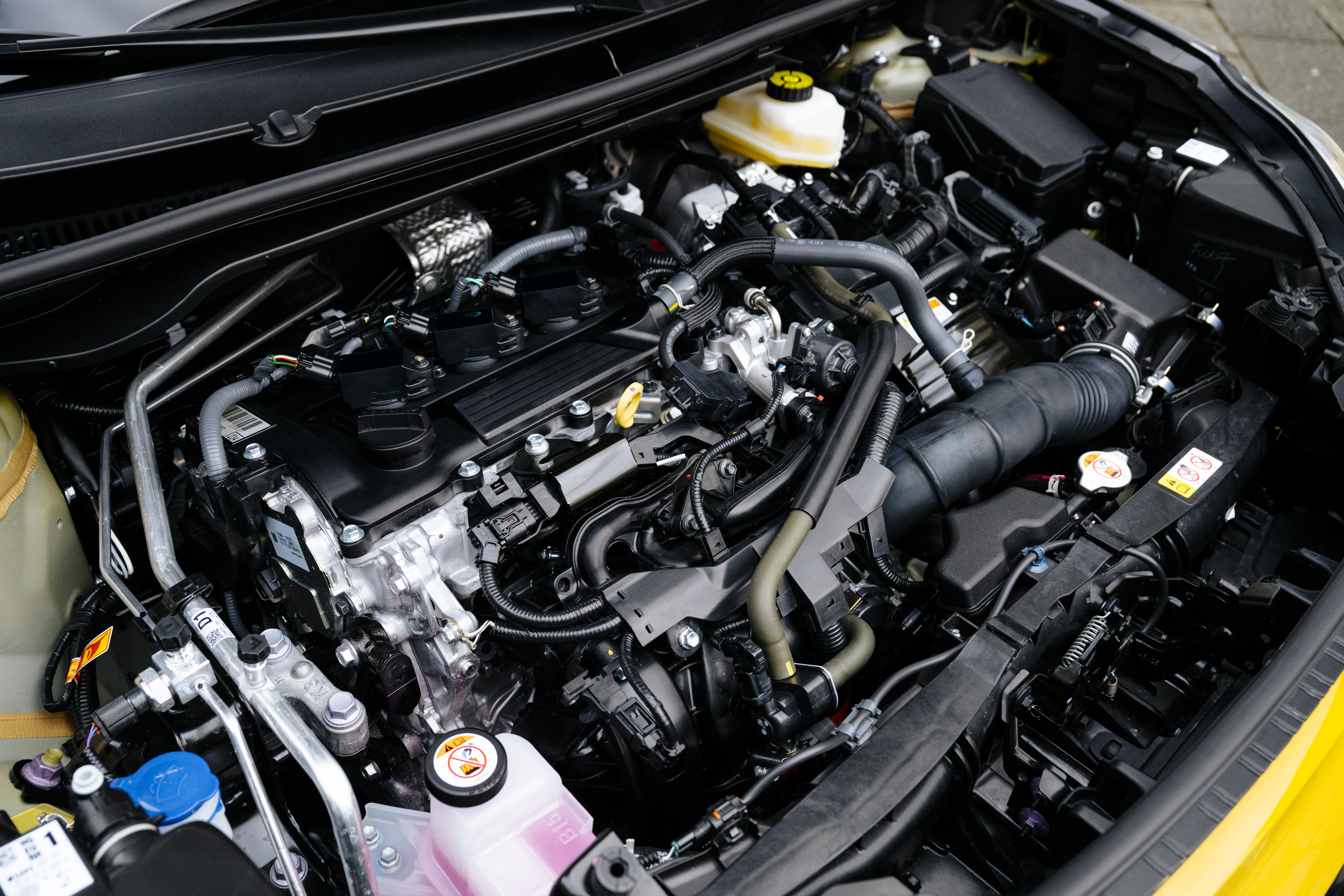
The Aygo X’s new powertrain consists of a 1.5-litre three-cylinder turbocharged petrol mated to an electric motor developing 114bhp and 141Nm of torque.
It can take the car to 60mph in nine seconds and on to a top speed of 107mph, while Toyota claims that the car emits just 85g/km of CO2, the lowest from a non plug-in vehicle, and can achieve a combined fuel consumption figure of 76.4mpg.
Compared to the old 1.0-litre three-cylinder car, these figures are a lot more appealing, with the old setup producing just 72bhp and 93Nm of torque, while 0-60mph took 14.9 seconds and the car’s top speed was 98mph.
All Aygo Xs now come as standard with a CVT automatic transmission, replacing the old car’s five-speed manual gearbox.
What’s it like to drive?
Fitting a hybrid setup to the Aygo X has completely transformed the way it drives compared to its predecessor.
Thanks to the on-board electric motor, the driving experience is a lot smoother, quieter and more refined than with the old model’s 1.0-litre unit.
Despite carrying an additional 140kg, it still feels light and nimble around the twisty bits, while the handling is precise and provides a good turn-in to make the Aygo X just as fun to drive as before.
Around town, the standard automatic gearbox takes the strain out of stop-start city traffic, while ‘EV Mode’ allows you to drive around at speeds of up to 30mph on electric power alone, if there is enough charge in the battery.
Where the Aygo X Hybrid starts to fall behind is on the motorway, as the standard CVT gearbox screams up and down the rev range, which does become tiresome after a while. Plus, there is still a fair bit of wind noise that enters the cabin at higher speeds, regardless of the fact that our test car comes with additional soundproofing.
How does it look?
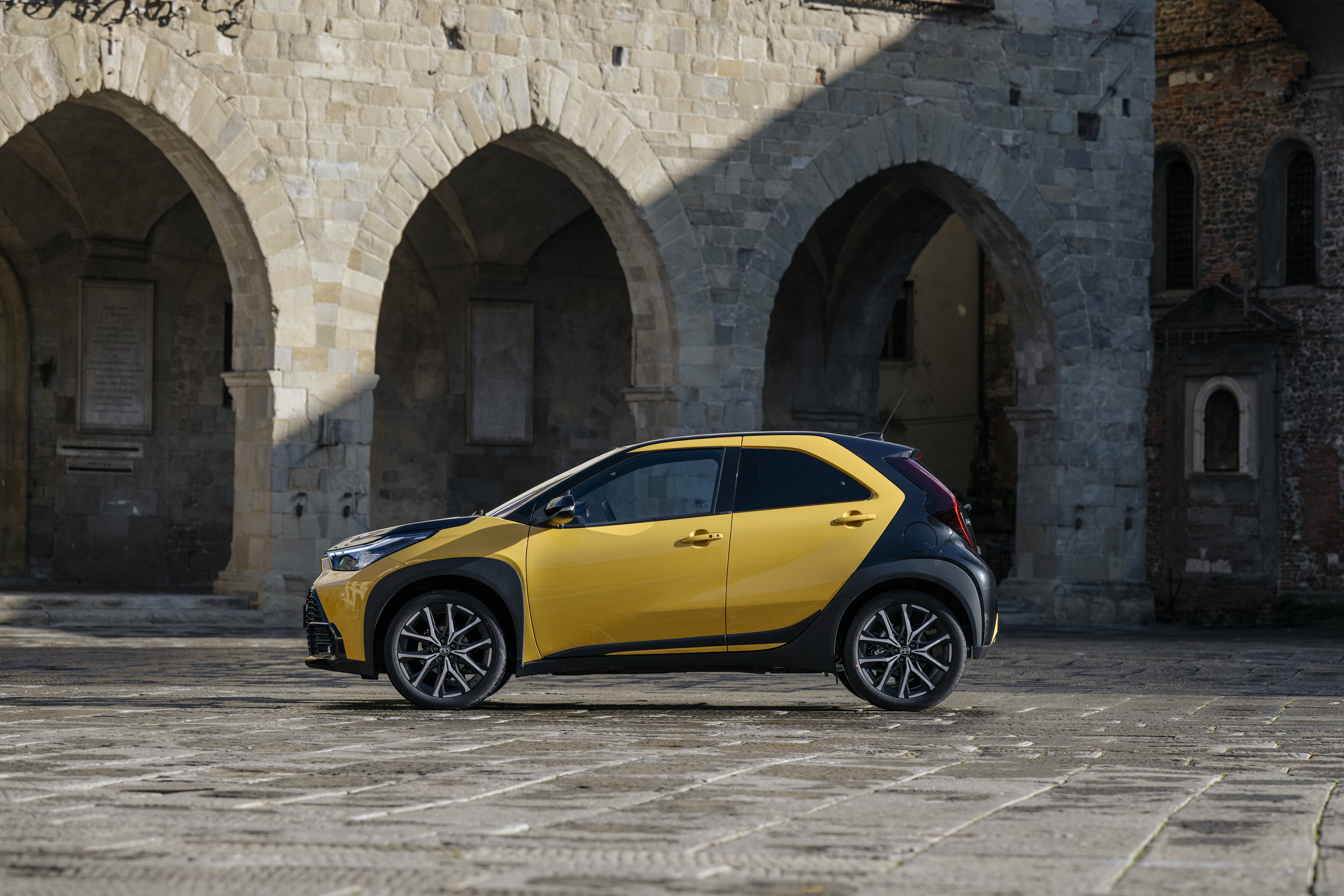
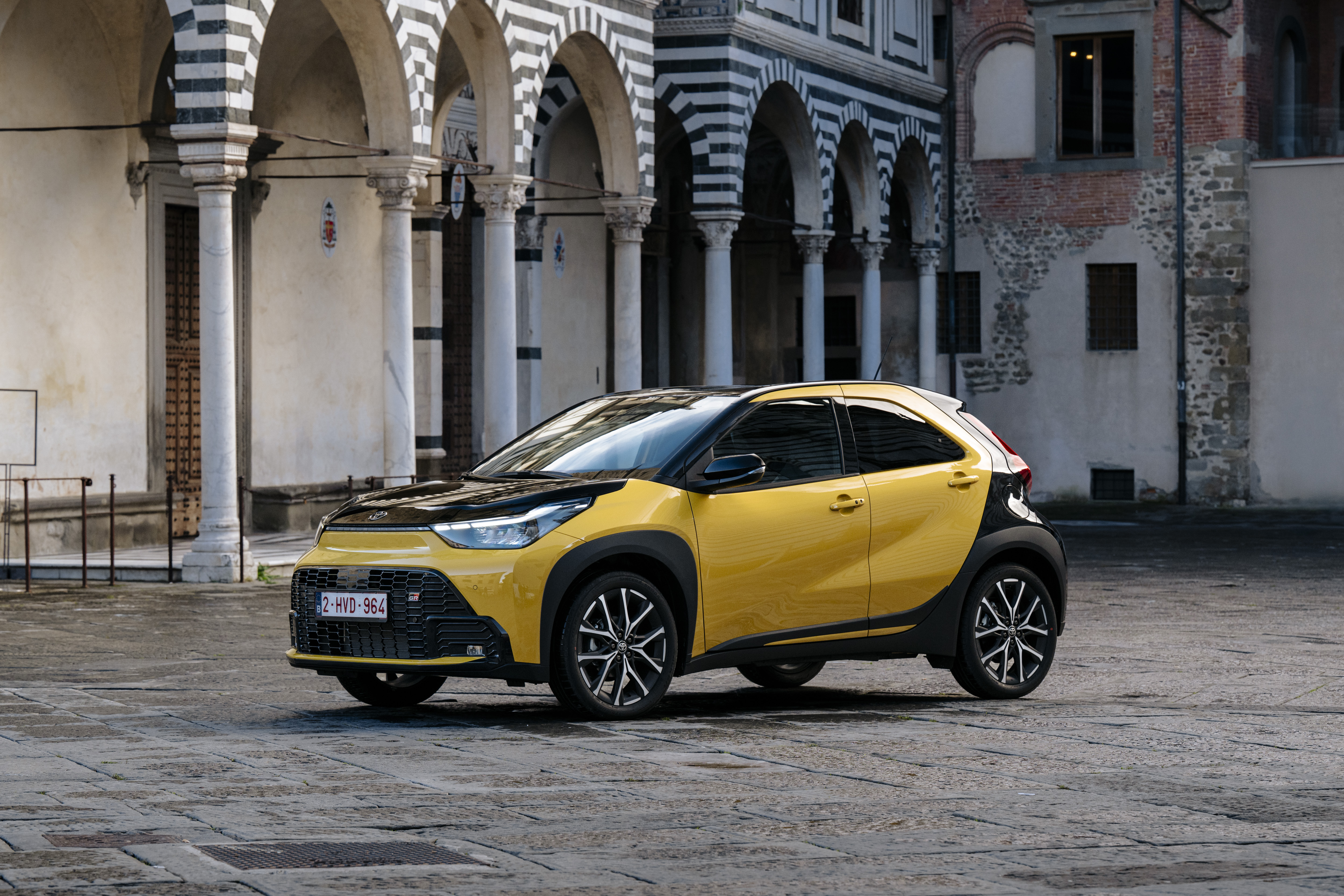
The Aygo X has always had a cheeky and charismatic exterior design and this facelift adds even more charm.
There is a new front end with sleeker headlights, a redesigned front bumper and the side profile is very distinctive with the car’s sharp wedge-like rear doors.
All cars retain the same wheel arch extensions for a more rugged look, and the two-tone paint fitted on our test car runs from the A-pillar and wraps around down the C-pillar and into the rear quarter panel.
Our GR Sport model looks the part with its black bonnet, 18-inch alloy wheels, and Mustard Yellow paint job, making it really stand out on the road.
What’s it like inside?
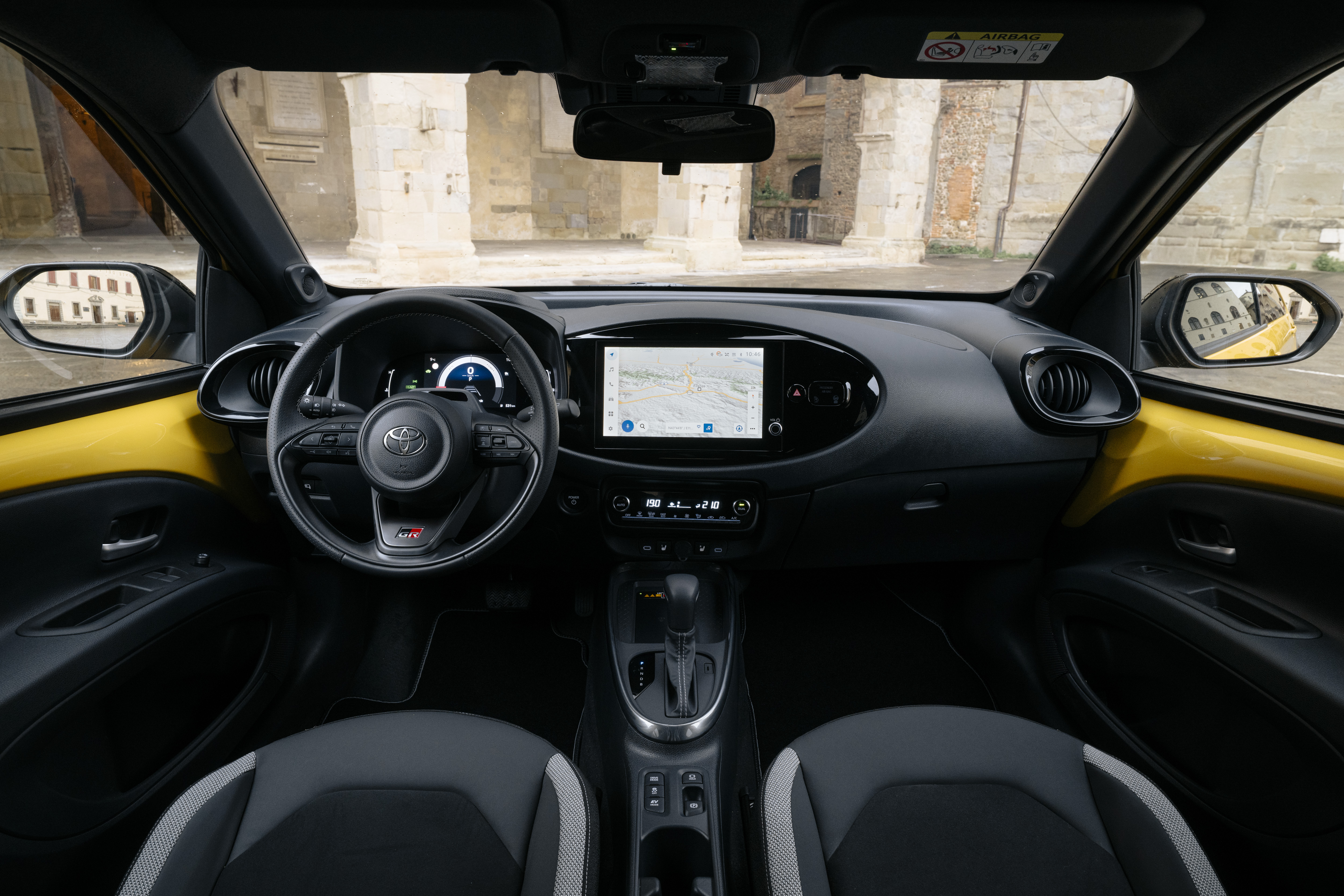
Toyota has kept the simplistic interior design on this new car with a redesigned climate control panel, with physical buttons, a new and improved infotainment system and there is now an electronic parking brake, to free up space in the cabin.
The materials throughout the cabin still feel cheap, with hard plastics and exposed metal panels on the door cards, which doesn’t reflect in our test car’s £26,000 price tag.
Storage is okay, with medium-sized door bins, a glovebox and two cupholders in the centre console.
Unfortunately, just like with the old Aygo X, space in the back of this new model is just as cramped, with almost no legroom for average-sized adults, and headroom is snug too, plus the Toyota is a strict four-seater, with cars like the Hyundai i10 providing five seats with a fifth seatbelt.
Boot space is small as well, with the car only providing just a 231-litre capacity, which is down on the Kia Picanto’s 255 litres of room.
What’s the spec like?
Entry-level Icon cars come with 17-inch alloy wheels, a seven-inch digital driver’s display, climate-controlled air conditioning and a nine-inch multimedia touchscreen display.
Move up to the Design grade and that adds 18-inch alloy wheels, LED headlights, a wireless phone charger, push-button start, power folding door mirrors and extra sound insulation to improve the cabin’s refinement.
Excel cars boast a larger 10.5-inch infotainment screen, front and rear parking sensors, keyless entry and heated front seats.
For the first time on the Aygo X range, buyers will also be able to opt for a performance-inspired GR Sport model, which features sports-tuned suspension, GR-specific alloy wheels, a black bonnet, a bi-tone paint finish and unique exterior and interior styling.
Unfortunately, with prices starting at £21,595, the Aygo X is significantly more expensive than other city cars on the market, like the Hyundai i10, which starts at just £17,100, and the Kia Picanto is even cheaper, with the range coming in at £16,695.
When you counter the fact that this Toyota still features pop-out rear windows and exposed metal trim on its door panels, the Aygo X doesn’t represent the best value for money in this segment.
Verdict
Toyota has done a great job of putting some life back into the Aygo X range.
Its new powertrain makes it a much more compelling alternative in the small car segment, which provides a smoother and more efficient drive.
It looks good, has a great reputation for reliability and is well-equipped too.
Sadly, with its high price tag, cheap-feeling interior and cramped rear seats, a Hyundai i10 and Kia Picanto still represent better value for money. But the Aygo X has much more personality, drives better, and should be extremely cheap to run.
If you’re looking for a small car that has a lot of character and will certainly stand up to the test of time, then look no further than the Aygo X Hybrid.