Drink-driving can be reduced with behavioural cues, according to research
A study by brewing company Heineken found that when people were given the right triggers, rates of drink-driving could be significantly reduced
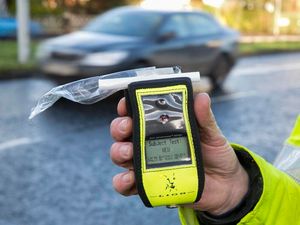
A study by brewing company Heineken has found that when people were given the right prompts, rates of drink-driving can be reduced by up to 50 per cent.
In conjunction with consultancy Innovia Technology, it found that despite 79 per cent of drivers having good intentions not to drink, 49 per cent of those found that they get caught up in having fun and find it difficult to avoid having an alcoholic drink.
With the study including ten bars in Manchester and Reading and 700 interviewees, the experiment was held over two sets of three days. The first three days used decoy solutions to help with drink driving, while the second set involved intervention to provide drivers with a clear alternative to drinking.
Interventions and visual cues, such as floor stickers and signs, were placed throughout the establishments to direct people towards non-alcoholic options and actively reduce drivers drinking.
After the study, 60 per cent of customers said that the programme made them think about changing their drinking behaviour, while 80 per cent said they would encourage and support their friends to not drink and drive.
Dr Helena Rubinstein, a behavioural scientist from Innovia, said: “Obviously we need to treat the statistics with caution because although they’re very high and going in the right direction, we need more studies.
“I think there will be some bars where this programme wouldn’t work and we need to think carefully about which sorts of establishments we could take this initiative into, but I do think there’s a groundswell of support for this. I think it has real potential to be used on a more widespread scale.”
This study comes out in conjunction with Heineken’s new No Compromises campaign starring F1 world champion and When You Drive, Never Drink spokesperson Nico Rosberg, and Rubinstein thinks that having such a high-profile personality working alongside such a campaign can only help.
“For Heineken it makes an awful lot of sense. If you’re a racing driver and you’re dealing with a highly complex instrument, you have to be at the top of your game, judgement can’t be clouded by anything and even the smallest amount of alcohol would do that
“I think somebody like Nico Rosberg would be able to understand that and be able to explain it to people. But also I think he’s been involved in driver safety and he’s been taking care of that for a long time, so it was only logical that he would be an excellent spokesperson for this.”
According to Heineken, 1.2 million deaths occurring each year due to drink driving and 16 per cent of all British traffic incidents caused by drink drivers, Rubinstein believes that Heineken partnership with Formula One can also be a big help in promoting the message.
“It gives us an opportunity to talk to a large amount of people, and I’m not an F1 expert, but how many millions of people watch it and how many of them probably have had a drink and got in the car. So it’s a great platform to get someone involved in that sphere.”