Government issues MOT guidance over classic vehicles
The Department for Transport has had to clarify what constitutes a vehicle of historic interest because of exemption confusion
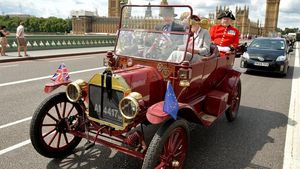
The Department for Transport has issued guidance on defining a vehicle of historic interest so that owners can claim an MOT exemption.
In September, the government announced that vehicles over the age of 40 would be exempt from needing an annual MOT test from May 20, 2018, bringing the rules in line with those for vehicle tax exemption.
However, the Federation of British Historic Vehicle Clubs (FBHVC) pressed the DfT to clarify what exactly classed a vehicle as exempt.
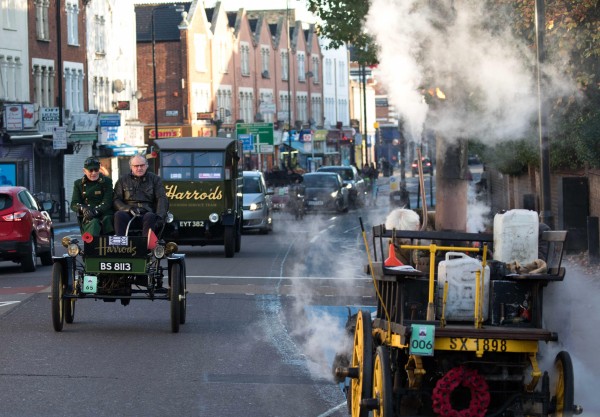
The updated guidance states that most vehicles that were manufactured or first registered 40 years ago from May 20, 2018 will be exempt from annual testing unless they have been substantially modified in the past 30 years.
The criteria for a “substantial change” include a new chassis design, updated suspension and running gear or a different engine.
It also says that the vehicle could still be exempt from an MOT where the original parts are no longer available, the replacement was an accepted alternative at the time the vehicle was made, or changes improved efficiency or safety.
However, the testing exemption isn’t compulsory – owners of vehicles of historic interest are encouraged to submit their car for testing if they think it’s necessary, and are still responsible for its roadworthiness.
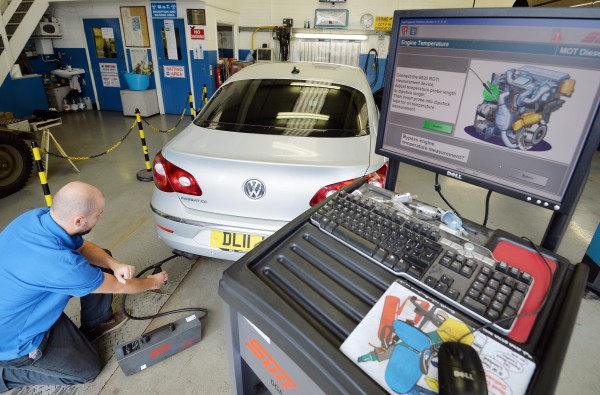
The FBHVC says it will list historic vehicle experts that can be contacted by owners who wish to check the status of their vehicle.
Previously, only vehicles built before 1960 were exempt from the MOT process. However, the government decided to change it because historic vehicles are “usually maintained in good condition and used on few occasions”.
It said: “We consider the element of risk arising from taking vehicles over 40 years old out of the testing regime is small. The option for owners to submit their vehicles to a voluntary MOT test will remain and they will still, like all vehicle owners, need to ensure that they meet the legal requirement of keeping their vehicle in a roadworthy condition at all times.”