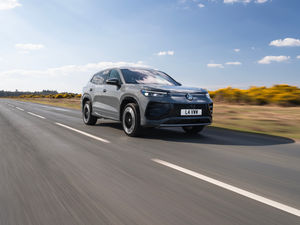
New VW Passat is worth every penny
You will be familiar with the law of diminishing returns, where you pay increasingly large amounts of money for ever smaller improvements.
It applies, especially, to consumer goods, from watches to mobile phones ... and cars.
Now, you might be thinking 'is this going to apply to the new VW Passat, reviewed here?'
Well, it costs about £1,000 more than the outgoing, seventh edition Passat, but you don't need to travel far to conclude it's worth every extra penny.
Prices start at £22,215 and top out for the moment at £37,035, although other models are in the pipeline, of course, which will add technology and swell the bottom line.
The VW Group (which takes in VW, Audi, Seat and Skoda, among others, remember), sells more Passats around the world than any other of its models, selling one somewhere every 29 seconds.
Which makes the new Passat a very important car indeed, especially as the boss of the VW brand said recently his bit of the group had to make more money as he watched Audi coining it in, not to speak of Porsche, where profit arrives by the turbocharged shed load.
You can just imagine the midnight oil burned to make sure nothing is left to chance when a new Passat is on the drawing board. So, here we have a car that's smaller than before in length and height (if a little wider) but which offers more room inside for people and their luggage. To the extent that there's real leg stretching room in the rear for six-footers, while the boot varies from huge in the saloon, to ballroom proportioned in the estate and surely big enough for the largest of growing families.
Generation eight Passat also comes with engines that emit fewer nasty gases, have better fuel consumption and, depending on version and ticked option boxes, a host of clever technology.
You can, for instance, have a car that steers for you when reversing a caravan, or one that hits the brakes hard if you fail to slow for a pedestrian who steps into the road.
Or how about a Passat that brakes, accelerates and steers for you in stop-go traffic. Yes, really.
Here in the UK we'll likely buy a shade more estates than saloons and all will have diesels under their flat, wide bonnets as it's deemed not worth the bother importing petrol versions as almost nobody would buy one.
That's because nearly every Passat sold here is destined for the company car park and diesels make a compelling case for business users.
They won't be disappointed. On the right, smoothly finished, road the new Passat makes almost no noise.
It's such a quality, hushed place to go to work in that your typically time-short business user is going to arrive for the next meeting as fresh and relaxed as when he (or she) left the office two hours before.
The Passat is, thankfully, no sports car but it tackles corners with some enthusiasm while making sure the comfort of all aboard is more important than track honed reactions.
There's added comfort from the electrically adjustable seats in the SE and SE Business level cars, the latter adding satellite navigation and, combined, likely to take the bulk of UK sales.
These two cars also have adaptive cruise control and front and rear parking sensors; yet more features to ease a business person's progress through the working day.
Helping too will be the thought that there is precious little to be gained by spending more money on a car (yes, probably another German) that really offers no more than the new Passat but carries a badge with more prestige.
A clear case of diminishing returns ...