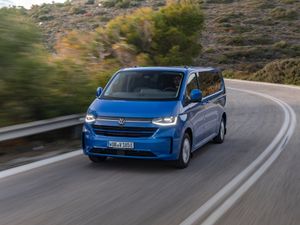
Hyundai i10 has bargain price tag
Korean car manufacturers have been making huge advances in recent years and Hyundai looks to have taken another big stride with its compact city car the i10.
 Korean car manufacturers have been making huge advances in recent years and Hyundai looks to have taken another big stride with its compact city car the i10.
The new five-door hatch may be no great shakes as a looker but it's smartly turned out and very well equipped for a budget vehicle.
And when you consider the asking price of just under £6,500 on the road, it starts to look a formidable package.
The i10 range is nice and simple. There's just one engine - a 1.1 litre petrol power plant, shared with the Kia Picanto. You can have it in Classic, Comfort or Style specification, with even the top model coming in at well under £8,000 on the road.
Where Hyundai looks to have stolen a march on its rivals is by equipping the base model, the Classic, the subject of this test, with upmarket features like electric front windows and air conditioning.
Air con is increasingly regarded as a necessity for many motorists - yet is rarely included in the base models of budget ranges except as an option. The i10's rivals charge between £400 and £945 for this feature -Êand most are more expensive to buy in the first place.
The i10 also comes with an integrated and easy to use radio/CD player with MP3 capability and is backed by the company's famous five-year unlimited mileage warranty.
For such a compact car there's a reasonable amount of room in the cabin, with plenty of storage cubby holes and 225 litres of space in the boot. The driving position is good and visibility is excellent, thanks to the big windows.
The dashboard is in a fashionably dark charcoal colour instead of the horrid pale grey that used to feature in so many Far Eastern cars. The only feature I really missed was remote central locking. A twist of the key in the driver's door does lock the whole car but it doesn't work from the passenger side, annoyingly.
 The engine develops 65hp and sounds willing, without being particularly powerful. The car will cruise at motorway speeds easily enough - it's when called upon to overtake that it struggles and begins to sound harsh.
The car I drove was also prone to vibration through the pedals under acceleration. It did steer nicely, however, and the ride, while a tad firm, was acceptable over all but the bumpiest surfaces. The seats are flat but I managed a three-hour journey without any discomfort.
Another big plus point with the i10 will be its running costs. I don't think anyone's going to be worrying about a diesel when this little petrol number can return 55mpg and has emissions of under 120g/km, resulting in annual road tax of £35. Insurance is group 2 and there's that excellent warranty to consider too.
All of which means the i10 is likely to prove a popular bet for anyone looking for a tidy runabout for reasonable money.
My only caveat is that while people are going to respect this new Hyundai they are unlikely to fall in love with it.
Those after a more stylish vehicle will want to look at alternatives like the Fiat Panda, Citroen C1/Peugeot 107/Toyota Aygo trio or the soon-to-be-replaced Ford Ka. All are more stylish lookers, while the i10 is a little lacking in the funk department.
They all cost more money, however, as do other rivals like the the aforementioned Picanto and the one-litre Chevrolet Matiz.
In fact, the more you consider it, the more you begin to wonder why some city cars cost in excess of £10K to put on the road, while Hyundai can put one out for under £6,500.
By Peter Carroll