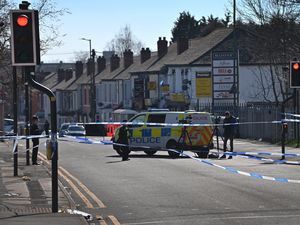
COMMENT: Why do we allow chaos on our streets?
This weekend as many as 2,000 members of Britain First will descend on the Black Country.
Like the English Defence League before them, they will do so to protest against plans to build a new mosque in Dudley.
Their activities are likely to bring the town centre to a standstill and badly disrupt trade.
And with two rival protests expected there will need to be a strong police presence creating an unwelcome atmosphere for shoppers.
Understandably, town centre traders are opposed to the march and will have to decide whether to risk opening at all.
Shoppers aware of the plans are likely to stay away and those who do not know are likely to turn back when faced with hoards of protestors carrying banners and accompanied by a marching band.
The question has to be asked – why are these protests allowed to take place?
The answer, of course, is that long established British principle of freedom of speech.
The 1688 Bill of Rights took it as far as the walls of Westminster.
And more recently Article 10 of the Human Rights Act 1998 cemented the 'the right to freedom of expression' to everyone under UK law.
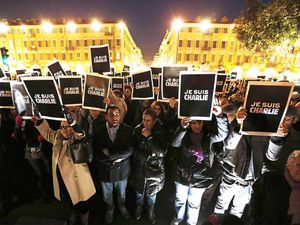
Earlier this year the price paid for upholding freedom of speech were the deaths of 17 people following the horrific attacks on satirical magazine Charlie Hebdo in Paris.
The magazine has a tradition of taking swipes at Islam and this is believed to have been attackers' motive.
In the weeks following the attack nearly four million people marched across France chanting 'Je suis Charlie'. Politicians and political commentators rushed to defend freedom of speech and the right of magazines like Charlie Hebdo to offend.
It begs the question 'what is the price of freedom of speech?' and is it a price worth paying?
Some 70 shops closed for the day in Dudley when the EDL staged its protest in February due to a fear of a repeat of the violence and vandalism that occurred in the town during a previous EDL protest in 2010. And it was estimated hundreds of thousands of pounds was lost in trade.
On February 15 the council staged a fun day in the town in a bid to make up for the disruption caused. But traders were left furious and could not understand why they had been forced to shut up shop. Many still cannot understand.
Graham Southall, aged 51, of Netherton, who runs a fruit and vegetable stall in Market Place, said: "They should have the right to express their views but there is a time and a place. On a Saturday it disrupts everything."
According to fellow trader Javad Hussain, aged 28, of Aston, Britain First has intentionally chosen a Saturday for their protest so as to cause maximum disruption. "They purposely do it on a Saturday," he said. "They should do it in a different way on a different day."
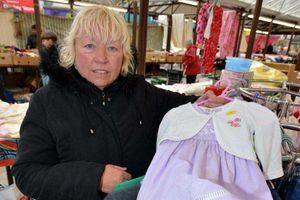
Wendy Farmer, aged 60, of Coseley, who runs a stall selling baby clothes, said the protest will cost her hundreds of pounds in trade.
And Gurvinder Singh, aged 38, of Dudley, another clothes seller, said an alcohol culture on a weekend will add to the risk of violence.
Trader Sajid Ali, aged 43, of Walsall, described disruptive protestors who have previously come to the town as 'hooligans' and 'pea-brains'.
He added: "If we were to open up on Saturday we would lose out. And over what? These stupid hooligans.
"If it was a peaceful protest, then fair enough. But many of them will be coming here to cause trouble."
Britain First leader, Paul Golding, said the group has proposed alternative routes to the police which would avoid Market Place.
He added: "We are trying to get our message heard, not to cause disruption. If anyone in the authorities locally was concerned about people in Dudley they wouldn't be going through with this 'mega mosque' which most local people don't want." There is also a hefty cost for the police. For the EDL protest in February, after which 29 people were arrested, West Midlands Police drafted in hundreds of extra officers from as far away as Wales to deal with the threat. Policing the event cost taxpayers £321,000. Afterwards, West Midlands Police and Crime Commissioner David Jamieson said he was worried about the wider impact the march in Dudley had on policing across the region.
Cost
These concerns have been echoed by Amjid Raza, spokesman for the Dudley Central Mosque and the Dudley Muslim Association.
He said: "Last time the police spent £321,000 on managing the protestors.
"At the same time jobs are being cut and we are having to battle to keep Dudley police station open to the public."
This time around Dudley Police has organised public meetings to discuss the policing operation. More than 50 people attended a meeting at Dudley Council House and another was held last night. There is reason to suspect tensions will be high. A group of war veterans, which acts under the name 'I'm a UK veteran and not a racist', plans to confront Britain First leader Paul Golding, who is expected to attend.
It has been angered by Britain First's use of the military to 'inflame public opinion' and members say they have been offended by the use of images of murdered soldier Lee Rigby.
Ex-servicemen John McKnight has stated his intention to stand face-to-face with Britain First members and hold up white feathers to signify what he perceives as the group's cowardice.
They will be joined by a Unity Rally which has pledged to work with police to ensure it is a peaceful protest. But the risk of violence will always be there with protestors in close proximity and if people were to be hurt, people will again question if the price of freedom of speech is too high?
Despite their opposing views on the mosque, Mr Raza insists Britain First to have a right to protest.
But he thinks it should be carried out so not to infringe on the lives of others. He said: "We respect people's right to protest. Everyone has that right. But that protest should not infringe upon other people and their free movement."
Mr Raza added: "If they had a static protest the council and the police would be in a better position to manage and contain what is going on."