Sperm shortage is no laughing matter
It is easy to laugh about a national sperm shortage over a pint down the pub – but the serious shortfall in donors across the UK is no laughing matter.
The new National Sperm Bank, which opened in Birmingham on Thursday, is calling on men to donate and has thrown open its doors to the Express & Star to dispel any myths people may hold when it comes to making a deposit.
Gone are the days when groups of students would make a quick stop off at the sperm bank on the way to the pub to make a deposit in exchange for beer money.
Nowadays donors are carefully vetted and tested – and even the 'adult material' available is discreetly covered so as not to offend.

According to the experts a change in the law revealing donor's names to children when they turn 18, plus increased demand from same-sex couples, cancer patients and single women wanting to go it alone, has led to the anomaly between supply and demand.
The process between registering an interest and having the first meeting takes just a week, and the full vetting process takes around six weeks.
But even then only about a quarter of those who sign up to donate will actually have their sperm accepted.
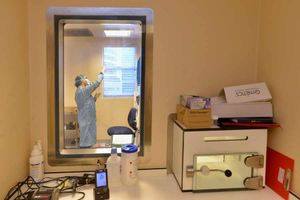
Rachel Jennings, a healthcare science practitioner at the sperm bank, said: "Most people get in touch with us through the website, and then we will send them some information.
"f they are still happy, we do a telephone questionnaire and ask them a few brief questions to get the basics, such as age, health conditions, or any health conditions their immediate family have.
"They will then have a screening appointment where we will ask them for some further information, and do tests. This normally happens within a week."
During the appointment, donors can also make preferences as to how their sperm is used.
Some people prefer their sperm only to be used for heterosexual couples or same sex couples, while others may want to put a cap on how many times their sperm can be used. The sperm bank has a standard cap of 10, which Mrs Jennings said is because it means the likelihood of children from the same sperm donor meeting and having a relationship is extremely low.
It takes around six weeks for the test results to come back, and the prospective donors are also given a counselling session.
Dr Sue Avery, director at Birmingham Women's Fertility Centre, where the sperm bank is based, said the counselling is also offered to the people who are considering using the sperm bank.
She said: "That is just so they understand what it means to be doing it, and that they are absolutely happy with it. There may be a lot of issues that could be raised." If the blood tests are fine, and they are happy with the counselling, there is also the issue of the quality of the sperm.

During the interview stage, donors are asked if they would like to be made aware of any problems with their sperm, so they can consult a doctor. But the sperm bank also only accepts donors with a high sperm count. Mrs Jennings said: "75 per cent of donors get turned away for all sorts of reasons.
"Sometimes it's medical and other times it is the quality of the sperm. The average man has 20 million sperm per millilitre, but we only take sperm that has 40 million per millilitre."
Once potential donors have passed all the tests and are ready to take the next step, they are shown into a fairly large room, complete with toilet, wash basin, sofa, chair and bin. There is also small table with a number of items including adult material.
The latter is a controversial subject. Dr Sue Avery, director at Birmingham Women's Fertility Centre, said she has had a number of Freedom of Information requests from people who believe the NHS is spending money on pornography, but this is not the case.
She said: "The folder we have is laminated so it's not like we have to keep buying this sort of thing. We have to be careful with it though, because the donors we have come from all walks of life.
"Some of the men who go into the rooms are offended by the images they see, and sometimes the men take their wives or partners into the rooms, and then they are offended by the images. That's why we keep the material in a folder."
The only suggestion of what the two rooms, in the fertility centre based in the Birmingham Women's Hospital, are used for are the bells outside.

Dr Avery said: "The bells are for the men to ring when they are done so a nurse can come and pick the sample up."
A man can usually donate between 10 and 15 times, but it is dependent on when the bank has the amount of sperm it needs to serve up to 10 families.
They will be paid £35 for each donation, although they only get £20 straight away, and the other £15 is kept until after the final exam, where the donors are tested again six months after their final donation.
During the first appointment and deposit, donors are asked to do write what they call 'the message'. This is a letter about them and why they donated their sperm and will be made available to any child born as a result of their donation when they turn 18, along with the donor's name.
But Dr Avery said: "We encourage the families to make sure their child know about it, so it is not a shock when they grow up.
"If someone was thinking about becoming a sperm donor, I would tell them to think about what they are doing, because it is giving someone the gift of a family and it's hard to imagine a bigger gift that you can give."
"These are people who desperately want children and for whom there is no other option."