'A springboard for new growth': Funds secured as work begins on ambitious city centre development in Wolverhampton
Work to create a vibrant new quarter in the heart of Wolverhampton city centre is now getting under way, with significant new funding secured and a contractor appointed.
The Smithgate development aims to deliver up to 1,000 new homes plus a mix of public spaces, shops and amenities to create a place where people can live, work and enjoy life.
ECF (English Cities Fund) - a partnership between Homes England, L&G and Muse - is working with Wolverhampton Council to regenerate 12 acres of land linking School Street and Darlington Street to the area around Market Square - with the project being brought forward through collaboration with the city council, stakeholders and the community.

Sir Michael Lyons, chairman at ECF, said: “We’re pleased to be working with Wolverhampton Council to deliver long-term regeneration that will make a real difference to residents and businesses.
“These milestones mark an important step forward for Smithgate as we work together to transform the area into a new mixed-use district, bringing forward new homes, high-quality public spaces and places for people to connect in a vibrant city centre.
“We are confident this will unlock economic growth, create jobs and act as a catalyst for further investment in Wolverhampton city centre.”
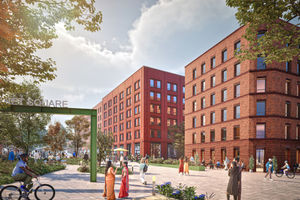
ECF has appointed Caddick Construction as the main contractor for this part of the project, with construction now underway on the first phase of Smithgate, known as Bicycle Works, which will create 331 quality new homes and highly skilled jobs for Wolverhampton.
Smithgate aims to create safe open spaces, shops and cafes for people to meet up, relax, spend time and enjoy, strengthening community ties and boosting local businesses.
Basit Ali, development director at ECF, said: “Reaching these milestones is a major step forward for Smithgate. Working with Caddick and having funding in place means we can accelerate delivery, bringing high- quality homes, green spaces, and vibrant places that not only make Wolverhampton more liveable but also unlock significant economic growth, creating jobs and having a long-term positive impact for the city and its people.”
The regeneration has attracted significant investment for this first phase of the project, with ECF securing £18 million from the West Midlands Combined Authority and £65 million in private funding.
Richard Parker, Mayor of the West Midlands, said of the scheme: “These homes, shops and restaurants will breathe new life and vibrancy into a corner of the city that always had so much more to offer. The scheme will be a springboard for new growth and provide hundreds of badly needed new homes.
“I’m backing regeneration schemes like this one in town and city centres across our region as part of my Growth Plan to fire up our economy, raise living standards and provide the homes people need and deserve.”
Over the next decade, Smithgate will unlock big economic benefits for Wolverhampton, creating jobs, skills opportunities and boosting city centre footfall to support and attract new businesses. Once all phases are complete, the development will also provide 20,000 square feet of retail, leisure and commercial space to create a dynamic destination for residents, visitors, and businesses.
Councillor Chris Burden, Wolverhampton Council's cabinet member for city development, jobs and skills, said: “The start of construction works by our chosen developer, ECF, marks a major tipping point for this strategic brownfield site, with its transformation set to re-energise the city centre by supporting new and existing communities. Smithgate is Wolverhampton’s largest regeneration scheme and will deliver hundreds of new homes for local people, create jobs and boost businesses – securing brighter futures for all.
“The first phase comes on the back of a catalogue of investment schemes set to boost the city centre economy, including the new £61 million City Learning Quarter, which recently opened to college students, and the ongoing £19 million city centre improvement works programme.”