Flats plan for former Wolverhampton care home redrawn after criticism
A flats plan for a former care home has been redrawn after criticism from planners.
Plans to turn the former care home at Abbeyfield House, Church Hill Road, Tettenhall, Wolverhampton into nine flats were rejected by Wolverhampton Council.
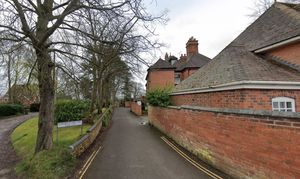
A new application for five flats has now been submitted to the local authority following December’s refusal.
The now proposed four two-bed and one one-bed flats would still result in the same number of people living in the building as the rejected nine one-bed flats.
Rejecting the plans last year, the council’s planners said nine flats was “excessive” for a “quiet residential neighbourhood” and the work would detract from the character and appearance of the Tettenhall conservation area.
The council added it would also add to parking problems.
“The proposed development, by reason of the number of units proposed and the intensity of built form, represents an overdevelopment of the site,” the council said in a report outlining the refusal for nine flats.
“The density of the proposal would be excessive relative to the building size and surrounding context.
“This would result in a cramped form of development that fails to respect the established character of the area and result in adverse impacts on residential amenity.
Planners added that shared garden space was “inadequate” and the plans did not provide enough parking spaces, cycle storage or space for bins.
“Church Hill Road is notably narrow, with limited off-street parking and frequent congestion due to constrained on-street capacity,” the council continued.
“The proposed development provides only nine parking spaces to serve nine apartments.
“The proposed development fails to provide sufficient parking provision, including visitor spaces, resulting in overspill parking, harm to highway safety, and adverse impacts on residential amenity.”
The council also criticised replacing timber windows and doors with “unsympathetic” UPVC which it said would “remove a traditional feature that contributes positively to the building’s character and appearance … and result in harm to the character of the conservation area.”