Wolverhampton's School of Art building granted Grade II-listed status after campaign to protect it from demolition
The University of Wolverhampton School of Art building has been granted Grade II-listed status, granting it additional protection against alterations or demolition.
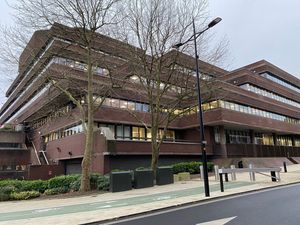
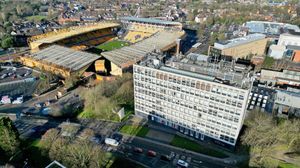
The University of Wolverhampton's School of Art building, also known as the MK Building, overlooking the Wolverhampton Ring Road, has been granted Grade II-listed status after more than 6,000 people signed a petition to protect it from redevelopment.
The 1960s building was set to be torn down as part of the university’s plans for a ‘radical’ overhaul of its estate earlier this year.
Dominating the city's skyline for more than half a century, the brutalist building was originally designed by Diamond Redfern and Partners.
Construction began in 1966 and completed in 1969, coinciding with the College of Art merging with the College of Technology to form Wolverhampton Polytechnic.
In January this year, the University of Wolverhampton announced it intended to demolish the building as part of plans to "streamline" its estates.
More than 3,500 people rushed to sign a change.org petition in the first five days of its launch, with nearly 7,000 people having signed the petition as of December 18.
Now, on the advice of Historic England, the Department for Culture, Media and Sport (DCMS) has officially granted the building Grade II-listed status, granting it protection against alterations or demolition.
Grade-II listing recognises a structure's historical and architectural significance, noting the building's 'special interest' for the region.
Listing reasons for the designation, Historic England noted the building's 'striking' slab block and 'bold' geometric exoskeleton, with its lender concrete panels exhibiting the influence of Pop Art in architecture.

Historic England also noted the building's role in the 'first tranche' of art colleges accredited to provide the National Diploma of Art and Design following post-war reforms, and its close association with the Blk Art Group, and the First National Black Art Convention, giving rise to the British black art movement.
Historic England said: "The college has several highly regarded alumni, and also has a close association with the Blk Art Group, formed in 1979, many of whose founding members were students at the polytechnic.
"The group sought to empower and raise the profile of black artists during a period in which racial tensions were common, and black art and artists were under-represented within mainstream art institutions.
"Members of the group were largely children of Caribbean migrants, raised in the industrial West Midlands. Their first exhibition, ‘Black Art An’ Done’, was held at Wolverhampton Art Gallery in 1981.
"The group organised the ‘First National Black Art Convention’ in October 1982, held at the College of Art, which is recognised as key to the formation of the British black art movement."
Deborah Williams, regional director for Historic England, said: "Wolverhampton School of Art is a bold building that holds a prominent place in the centre of the city, and in the hearts of many locals.
"The striking brutalist design, combined with the important social history of the British black art movement, mean the building meets the high bar for post-war listing and I’m pleased DCMS agreed with our recommendation to recognise the significance of this distinctive piece of 20th-century history."