
Trail hunting ban will ‘likely result in 300 dog deaths’ in Shropshire – Wrekin MP
Banning trail hunting will result in 300 dog deaths in a single Midlands county, an MP has claimed after a senior Conservative said Labour MPs failed to “understand the quintessential quality of rural life”.
Mark Pritchard , who represents a constituency in Shropshire, said he raised the figure in an effort to "stand up for all of those people in the hunts who do not want to destroy all of those dogs".
Labour committed in its manifesto to “ban” trail hunting – where packs of hounds follow a scent laid for them – and the pledge featured in the Government’s new animal welfare strategy, unveiled last month. A consultation is due to open in “early 2026”.
Mr Pritchard spoke in a debate to outline the impact of a hunting ban on a county like Shropshire, where hunting is an important part of the rural community for many.
As Labour’s rural affairs minister Dame Angela Eagle spoke, Conservative MP Mr Pritchard intervened in her speech to ask: "Why is it that the Government are going to spend so much time on banning trail hunting?

"And is she aware that in Shropshire alone, if that goes through, we're likely to see the death of 300 dogs - 300 hounds - at least?
"And that will impact on many, many rural SMEs (small and medium-sized enterprises)."
Mr Pritchard, MP for The Wrekin, also said: "I today stand up for all of those people in the hunts who do not want to destroy all of those dogs as well as jobs."
Dame Angela paid tribute to Mr Pritchard's "record on animal welfare" in her reply.
She said: "The ban on trail hunting was in our manifesto, and we are consulting on how to put it into effect, and I certainly hope that (Mr Pritchard) will take part in in that consultation.
"He may vote any way he likes but I hope he'll take part in the consultation."
The proposed ban was announced before Christmas, angering those who assembled for traditional Boxing Day hunts.
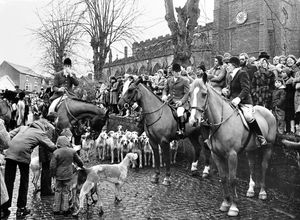
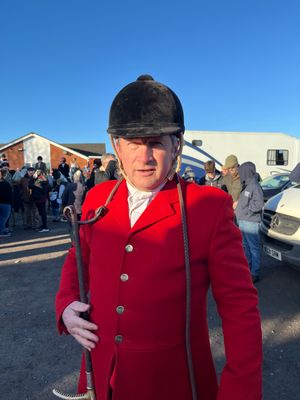
Hundreds turned out to cheer on the Albrighton and Woodland Hunt's annual Boxing Day meet, and Hunt Master, Mark Gilbert, said the large numbers proved people supported the tradition.
He said: "It is part of rural communities. We are part of the rural community, it takes in everyone from working class people to farmers, all walks of life. We are not the landed gentry that people would show us to be.
"It is fantastic to get the support we are getting. There is a minority of people out there, including the government, who obviously have an agenda to ban trail hunting, which they have hidden in the animal welfare bill."
The Conservatives' opposition day motion, which included a criticism of Government plans for "more energy infrastructure in the countryside to meet its net zero targets" and to raise money from inheritance taxes on farm estates worth more than £2.5 million, fell by 332 votes to 105, majority 227.
Tory shadow environment secretary Victoria Atkins told the Commons said there was no reason for a ban on trail hunting and no reasoned argument had been given.
She said: "Labour MPs need to be able to justify why a blanket ban should be imposed instead of tackling those who actually break the law. If they are to have intellectual consistency, do they advocate the banning of driving on the basis that some people speed? Of course not."
Opening an opposition day debate about rural communities, Ms Atkins said trail hunting was "long established and specifically permitted by the last Labour government in the Hunting Act as a humane alternative to fox hunting".
She added it was "rightly a criminal offence" for participants to break the Hunting Act rules, which would include hunting a wild mammal with dogs.
The frontbencher warned Labour MPs did not "understand the quintessential quality of rural life - that sense of belonging, that sense of being part of a community".
She continued: "From the parish church, to the local riding stables, to our local pubs, it is about people coming together.
"And rural sports is an example of this. They are a key part of the rural way of life for participants and non-participants alike.
"They're responsible for 26,000 full-time equivalent jobs and perform vital conservation work across the countryside. ¶"Wander down a rural high street and you will see shops selling clothing and equipment for rural sports, as well as farriers, gun-makers, saddlers and others dotted around the countryside.
"A careless policy on rural sports will have wide-reaching impacts across our rural communities."