Goose rescued from fishing line at Chasewater as RSPCA issues litter warning
A Canada goose has been rescued after becoming tangled in discarded fishing line at Chasewater Country Park, prompting a warning from the RSPCA about the dangers litter poses to wildlife.
The bird was first spotted on Saturday, March 14, with fishing line wrapped tightly around its neck. Several attempts to catch the goose were initially unsuccessful.
After early efforts failed, rescuers arranged to return with additional equipment to reach the bird on the water at the park in Staffordshire.
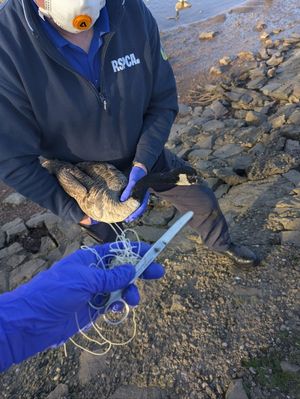
A second attempt on Tuesday, March 17, saw RSPCA Animal Rescue Officer Tom Hall return alongside Inspector Michael Darling, and by using mixed corn to lure the goose closer, the team were able to safely capture it.
Hall said: “The line was wrapped completely around the neck and would have an impact on feeding.
“I managed to corral most of the swans and geese away while Inspector Darling focused on getting close to the goose. Once caught, I was able to carefully cut the line off.
“Luckily none of the line had penetrated skin, but had caused rubbing and abrasion to face and neck.”
The goose was released back into the water shortly afterwards.
“The goose was fit enough to be released in situ, and swam away and had a preen and cleaned his face away from the group,” Hall added.
While the bird escaped serious injury, the RSPCA says the incident highlights the ongoing risks posed by discarded litter, particularly fishing equipment.
Hall said: “Thankfully this goose was okay, but these types of incidents demonstrate how important it is that anglers take every means possible to dispose of lines and tackle and prevent them from turning into lethal litter for wildlife on our sea fronts, waterways and parks.”
The charity is urging people to support the Great British Spring Clean, organised by Keep Britain Tidy, which runs until March 29.
RSPCA wildlife expert Rebecca Machin said: “It’s distressing to see how our native wildlife is being affected by litter, and many of these incidents are completely avoidable.”
She added: “We see the impact of how dangerous litter can be, including at our wildlife centres, when animals have become entangled, or caught up in rubbish. Fishing tackle, cans, bottles, football netting and even disposable vapes are just some of the items that pose a serious danger.
“The good news is that preventing incidents like these is simple, and the public can help us prevent this suffering in the first place.”
RSPCA figures show the charity received more than 300 reports last year involving animals tangled in fishing debris, including hooks, lines and nets.
Residents are being encouraged to dispose of waste responsibly and take part in local clean-up efforts to help protect wildlife across the area.