Officials hail ‘hugely positive’ reduction in Staffordshire’s inquest backlog
Officials have hailed a ‘hugely positive’ reduction in Staffordshire’s inquest backlog.
The number of cases where families have been waiting over 12 months to find out why their loved ones died has fallen from 136 to 99 over the past year.
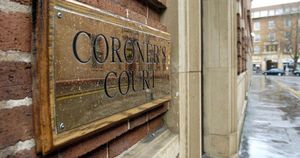
This follows the recruitment of a temporary area coroner to increase capacity, with the role now set to be extended for another year. But senior coroner Andrew Barkley says it would be ‘unrealistic’ to expect the backlog to be eliminated entirely, due to factors beyond the service’s control, such as ongoing police investigations.
The coroners service is jointly funded by Staffordshire County Council and Stoke-on-Trent City Council. Last December councillors agreed to provide £131,200 to fund a temporary coroner for 12 months to help bring down the number of cases going over the statutory six-month time limit.
Members of the joint coroner’s committee were given an update on the project at their meeting on Tuesday.
Clare Clarke, strategic manager for the coroners team, said: “Progress has been made in respect of the backlog through the appointment of the temporary area coroner. We’re seeking to retain the temporary position for further 12 months. Provision was made for a full-time post – that post was filled on a part-time basis so the proposal is to extend that , which would be within the budget envelope. The idea obviously is the backlog would then be further reduced by that resource.
“The backlog figures are hugely positive. There is an overall reduction in the backlog of between 20 per cent and 26 per cent in all areas.”
According to the report to the committee, the temporary coroner Lindsey Tonks has concluded 96 hearings, prioritising the backlog cases. The total number of open cases has fallen from 788 to 629 since last December.
County councillor Hayley Coles asked whether it would ever possible for the service to ‘really get on top’ of the backlog. But the committee was told that there would always be some cases going over the time limit due to external factors.
Mr Barkley said: “I think it’s important to understand that you’ll never remove the so-called backlog completely. There is the inevitable churn of caseload. And many cases are beyond our control.
“If there is a police or Health and Safety Executive investigation then the coroner can’t resume his inquest until that has been completed. If it’s a foreign death and we requested information and evidence from abroad, we cannot move until that evidence is with us. So it would be unrealistic to presume that the backlog could be reduced to zero.”
Acting service manager Sam Woodward told the committee that only 26 of the 99 cases which had gone over 12 months were within the service’s control.
She said: “One of the new cases we’ve had has had a charging decision made, and that isn’t due to go before the criminal court until June next year, so already there is that in-built delay.”
The service is forecasting a £327,000 underspend in 2025/26, largely due to a reduction in employee costs. Committee members agreed to a request to use £78,000 of this underspend to support work to reduce the backlog.