We visited a Staffordshire reservoir where water levels are lower than normal - but we were told 'not to worry'
We visited Staffordshire's Tittesworth Reservoir to take a look at the water levels and talk about water safety as the hot weather continues.
As temperatures soar across the UK and an official heatwave becomes more likely, we visited Staffordshire's Tittesworth Reservoir.
Tittesworth Reservoir, near Leek, pumps on average 28 million litres of water a day to up to 45 million homes and businesses in parts of Stoke-on-Trent, Leek and the Staffordshire Moorlands region.
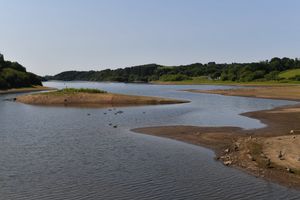
Approaching the strikingly beautiful reservoir, it was easy to see where the water had declined due to the high temperatures, with a layer of dark silt and mud being visible at the line where the water would regularly be.
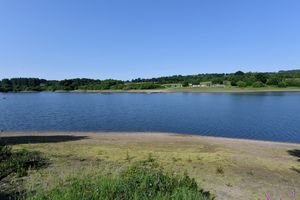
However, the water group, Severn Trent, said that while a decline in water levels is visible, it 'isn't out of the regular' for this time of year.
During an exclusive media-only talk with Severn Trent officials, they said 'not to worry' about potential hosepipe bans and water shortages, and instead to focus on 'conserving water' where you can.
Severn Trent water resources strategy lead, Doug Clarke, said: "The reservoir is a little bit lower than what we would like at this time of year.
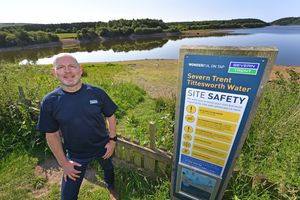
"That's because we have only had 39% of the average rainfall that we would usually expect to have in our region over the spring period.
"Usually the water level would be quite low for this time of season, but not quite as low as it is now."
Mr Clarke said that water conservation is important during the warm period to avoid things like hosepipe bans, saying that saving water where you can is crucial.
He said: "We are doing everything that we can to keep the water levels high, we are keeping leakage down and bringing other resources in to help.
"It's all about conserving water. In the garden, it's important to leave the lawn alone, gardens go green again when the rains come, so we can leave the sprinklers alone.
"Inside the house, leaking loos and faucets can cause hundreds of litres a day of loss. And with having a glass of cold water on a hot day, keep a jug in the fridge instead of running the cold water constantly, it all helps to reduce water waste."

However, while water conservation was important, one of the biggest talking points of the day was advice about water safety during the hot period.
Mr Clarke said that it is 'extremely dangerous' to enter the water, asking people to enjoy their reservoir locations, but 'not to enter the water'.
He said: "When the weather is warm and it is really hot, the water does look really inviting. But it's actually really dangerous to enter the reservoirs.
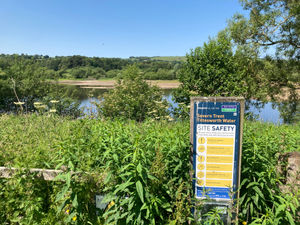
"We love people to come to sites like this. But the water is incredibly cold, even more so when it is 20 or 30 degrees, it's a massive difference in the water and shock can quickly set in.
"It also gets very deep, there are rocks and pipes, and the waterside can be very soft and muddy. But the shock of the cold water, that's the real danger."