Asylum hotels, HMOs and rogue landlords are creating 'transient communities', says former Dudley MP Marco Longhi
Asylum hotels and a proliferation of hostel accommodation are 'corrosive to community cohesion', and require the firm action from politicians, says a former Black Country MP.
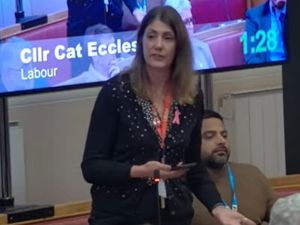
Marco Longhi, former MP for Dudley North, will address tonight's meeting of Dudley Council on the issue of asylum accommodation after more then 3,000 people signed his petition.
Sign up to our free newsletter today
The former Tory MP, who as since defected to Reform UK, has secured a 30-minute debate where he will call on the Conservative-run authority to take legal action to close all asylum accommodation in the borough.
He also called on the council to tighten its rules on houses of multiple occupation (HMOs), which he feared would be used to disperse migrants into the community. HMOs are hostel-type accommodation, where tenants can rent secure bedrooms, but share communal spaces such as kitchens with their neighbours.
Mr Longhi said he was constantly being contacted by residents who had seen a rise in anti-social behaviour after neighbouring properties had been turned into HMOs.
"I'm getting emails and messages all the time, saying, 'Marco, that house has been converted. There's all sorts of people pulling up, there's drug-taking going on, there's women coming and going, there's all this', it's happening all the time. This is something that local government is turning a blind eye to."
Councillor Patrick Harley, leader of the council, says there is only one official asylum hotel in the borough, which houses 72 people - one of the lowest rates in the West Midlands. He said the council was in the process of taking legal action to get that hotel closed, on the basis that it represented an unauthorised change of use. He said the authority was also seeking to end the use of the Superior Hotel - formerly the Ward Arms Hotel - by other local authorities, including Birmingham, for accommodation of people on its housing waiting list. Councillor Harley said neither the hotel, nor the authorities in question, had informed Dudley Council it was being used for this purpose.
Mr Longhi said he was particularly concerned about the growing number of HMOs in the area, which had led to numerous social problems in the area.
"The HMO side of things is something that is potentially even more corrosive to community cohesion than even the hotels," he said.
"The hotels are clearly a massive problem, but if asylum seekers get dispersed into HMOs, it becomes an even bigger problem.
"So I'm asking the council to review its approach from a planning perspective towards granting HMO status to buildings that were never really, often designed for that purpose."
Mr Longhi, a former councillor in Walsall, said he wanted Dudley Council to introduce bylaws that meant the default position was to refuse permission for HMOs unless a powerful case was made to justify them.
"Most residences are designed to be private dwellings with families in them, and pubs and whatever that have been converted again, it's just changing the character of the local community," he said.
"HMOs tend not to be a great asset in any community, never mind who occupies them.
"I'm concerned that the likes of Serco and the Home Office are going to be pushing people into them, underneath the nose of local authorities, often without any planning permission whatsoever.
"And then when they get caught out, they'll say, 'oh, just apply retrospectively, and you'll probably get approved'. I think there's a lot of that going on."
Mr Longhi said the weak rules were being exploited by unscrupulous landlords who see the potential to make more money from having multiple tenants.
"The people who pay the price are are the immediate neighbours and the local communities who suddenly find themselves with people who don't speak the language, who don't want to integrate in the local community, and quite often, as we know unknown men with no knowledge of who they are, and you know potentially even criminals.
"On the HMOs there is the concern that if you've got like place where people are transient communities, it's hard to keep hold of now who's living there, and they can move more easily."
"Well, who are they? What are their backgrounds? Are they intending to integrate. This is the problem. These people come in, they throw away all of their identities into the sea before coming in.
And there's only one reason for that. You know, a lot of these people could jump on the likes of EasyJet or whatever and for 20 or 30 quid land in the UK, but they don't. They choose not to do that, they tend to spend thousands and thousands, get rid of their identities and claim there's a reason for that. It's because they want to hide who they actually are."
He accused local councillors of hiding behind officers in the decision making process.
"They don't take a stand," he said. "And this is my point. I am taking a stand. You can adopt more stringent local bylaws in order to make the granting of HMO status much more difficult for any applicants.
"I would like to see a scenario in which you've almost got like the presumption against development in greenbelt as there being a presumption against the granting of an HMO licence, because these are not buildings that tend to attract the kind of occupants that bring a positive contribution towards local communities.
"People are just buying up old, decrepit pubs and doing them out, or buying a larger house and squeezing people in and get a contract with Serco or the Home Office to try and get lots of young undocumented males who we've got absolutely no knowledge about, and who could potentially be a risk to local communities.
"HMOs should not be something that we just approved willy-nilly, irrespective of who the occupants are, because they tend to attract occupants who can be extremely transient and who might, for their own reasons, not be looking to make a positive contribution to the local community."