Birmingham traders at Bull Ring Indoor Market building set to move to new home next year
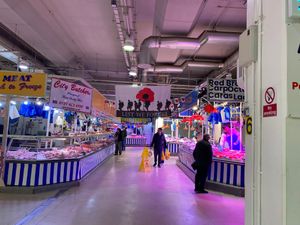
Birmingham traders at the Bull Ring Indoor Market building are set to move to a new home next year amid a demolition countdown.
Get the latest headlines delivered straight to your inbox with the Express & Star’s free newsletter
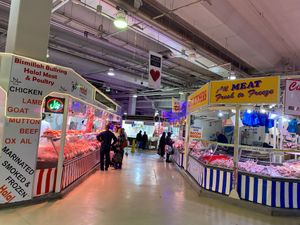
Controversial proposals will see the historic market building replaced by hundreds of apartments or student bedrooms – or a combination of the two.
There was deep shock and concern when it was revealed back in 2024 that the building faces being bulldozed after being part of the city’s fabric for years.
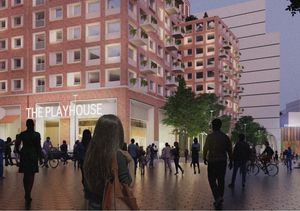
Those behind the plans, referred to as the Edgbaston Street Gardens scheme, have said they will provide new green spaces, amenities and commercial uses alongside public realm improvements.
But uneasiness over what could happen to the market traders persisted at three council meetings last year, despite plans to provide replacement markets.
At the third meeting in July, the proposals was deferred, minded to refuse – but developers Hammerson launched a successful appeal and later confirmed that the regeneration plans are set to go ahead.
In a recently-published report, the council acknowledged the existing Bullring Markets, which consist of the indoor market, rag market and open market, are “important historical assets”for Brum.
“Retail markets [have been] in existence since 1166,” it said. “The markets provide an alternative type of retail that can generate significant footfall and turnover when operated well and have strengths.”
It went on to confirm that the existing Bullring Markets will be replaced with a new “vibrant retail market complex” as part of the Smithfield development in the heart of the city.
It continued there are plans to relocate traders to a temporary location until the new markets have been constructed.
“Following extensive work on potential alternative sites, the favoured option is to locate the temporary markets within the existing Smithfield area, in a space not currently required for construction,” the report said.
“This affords the temporary market close links to the existing site, provides the space for all three markets to be located on one site and is the most affordable option.”
Nick Lowe, head of markets at the council, told a recent meeting that construction on this temporary market is expected to start later this year – but the authority faces a race against time to get it built.
The report states that building works could be complete by July 2027, before the new market potentially opens later that year in September.
This target date comes after Hammerson granted an extended lease of the indoor market until late 2027, which it said would allow time to “consolidate the markets to a new single, purpose-built market”.
“The temporary market must be delivered by October 2027,” the report warns. “This is when the new indoor market headlease with Hammerson expires and the other parts of the site are to be released for construction.”
Speaking at the meeting, trader John welcomed the transition and said: “The move to this new market is something I’ve experienced before with regenerations in London.
“As regards to being a trader here, it’s an exciting opportunity really to get over to this new market place.
“As long as everything goes alright and it goes smoothly, I’m looking forward to it – it’ll be great for the city.”
‘Support will be provided’
As well as an update on the timeline for the new market, the council confirmed it was working jointly with construction company Lendlease to develop a “tailored programme” to protect the Bull Ring Markets.
This support package also aims to help traders’ businesses to “grow and thrive” now and through their transition to both the temporary and permanent markets.
“The type of support being considered includes helping traders to develop business plans to support business growth – and to meet the potential requirements to be eligible to relocate to the temporary market,” the report said.
“Support will also be provided to support the continued operation of the whole market by raising public awareness and increasing footfall to the temporary location of the markets.”
Reacting to the successful appeal last year, Harry Badham, chief development and asset repositioning officer at Hammerson, said: “This planning consent is a great outcome given the city’s needs and priorities, especially around housing.
“As long-term backers of Birmingham, we know the potential growth that is achieved with targeted investment and regeneration.”