
Unite union fined £265,000 over Birmingham bin strike injunction breaches
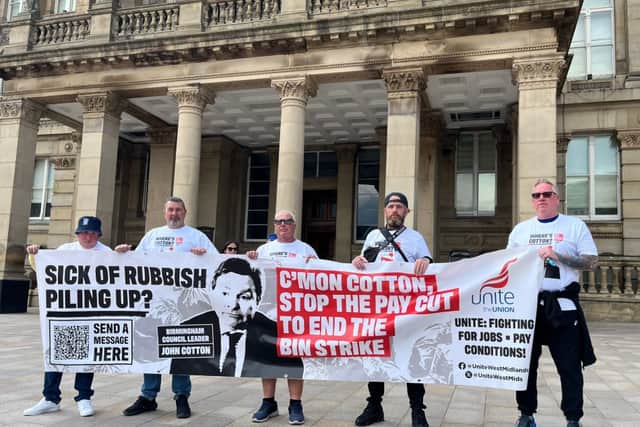
Trade union Unite has been fined £265,000 after breaching a High Court injunction over industrial action by refuse workers in Birmingham.
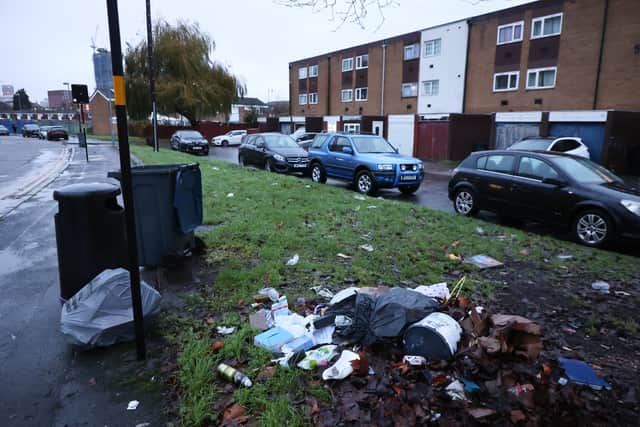
Unite members walked out in March 2025, leading to rubbish piling up on the streets.
The High Court order, which the union previously agreed to, prohibits the blocking of council rubbish collection vehicles at depots or on Birmingham city streets.
Birmingham City Council brought action over breaches of the injunction made in May 2025.
Unite has admitted the breaches, which included the blockading of vehicles at depot entrances and slow-walking next to vehicles, and apologised “unreservedly” in court documents for a hearing in October.
And in a decision on Tuesday, Mrs Justice Jefford fined the union £265,000 for the breaches, including picketing outside of defined areas.

She said in a 21-page judgment: “I cannot accept that when Unite offered an assurance that protesting would be limited to the assembly areas, anyone giving instructions for that assurance to be offered would have intended that the protests could just be moved a few hundred metres away from the depots so that the vehicles that had left the depots could then be obstructed and delayed at a different point in their route.
“It would make a nonsense of the order if, once the wagons had exited the depots, a few yards down the road their progress could be obstructed by protests outside the designated assembly areas.”
Mrs Justice Jefford added she accepted that Unite’s apology was genuine, but “was not offered until September 2025, some two months after the breaches had first occurred and the excuse for them was first offered”.

Unite general secretary Sharon Graham said: “This is yet another pathetic attempt to intimidate workers and it won’t work.
“Unite will not allow these workers to pay the price for the council’s failings in their pay packets.
“Instead of using Thatcher’s anti-union laws to injunct the picket line and stop lawful protest, the council should honour the deal scoped out at Acas.
“They walked out of the room, said they would be back with the deal in writing, and never returned.
“Rather than resolving the dispute, Birmingham City Council’s own figures have confirmed they have spent £33 million of Birmingham residents’ money trying to break the strike.
“It won’t be broken – these workers are fighting for council workers everywhere.
“Unite is very relaxed about the fine, every single penny will come out of Labour’s affiliation fee.
“So, Labour will be paying for this one and any others that come our way.”

In October, lawyers for Birmingham City Council told the court in London that the “appropriate penalty” for breaching the injunction would be a financial one.
Bruce Carr KC, for Birmingham City Council, said the “absurdity of the position” is that until July 25, when it received legal advice, Unite genuinely believed that the terms of the order entitled them to block vehicles some distance from the depots.
He told the court the order was made to “ensure that the claimant was able to deploy its vehicles so that the residents of Birmingham, particularly in July, but from May onwards, did not suffer from having large quantities of waste sitting around at or near their places of residence”.
The terms of the injunction included ordering Unite to take reasonable steps to ensure that its members or officials refrained from picketing other than at the site entrances to three depots, and refrained from carrying out any protesting outside designated assembly areas.
Birmingham City Council alleged that breaches of the injunction started within days of it being granted, with slow-walking beginning in July.

In written submissions, Oliver Segal KC, for Unite, said: “The defendant accepts that it is guilty of contempt by reason of breach of a court order. The only issue for the court is sanction.
“The defendant apologises to the court unreservedly.”
He added: “The defendant believed that the order imposed no obligations on it to restrain activities in relation to protesting, including the blocking of vehicles, away from the immediate vicinity of the depots.”
Mr Segal said Unite accepts “its belief in that regard was in error”.
However, Mrs Justice Jefford said: “I reject the defendant’s submission that any of the admitted breaches were not deliberate and were the product of a misunderstanding.”
She added: “I am sure that there was at best a genuine belief that Unite had a clever argument as to the scope of the injunction but not a genuine belief that the injunction permitted protesting away from the depots which nonetheless obstructed the progress of the wagons.”