Birmingham is no longer bankrupt, council leader says
Birmingham is no longer bankrupt, the city council’s leader has said, nearly two and a half years after the government stepped in to help run it.
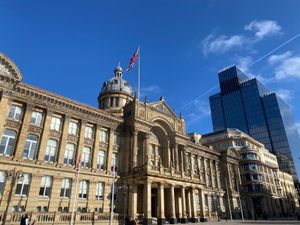
Crisis-hit Birmingham City Council has revealed details of its proposed budget for the next financial year, with the Labour-run authority saying it is no longer ‘bankrupt’.
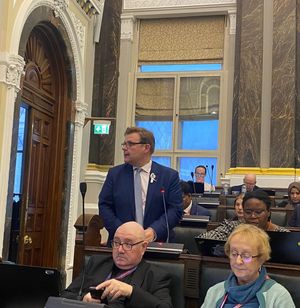
Council leader John Cotton said in a statement issued this week that a £300 million budget gap had been closed while equal pay liabilities had also been tackled.
“Thanks to the decisive, tough action we took to get the council back on track, the ‘bankrupt Birmingham’ tag is now a thing of the past,” he said.
“This is a significant moment in the council’s recovery and is down to the sheer hard work that has been undertaken here in Birmingham by members and officers, supported by [government-appointed] commissioners.”
But a number of pressing issues are still casting a shadow over the council, including the ongoing bins strike, with the latter starting last January.
The industrial action, which was triggered by a dispute between the council and Unite the union, left rubbish piling up outside homes during its height and services such as recycling and garden waste suspended.
Despite such disruption, Birmingham City Council is proposing a council tax rise of around 5 per cent – this would follow hikes of about 7.5 per cent and 10 per cent in the past two years.
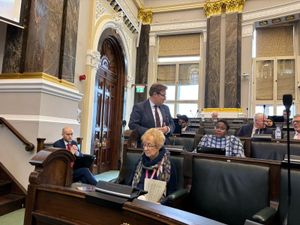
Asked on Tuesday (February 3) what he would say to residents who may feel frustrated by the rises, Councillor Cotton said: “I’m very disappointed we’ve not been able to bring the bins dispute to a close."
He continued that the council had previously put “fair and reasonable” offers on the table in 2025 to try and reach a resolution.
Negotiations between the council and Unite came to an end last summer, with the authority saying it had ‘reached the absolute limit of what we can offer’ amid equal pay fears.
“I’d still very much like a negotiated settlement so the workforce can return to work and deliver a modern waste service that the people of this city want and deserve,” Councillor Cotton went on to say this week.
“But what I can’t do is put at risk the progress we’ve made around equal pay.
“I think that would be an abdication of my responsibility and it wouldn’t be fair on the people of this city.”
On council tax itself, Councillor Cotton said: “Obviously I regret the fact that we found ourselves in the position where we had to take the increases that we did in the two previous budgets.
“We’re now back in the mainstream of local government following practice when it comes to council tax across the country.
“And we continue to maintain that very generous council tax support scheme.”
He added: “When it comes to average council tax per household, we are low end of the table compared to the other core cities.”
The council has also in the past pointed out that council tax is collected to fund local services generally.
The bins strike dispute was initially sparked by the loss of the Waste Recycling and Collection Officer role.
The past 12 months or so have seen striking workers claim they face a pay cut of £8,000 – a figure the council has disputed.
The council’s managing director Joanne Roney recently said there had to be a “reasonable amount of recognition for both parties”, particularly with the council’s equal pay and financial position.
“They are just parameters within which I have to operate,” she said in January. “[The council and Unite] are miles apart.”
Several issues contributed to the recent financial turmoil at the council, including Birmingham-specific factors such as the equal pay debacle and the disastrous implementation of an IT system.
Labour politicians in the city have also pointed the finger at funding cuts during the previous Conservative Government.
“I’m determined that the mistakes of the past will not be repeated, as we drive further efficiencies to deliver better services and value for money for council taxpayers,” Coun Cotton said.
“I’m ambitious for Birmingham’s future.
“Now we will step up our work with West Midlands Mayor Richard Parker and Government to invest in our communities, delivering the homes, jobs and services that the people of this city deserve.”
The council has also said its budget for 2026/27 includes an extra £130m investment in council services, which would focus on cleaner, safer streets and better local services.