Plans to convert Birmingham shop into HMO are refused
Plans to convert a Birmingham shop into a HMO have been refused despite assurances it would be “professionally managed”.
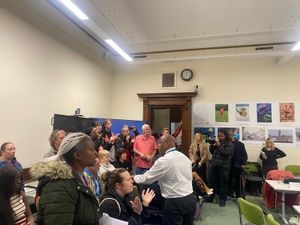
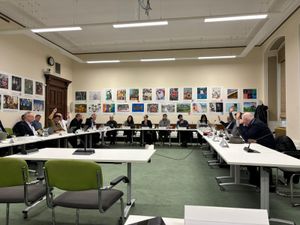
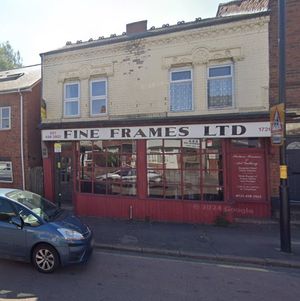
Proposals for a change of use from a shop at 1726-1728 Pershore Road in Cotteridge to a six-bedroom HMO were considered at a planning meeting on Thursday.
Get the latest headlines delivered straight to your inbox with the Express & Star’s free newsletter

The planning application had triggered concerns among the community however, with locals previously suggesting that there was already an “over-concentration of HMOs”.
Birmingham MP Al Carns also argued last year that the area was struggling to cope with the number of HMOs.
At a previous meeting, Birmingham’s planning committee voted to defer a decision on the plans so more details about how this proposed HMO would be managed could be secured from the landlord.
A new update, issued ahead of this week’s meeting, confirmed that the applicant is an “experienced provider of high-quality co-living accommodation for students and young single professionals”.
It continued that the property will be “professionally managed” and that all tenants will be subject to “strict vetting”.
The applicant also said there would be monthly internal inspections and strict noise policies.
“The information submitted provides assurances that the property will be managed in a professional manner with minimal impacts on the surrounding area,” a council officer wrote.
“The management strategy provides comfort that a clear plan is in place to deal with any issues that may arise.”
But despite these assurances, Birmingham councillors remained troubled by the number of HMOs in the city and the possibility of this proposed one becoming exempt accommodation.
Supported exempt accommodation is housing where vulnerable adults are helped to live independently.
Coun Gareth Moore, who previously argued that Birmingham has plenty of HMOs, said today: “I’ve not yet come across a HMO provider that hasn’t described their management as professional.
“So the reassurances provided don’t really give much comfort at all.
“I don’t think there’s any justifications as to why we need another HMO.”
Coun Jamie Scott echoed similar concerns, saying: “This is an area where there’s already a lot of this type of accommodation.”
“It is a fear and an anxiety that this can be turned into something like exempt accommodation,” Coun Jane Jones added.
‘No reasons to resist this’
Addressing concerns raised in the objections, the previous council report said that just over seven per cent of the houses within 100 metres of the application site are used as HMOs – nine properties in total.
It continued: “I therefore consider that the proposal would comply with [a policy] which states the change of use of a family dwelling to a HMO will be permitted where it does not result in more than 10 per cent of dwellings within a 100m radius being used as HMOs.”
It added that this HMO “would not be exempt accommodation” and that there’s ‘no evidence to suggest that the proposal will […] increase crime and anti-social behaviour’.
At today’s meeting, chair of the planning committee Coun Lee Marsham said: “From a planning point of view, we have to separate [concerns over exempt accommodation] from the issue at hand.
“Exempt accommodation should be in the planning system, I’m forever calling for that – sadly that’s not in our gift at the moment.
“Regarding the assurances, ultimately that’s also outside this committee – that would be for our licensing scheme around HMOs and the private rented sector.”
“From a planning point of view, we don’t have any reasons to resist this,” a council officer added.
“There’s no loss of family home, there isn’t an overconcentration in this area – it’s less than 10 per cent.
“If we are going down the resist route, I would need a reliable reason for refusal.”
The committee however ultimately voted to refuse the plans but the applicant can appeal the decision.
Reasons for refusal will be set out at a later stage, with the committee members suggesting “changing neighbourhood, loss of retail unit and parking” as possible ones.