Plans to convert Birmingham shop into HMO recommended for approval for second time
Plans to convert a shop into a HMO in a south Birmingham suburb have been recommended for approval for a second time.
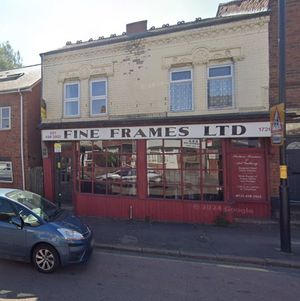
Proposals were previously lodged for a change of use from a shop at 1726-1728 Pershore Road in Cotteridge to a six-bedroom HMO.

The planning application was met with concerns last year however, with Birmingham MP Al Carns arguing at the time that the area was already struggling to cope with the number of HMOs.
Locals living nearby also suggested there was an “over-concentration of HMOs” and that further ones could “undermine community cohesion”.
Unease over the number of HMOs in Brum was a talking point at a planning meeting in November, with Coun Gareth Moore saying: “We have plenty of them in the city already.”
Coun Colin Green added: “I would much rather this be brought into family housing rather than a HMO, for reasons long-discussed on this committee and the nuisance associated with them.”
After saying she was getting daily complaints about HMOs, Coun Jane Jones continued: “I’m not actually against HMOs.
“With the current climate we’ve got with housing, we couldn’t cope without them.
“But the problem is I can’t tell from this report whether the landlord is going to be responsible – is he going to provide support for his tenants?”
A council officer told the meeting that a “lot of this comes down to the character of tenants and how they look after the premises”.
“[This] is difficult for us to control, almost impossible,” she said.
“I think it’s important we don’t cast judgement over the character of potential future tenants.”
The committee ultimately voted to defer a decision on the plans so more information about how the HMO would be managed could be secured from the landlord.
A new update, issued ahead of a meeting this week, confirmed that the applicant is an “experienced provider of high-quality co-living accommodation for students and young single professionals”.
It continued that the property will be managed by a dedicated and professional HMO management company and that all tenants will be subject to “strict vetting”.
The applicant also said there would be monthly internal inspections and strict noise policies.
“The information submitted provides assurances that the property will be managed in a professional manner with minimal impacts on the surrounding area,” a council officer wrote.
“The management strategy provides comfort that a clear plan is in place to deal with any issues that may arise.”
The plans have therefore been recommended for approval for a second time and will be considered by the planning committee again this Thursday, January 22.
‘HMOs are not the enemy’
Coun Lee Marsham, chair of the planning committee, argued at the meeting last November that ‘exempt accommodation is the enemy’ – not HMOs.
Supported exempt accommodation is housing where vulnerable adults are helped to live independently.
It could be used as accommodation for people who are homeless, those recently released from prison or people with substance dependencies, as well as domestic abuse survivors and refugees.
“Yes HMOs are a problem but nowhere near the problem we face with supported exempt accommodation,” Coun Marsham said.
Addressing concerns raised in the objections, the previous council report said that just over seven per cent of the houses within 100 metres of the application site are used as HMOs – nine properties in total.
It continued: “I therefore consider that the proposal would comply with [a policy] which states the change of use of a family dwelling to a HMO will be permitted where it does not result in more than 10 per cent of dwellings within a 100m radius being used as HMOs.”
It added that this HMO “would not be exempt accommodation” and that there’s ‘no evidence to suggest that the proposal will […] increase crime and anti-social behaviour’.