Thousands of Birmingham residents set to see 'biggest bin shake-up' in 25 years this new year - here's what to expect
Thousands of Birmingham residents are set to see major changes soon as the city council prepares to embark on its ‘biggest bin shake-up in 25 years’.
The Labour-run council, which has recently faced financial turmoil, says it is transforming its waste service to improve reliability, hit recycling targets and make necessary savings.
The changes, which will see collections of household rubbish move from weekly to fortnightly, were initially meant to be rolled out in spring 2024.
Weekly food waste collections and a second recycling bin, specifically for recycling paper and cardboard, were also set to be introduced in phases across Birmingham from April onwards.
But with the ongoing bins strike causing disruption to collections, the decision was taken to delay the waste transformation.
The council has now said the changes will start rolling out in June 2026 “regardless of the strike situation”.
What are the changes?
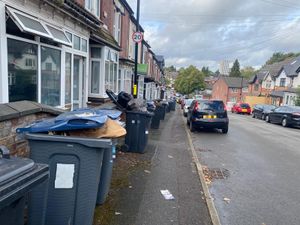
The waste transformation means collections of household rubbish will become fortnightly – a planned change which has attracted criticism from opposition councillors.
There will also be a fortnightly collection of recycling, with a second bin being introduced specifically for recycling paper and cardboard.
Birmingham residents will see a new weekly food waste collection introduced too, which will include two caddies – one external and one for the home.
The council has also said there will be “extensive communication and engagement” with residents and a trial scheme for the food waste collections from March next year.
On the move to a fortnightly collection of household rubbish, cabinet member for environment Councillor Majid Mahmood said previously: “I know some residents are concerned.
“But this will not be introduced until we have the food waste collections, meaning people will have less general waste.”
When will they happen?

The city council has said the rollout will be on a phased basis, with around 20,000 residents transferred to the new service in fortnightly blocks.
The introduction of the changes will be based on a depot-by-depot deployment, with a report saying Perry Barr will be first followed by Lifford in south Birmingham and then Atlas in Tyseley.
According to the report, the overall timeline for implementing all the new waste services will take around 12 months starting from June 2026.
It says there will be a three-month initial implementation phase followed by a nine-month roll-out and “reintegration of services”.
“The first three months will focus on workforce mobilisation alongside comprehensive resident communications and engagement,” the report said.
The plans mean some Birmingham residents, such as those living in flats above shops, may not actually see the changes introduced in their area until 2027.
“Initial roll out is to kerbside properties only, with multiple occupancy and flats above shops to follow,” the report said.
“The additional 130,000 multiple occupancy properties and flats above shops will be on a subsequent timeline, likely to extend to quarter 4 in 2026/27.”
“There will be comprehensive communications and engagement with residents to ensure households know what is happening on their street and when,” the council added.
Will recycling collections resume?

The council has said its waste transformation programme will include the reintroduction of recycling collections, which have been suspended since February 2025.
“I understand the frustration of residents,” Councillor Mahmood said recently. “I would like to thank them for their patience and understanding.
“Historically we’ve suffered from high missed collections in the city and low recycling rates.
“The whole purpose of this transformation is to change that.
“We want to exceed the 65 per cent target that’s been set by the government for recycling for 2035,” he added.
What if the bins strike is still happening?
The council has said it expects the rollout to begin in June 2026 regardless of whether the bins strike is still happening at that point or not.
Councillor Mahmood said changes had been introduced in recent months to support the transformation, including over 1,100 new routes, a new council-owned fleet and training for staff and managers.
“We have already made some changes, with our new council-owned fleet fully operational,” he said. “[This means] there is less reliance on hired vehicles, improved reliability and better consistency in collections.
“Our crews have the tools they need to deliver a more reliable, efficient service.”
“We’re ready to go on this now,” he added. “We’ve done all the background, done all the mobilisation.
“We’ve very confident that we’ll get the rollout in June.”
The bins strike dispute between the council and Unite the union was initially sparked by the loss of the Waste Recycling and Collection Officer (WRCO) role.
Striking workers have raised concerns about pay while the Labour-run council’s leadership has repeatedly insisted that a “fair and reasonable” offer had been made.
How much has bins strike disruption cost the council?
The direct costs and loss of income from garden waste is estimated to have cost the council at least £14 million.
But a report recently said the industrial action will also have an impact on the council’s ability to make savings by transforming the waste service.
“It would be difficult at this stage to specify exactly what the cost of industrial action is,” Councillor Mahmood said recently. “We do have a budget meeting in February where the costs will be published.
“There is a significant cost, we can’t hide behind that fact. We want to bring [the industrial action] to an end.”
Referring to equal pay, he added: “We do know the cost of any new claims of discrimination far exceeds the current costs of industrial action.”
What have opposition councillors said?
Opposition councillors were sceptical about the changes being made against the backdrop of the bins strike.
“Residents will rightly ask how on earth Labour can justify pushing ahead with a completely new waste system when they can’t even get the current one working,” Conservative councillor Robert Alden said in a statement.
“The council has been unable to collect recycling for a year and yet Labour would have you believe they can successfully introduce food waste recycling during a strike.”
Councillor Alden, leader of the opposition, also urged the council during a recent meeting to “look again” at its plans to switch to fortnightly collections of household rubbish.
Conservative councillor Ewan Mackey added that it “seems like madness to introduce a new service” amid the current disruption from the strike.
“It wasn’t long ago that we heard the agency workers themselves were going on strike,” he said. “Reputational damage is bad enough.”
But Councillor Rob Pocock, the Labour cabinet member overseeing transformation, told the meeting that the proposals were the “biggest transformation in our household waste collection service for at least 25 years”.
“[They] will finally bring to an end this city’s woefully underperforming recycling service,” he added.