Calls for public inquiry into Birmingham City Council’s financial turmoil amid ‘bankruptcy questions’
Calls for a public inquiry into Birmingham City Council’s financial turmoil have intensified amid a row over its crisis.
A group of academics and financial experts have recently argued that errors in forecasts of reserves and equal pay liabilities led to the council declaring itself effectively bankrupt.
What followed this alarming moment in 2023 were unprecedented cuts to local services; hikes in council tax and government-appointed commissioners being sent in to oversee the council’s recovery.
In an open letter to Local Government Secretary Steve Reed, the group said the decision had caused “damaging” consequences for residents.
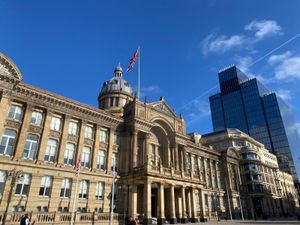
Amid such concerns, council leader John Cotton said the authority was “on track to deliver a balanced budget without the need for exceptional financial support” this year.
But the group of experts want to see a public inquiry carried out to avoid similar situations happening at other local authorities.
“We call for a public inquiry to establish how and why such a damaging section 114 notice could have been initiated based on unaudited and, as has now come to light, materially incorrect accounting information,” the letter said.
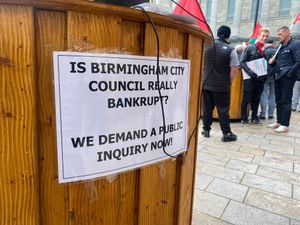
Campaign group Brum Rise Up, which gathered outside the council house on Tuesday afternoon, has also suggested that a public inquiry into the council’s decision to declare ‘bankruptcy’ should be held.
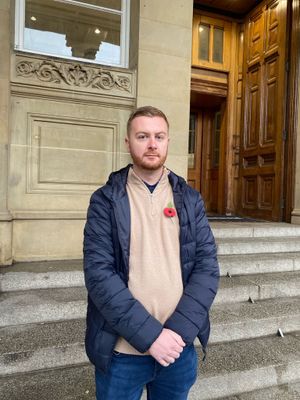
Others have echoed such calls, including Harborne resident and independent election candidate James Cross.
“We’re asking for justification as to why the section 114 [bankruptcy] notice was issued,” he told the Local Democracy Reporting Service.
“I think there needs to be an open and transparent investigation into the finances.
“It’s the biggest local authority in Europe; got one of the biggest budgets and it’s public money so every pound spent needs to be accounted for.”
Asked about recent cuts in Harborne, such as the controversial closure of the day centre for vulnerable adults, he added: “My question now is was it necessary?
“I think they steamrolled with cuts not knowing the full extent of the finances.”
At this week’s full council meeting, Green Party councillor Julien Pritchard suggested there should be an independent inquiry to ensure a public debate about the council’s finances.
“[The open letter] is not the first time that the council’s bankruptcy and equal pay liability has been questioned,” he said.
“Does he [the council leader] not think that with all these questions that keep coming up, it’d be a good idea to have a full independent inquiry […] to have this debate with the full facts in public?
“At the moment we have academics saying something and the council responding with ‘basically, you haven’t got all the facts’ – so let’s get them all out.”
Council leader John Cotton responded: “The reality was in 2023 that the council was served with a section 114 notice before we then moved into the government’s statutory intervention.
“My focus over the last couple of years has been dealing with that situation; dealing with the equal pay liability; the reimplementation of Oracle and tackling the huge budget deficit that was an absolute fact that we needed to address.
“So rather than engage in theoretical debates, I’m focused on the practicalities of ensuring we build a stable financial future and sort out issues that have inflicted this organisation for far too long.”
Martin Brooks, an independent councillor who quit Labour, went on to describe some of the cuts to local services over the past two years as “diabolical”.
The ‘bankruptcy’ debate
Analysis supporting the open letter, by Dr James Brackley of the University of Glasgow, compares the figures used at the time with those later published in the council’s audited accounts.
He argued the council massively underestimated its available reserves and overstated the equal pay liability risks and claimed the council’s finances were much healthier than feared.
But the council has said that when the section 114 notice was issued it faced an £87m budget shortfall – a deficit which had not taken the potential equal pay liability into account.
It also said that the local authority had not at that point secured government approval to cover equal pay liability through borrowing or asset sales.
The council added that Carol Culley, executive director of finance, said that most chief finance officers would likely have taken the same decision based on the information available at the time.
Amid the debate, Coun Cotton said: “Oracle remains on track, last week we signed an agreement with UNISON and GMB to settle the outstanding equal pay claims brought by the two unions and crucially, this year we’re on track to deliver a balanced revenue budget without the need for exceptional financial support for the first time in several years.”
He continued that the council had been working with the government “to repair the damage of 14 years of crippling Tory cuts”.
“Under my leadership, this council has taken the tough decisions and decisive action required to return to the mainstream of local government,” Coun Cotton added.
Lead commissioner Tony McArdle has also spoken out, telling Birmingham Live: “The fact of the matter is, as has played out, Birmingham was in a dire position.”
He continued that Birmingham residents were having to “pay the bill” for issues such as the Perry Barr ‘athletes village’ debacle, Oracle and equal pay.
“Our work here is about stopping those difficult, poor decisions being made, and that hemorrhaging of money across all these things…so that the council can be put back on a sustainable footing.”
A spokesperson for the Ministry of Housing, Communities and Local Government added: “Birmingham City Council has made progress on its reform and recovery, but challenges remain, which is why commissioners continue to support the council to deliver for local people.”