
Unite members ‘repeatedly and deliberately’ breached injunction relating to Birmingham bin strikes, High Court told

Members of Unite “repeatedly and deliberately” breached an injunction relating to industrial action by refuse workers in Birmingham, a High Court judge has been told.
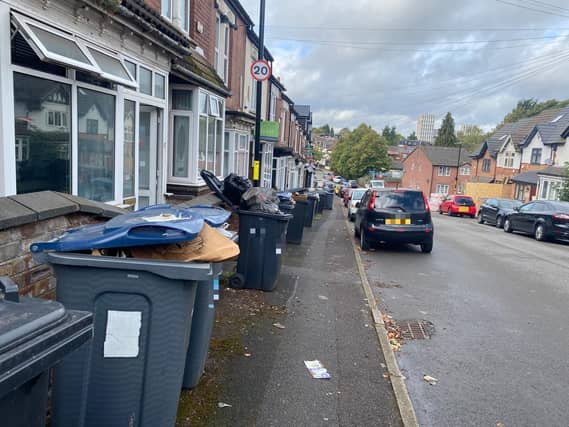
Unite members walked out on March 11, leading to rubbish piling up on the streets, and the union has warned the strike could continue into next spring.
The High Court order, which the union previously agreed to, prohibits the blocking of council rubbish collection vehicles at depots or on Birmingham city streets.
Unite has admitted the breaches, which included the blockading of vehicles at depot entrances and slow-walking next to vehicles, and apologised “unreservedly” in court documents.
On Tuesday, lawyers for Birmingham City Council told the court in London that the “appropriate penalty” for breaching the injunction, which was made on May 23 this year, would be a financial one.
Bruce Carr KC, for Birmingham City Council, said the “absurdity of the position” is that until July 25, when it received legal advice, Unite genuinely believed that the terms of the order entitled them to block vehicles some distance from the depots.
He told the court the order was made to “ensure that the claimant was able to deploy its vehicles so that the residents of Birmingham, particularly in July, but from May onwards, did not suffer from having large quantities of waste sitting around at or near their places of residence.”
He added: “We say that from the outset, this defendant has shown complete disregard for the terms of the order.”
Mr Carr also said that the “evidence demonstrates a pattern of disobedience” and that after several breaches, the council eventually “lost patience” and brought the breaches to court.
He continued: “It is the last round of a cat and mouse game, in the course of which the defendants were repeatedly and deliberately pushing the boundaries of the order, and pulling a fast one.”
Mr Carr said it was an “insult” to both the residents of Birmingham and to the court, for Unite to say it has the genuine belief that its members were entitled to block refuse vehicles down the road from depots.
“It is absurd and not an honest explanation for why they have repeatedly breached the order,” the barrister said.
The terms of the injunction included ordering Unite to take reasonable steps to ensure that its members or officials refrained from picketing other than at the site entrances to three depots, and refrained from carrying out any protesting outside designated assembly areas.
Birmingham City Council alleges that breaches of the injunction started within days of it being granted, with slow-walking beginning in July.
In written submissions, Oliver Segal KC, for Unite, said: “The defendant accepts that it is guilty of contempt by reason of breach of a court order. The only issue for the court is sanction.
“The defendant apologises to the court unreservedly.”
He added: “The defendant believed that the order imposed no obligations on it to restrain activities in relation to protesting, including the blocking of vehicles, away from the immediate vicinity of the depots.”
Mr Segal said Unite accepts “its belief in that regard was in error”.
He added: “The court is asked to accept as genuine the strength of feeling on the part of the defendant and its members in relation to a lawful industrial dispute as an explanation, albeit not an excuse, for the defendant’s unlawful conduct in relation to picketing and protesting in relation to that dispute.”
Mr Segal also said “this is not a case in which a very severe sanction is needed to ensure future compliance with the order”.
Mrs Justice Jefford is expected to give a written ruling at a later date.
Comment Guidelines
Iconic Media encourages reader discussion on our stories. User feedback, insights and back-and-forth exchanges add a rich layer of context to reporting. Please review our Community Guidelines before commenting.