Controversial Birmingham Low Traffic Neighbourhood scheme moves into second phase
Birmingham City Council is pushing ahead with the second phase of a divisive Kings Heath traffic scheme, with new 20mph speed limits and one-way streets planned.
The Low Traffic Neighbourhood (LTN) scheme in the suburb has split opinion in the past, with the use of modal filters, which keep through traffic from certain streets, proving particularly controversial.
The council has said it wants to reduce traffic in residential neighbourhoods in a bid to make it safer for people to walk and cycle in the area.
But the authority has also acknowledged that the scheme has been “controversial” and said there were “strong feelings both in favour and against” in a recent report.
So far, modal filters have been introduced to the west of Kings Heath High Street and a section of York Road has been pedestrianised.
The planned second phase of the scheme would go on to deliver the “planned full expansion” to the east of Kings Heath High Street and into south Moseley while also mitigating traffic displacement caused by “previous partial implementation of the scheme”.
According to a recent council report, the second phase would be split into four ‘packages’:
Package one: revision and consolidation of the temporary measures located mostly to the west of the High Street.
Package two: new measures to the east of the High Street including new modal filters, one-way streets, and traffic calming.
Package three: 20mph speed limit across the project area, including all ‘boundary’ roads, and traffic calming measures along Coldbath Road.
Package four: introduction of a bus gate on Addison Road and reinstatement of the right turn from Vicarage Road onto A435 Alcester Road.
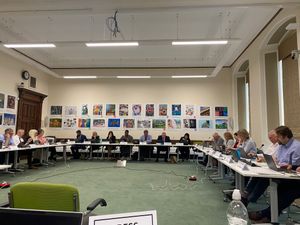
At a meeting on Tuesday (July 22) cabinet members of the Labour-run council agreed to approve the full business case for packages one and two.
Mat MacDonald, an NHS doctor appointed road safety commissioner by West Midlands mayor Richard Parker, welcomed the move amid concerns over the level of traffic in the area.
“As the numbers of cars on our roads steadily increases, hundreds of children at the four schools across the area earmarked for changes in these proposals have had to face danger, congestion and pollution on their way to and from their education every day,” he said.
“The area’s four hard working local councillors and I will be doing everything we can in the coming weeks to engage with the community over what happens next and ensure there are no further hold ups in the creation of safe routes to school for our kids.”
Councillor Sharon Thompson, deputy leader at Birmingham City Council, added at Tuesday’s meeting: “I think everybody is broadly in agreement that to do nothing is not an option […] so I am supportive of the scheme coming forward.”
But the Birmingham Conservative group pledged to scrap the LTN in Kings Heath this week if the party ends up in control of the council following the 2026 local elections.
“Cities – especially those the size of Birmingham – need readily accessible transport networks that cater to all and allow for convenient travel”, Councillor Tim Huxtable, shadow cabinet member for environment and transport, said.
“The current LTN scheme in Kings Heath makes it more difficult for a majority of the city’s residents to visit those local businesses on the high street, having a detrimental economic impact on Kings Heath.”
Councillor Majid Mahmood, the Labour cabinet member for transport, acknowledged the project had “sparked strong opinions”.
“That’s why we’ve held seven rounds of consultation, listened to feedback and crucially made changes to the design,” he said.
“The most common comment from members of the public not in support of the scheme was the longer journey times and expected displacement of traffic onto fewer roads.
“However, we want to reduce traffic on parts of the network that are not suitable for carrying large numbers of vehicles, like residential streets.”
“We’ve worked hard to balance concerns with the long-term benefits for all,” he added.
He also reminded those at the meeting that councillors representing the affected wards were “very supportive” of the proposal.
“Our city is growing,” Councillor Mahmood said. “With this growth comes increased demand for transportation.
“But we cannot meet this demand by reliance on only cars.
“Our current transport system leaves too many behind – those who can’t drive, those exposed to poor air quality and those at risk on our roads.”
Addressing the debate over the scheme, a recent council report added: “For residents within the scheme area, the impact of longer routes and journey times is offset by the improved environment, reduced risk of road harm, and conditions more conducive to active modes of travel.”
The scheme was launched in 2020 as part of the council’s ‘Places for People’ strategy which aims to make it nicer to be outside and safer for children to play in residential neighbourhoods.
The council said recently the ‘design principles’ of the Kings Heath LTN had been revised to address road safety concerns and take feedback into account.
This means it would minimise the number of modal filters; make greater use of one-way streets and introduce traffic calming measures to reduce speeding on wider roads.
The second phase of the scheme is also set to address the issue of “vandalism” by reducing the use of removable bollards.