Out-of-view Victorian catacombs built into old West Midlands sand quarry where famous printer was reinterred
Watch as Kevin Thomas from Birmingham Heritage Walking Tours explains the interesting history of the Victorian catacombs - often referred to as the city’s best-kept secret.
Birmingham’s Grade II-listed Warstone Lane Cemetery was opened by the Church of England Cemetery Company in 1848.
Warstone Lane Cemetery and the nearby Key Hill Cemetery were compulsorily purchased by Birmingham City Council in 1952 and closed for burial in 1982.
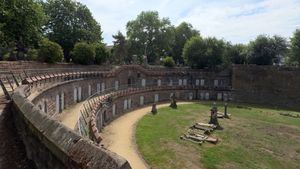
According to Historic England, the cemetery’s catacombs were built into the sides of the old sand quarry and were not completed until 1880.
As reported by Birmingham World, John Baskerville, printer, print designer and businessman, was reinterred in the catacombs, which provided added capacity by creating a tiered burial ground.
Baskerville, whose work was admired by Benjamin Franklin, was one of the 600 people moved from the demolished Christ Church on New Street to Warstone Lane Cemetery in 1899.
He had written in his will that he did not want to be buried in consecrated grounds, and in 1963 a petition was presented to Birmingham City Council requesting that he be reburied in unconsecrated ground. Despite this, Baskerville remains at rest in Warstone Lane Cemetery.
Birmingham Heritage Walking Tours’ Kevin Thomas says 'Warstone Lane and the catacombs have become a really important part of the community in the Jewellery Quarter'
Kevin Thomas from Birmingham Heritage Walking Tours said: “This is Warstone Lane Cemetery and you've got these formal, two-tier crescent-shaped catacombs, and some people think they're Georgian because they're crescent, but they're not, they're Victorian.
“The Birmingham catacombs are quite often referred to as Birmingham's best-kept secret and that's because they're not visible from the road anymore. But that's a new thing. When they were first constructed, they would have been a celebration of life and death but since then, the trees have grown, the gravestones have become more dense and can't really see it from the road anymore.
“During the Industrial Revolution, people flocked into Birmingham and there weren't the graveyards to accommodate the dead and so a private company set up Warstone Lane Cemetery and the catacombs to accommodate them.
“Not only that, Birmingham city centre was going through a dynamic patch at the time with rebuilding and places like Christ Church closed down and they rebuilt over the site and they needed somewhere to move those bodies to and this was the perfect location.
“Warstone Lane and the catacombs have become a really important part of the community in the Jewellery Quarter. As time goes on, the Jewellery Quarter is changing from a place of making to a place of living and there are very few green spaces here. Along with St Paul's Square and Key Hill Cemetery, they are the only park-like places in the Jewellery Quarter and they've been used for theatre events, music events and if you come down on Saturday morning, you might even find a yoga class going on.
“The catacombs about 10 years ago were renovated and made safe, they were in a state of disrepair, and hopefully that's prepared them for the next hundred years.”