Hospices are 'on the brink' says body as Stourbridge charity reveals £500,000 funding deficit
The chief executive of a West Midland hospice says funding for the sector is 'no longer fit for purpose' - as she revealed that the charity was operating at a deficit of £500,000 this year.
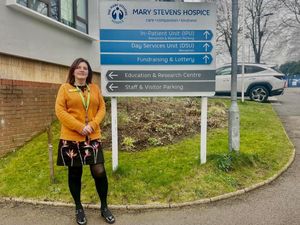
Claire Towns, chief executive of Mary Stevens Hospice in Stourbridge, said hospices could no longer rely on charitable donations to keep the sector afloat.
Sign up to our free newsletter today
The comments came as a new report revealed that 57 per cent of hospices were running at a deficit, with 20 per cent of them losing more than £1 million a year.
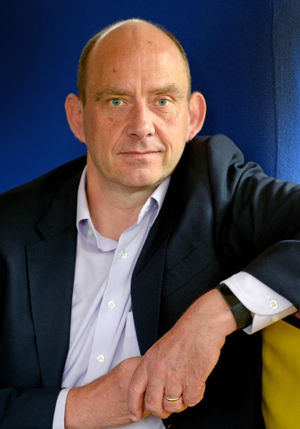
Toby Porter, chief executive of Hospice UK and the former boss of Acorns Children’s Hospice in the West Midlands, warned that hospices were 'on the brink'.
He said two in five of all UK hospices were planning to make service cuts this year.

“We’ve been ringing the alarm on hospice funding for some time, yet too many hospices are still struggling to cope with the rising cost of providing their essential care," he said.
"Sixteen hospices have already made significant service cuts, and our data shows two in five of all UK hospices are planning to make cuts this year.
“This cannot continue, we need a long-term solution to hospice funding to ensure dying people get the care they need. This starts with full funding of specialist palliative care provided by hospices. With assisted dying on the horizon this could not be more pressing. The time to fix hospice funding is now.”
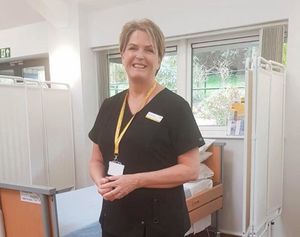
Mrs Towns called on the Government to come up with a sustainable, long-term funding programme to ensure end-of-life care was properly and consistently funded.
Their sentiments were echoed by managers at Compton Care in Wolverhampton and Severn Hospice in Shropshire.
Mrs Towns said: “Evidence from across the sector shows that the current hospice funding model is no longer fit for purpose.
"Like many hospices in the UK, we are facing a financial deficit this year and are currently operating with a deficit budget of half a million pounds.
"We are immensely grateful for the ongoing support of our community, but charitable income cannot continue to bridge the gap.

"We are calling for a sustainable, long-term funding solution that ensures specialist palliative care is properly and consistently funded, enabling hospices like ours to continue providing care when it matters most.”
The parliamentary public accounts committee says too many people are dying in hospitals instead of at home or in a hospice, and MPs criticised health leaders for not taking financial 'crisis' in the hospice sector seriously enough.
The committee warned that the sector in England was facing a 'serious financial situation' which was already affecting patient care, including cuts to services.
These concerns have been raised by this newspaper, through our Fair Deal for Hospices Campaign.
We have supported Hospice UK's four-point plan for fair funding that aims to secure the future of hospice care.
Hospices provide vital palliative care both at their centres and in the community, offering vital medical help and support to families, but are forced to do so without a sustained or regular income from central government, instead having to rely on short-term grants that do not allow them to plan for the future.
Rachel Overfield, chief executive of Compton Care which serves Wolverhampton and parts of Shropshire, said: “We recognise the significant pressures highlighted in today’s report from Hospice UK.
"Many of the challenges described are being felt across the sector, and we support calls for a more sustainable national funding model for hospice care.
“We have taken responsible steps over recent years to stabilise our financial position. While we are still operating in deficit, this is being carefully managed through strong planning, tight cost control, and the continued generosity of our community, all against a backdrop of rising costs across the sector.
“Importantly, we are not cutting frontline services, and our ability to provide safe, high‑quality care for local people remains secure. Our priority is, and always will be, ensuring that everyone who needs us receives the best possible support at the end of their life.”
MPs on the committee accused both the Government and NHS England of 'not responding to the growing financial crisis in the adult hospice sector with the seriousness and urgency needed'.
MPs were told that hospices face a funding 'cliff edge' from April and were warned that if no new funding is given to the sector before the new financial year, hospices would be forced to reduce services further.
Compton Care, which serves Wolverhampton and parts of Shropshire and Staffordshire, received a cash award from the Government in January for infrastructure improvements.
But the £200,000 it received could not be used for day-to-day care costs. It, like other hospices, is reliant on piecemeal grants from the Government and charitable fundraising. With hospices awaiting news of the latest grant for the new financial year, they cannot formulate an effective plan for the long-term care of people who have life-limiting illnesses or who need end of life care.
Speaking earlier this year, Miss Overfield said: "We're a £16 million organisation that receives £4 million a year from the NHS, and that means we have to raise £12 million every year just to stand still.
"We do that through all the usual ways, but every year it becomes harder and harder because people have less money in their pockets.
"In an ideal world what we really need to see is the NHS paying more for what they get from us, because that would take the pressure off of our fundraising.
"We'll always be a charity that needs to raise money, but our costs have gone up every year and the money we receive from the NHS hasn't.
"That's what really needs to be solved, that's the money that pays the wages and everything else that goes into delivering palliative care. This money is nice to have, but it's not the answer really."
The committee spoke of an 'urgent need' for reform to address the financial challenges that the independent adult hospice sector faces.
It said the Government's solution was in the 'early stages of development' but said the details were 'sketchy' and that it was at least a year from being introduced.
"This is not good enough when so many hospices are announcing service cuts," the MPs added.
Committee chairman Sir Geoffrey Clifton-Brown warned that 'by the time any help arrives, invaluable services may already have been cut.'
Overall hospices in England spend around £1.2 billion on care each year, with £420 million provided by local health bodies.
This means hospices rely on charitable donations to fund much of the care they provide, the authors add.
But it comes as a separate report from the Charities Aid Foundation highlighted how charity donations by the public fell by £1.4 billion last year. One hospice in our region announced in November 2024 that it was closing eight beds and making 21 staff redundant, including 15 clinical roles, to cope with financial pressures.
Earlier this year, St Giles Hospice in Lichfield warned it was dealing with a £1.5 million-a-year deficit.
"I've got a group of donors who are phenomenally generous but who are also feeling the squeeze, and an NHS income that isn't keeping up with inflation," Elinor Eustace, its interim chief executive, warned..
MPs on the committee said that the Department of Health and Social Care and NHS England did not have effective oversight of the independent hospice sector and called for the Government's reform programme - known as the modern service framework - to outline the core hospice services that local health bodies have a duty to commission.
They also called on health leaders to set out in detail how end of life and palliative care will be moved out of hospitals and into the community.
Health officials have also been told to work with local health bodies to determine the impact of hospice cuts.
Sir Geoffrey said: "The institutions whose job it is to help ease our final days deserve to have recognition of the central role they play in our health system.
"And yet Government's actions, despite all reassurances to the contrary, are communicating a certain blithe certainty that the sector's challenges will be resolved at the local level.
"We acknowledge the Government's insistence that it lacks complacency but the autumn timelines of the arrival of its current reforms risk ignoring the reality.
"A funding cliff-edge is approaching in only a month.
"Details of what these reforms might look like are thin on the ground, but regardless, by the time any help arrives, invaluable services may already have been cut."
Commenting on the report, James Sanderson , chief executive at the palliative care charity Sue Ryder , said: "The palliative care sector is crying out for reform.
"The Government's plan for palliative care, its modern service framework, must deliver later this year. It has the potential to be transformative but without the right balance of funding and structural reform, it will be insufficient to deliver the changes required and it will be terminally ill people who pay the price."
Sam Royston , executive director of research and policy, at end-of-life charity Marie Curie , added: "The committee has laid bare what Marie Curie has warned for years; end-of-life care is in crisis, and the UK government's response does not reflect the scale or urgency of the issue.
"Almost one in three people lack the end-of-life care they need, with many dying in pain or alone due to overstretched, underfunded services.
"A modern service framework is vital but must be backed by clear delivery and funding to bring real change.
"Shifting care from costly emergency hospital settings to the community is not just the right thing to do for people, it makes financial sense.
"Dying well should not depend on where you live or what you can give to a charity. It is a basic expectation that government has a duty to meet."
The Department of Health and Social Care and NHS England have been approached for comment.
Surging costs have led to many services being cut back – just as demand is rising, fast, because of our ageing population. It says the situation is not sustainable – and time is running out.
Hospice UK is calling for full funding of specialist palliative care provided by hospices, as part of a set of reforms to ensure to nobody misses out on end of life care as a result of insufficient hospice funding.
This comes at a time when demand for end of life care is increasing, with a 25 per cent rise in need projected by 2048. Last year, the Government laid out its 10-year plan for health, which set out a vision of a neighbourhood health service in which people with long-term illness, including those approaching end of life, are looked after primarily at home, or in health centres close to them.
The plan identified hospices are part of this shift to move care into the community. Hospices are expertly placed to do this, but right when they should be expanding their services, they’re shrinking.
The number of hospices reporting a deficit has been steadily ticking up year on year. A total of 43 per cent recorded a deficit in 2022-23, following by 62 per cent in 2023-24. The 2024-25 figure only dipped slightly due to an emergency £100m of additional funding for English hospices announced by the Government in the December.
Mr Porter added, “We hugely appreciated the additional short-term funding Government awarded to hospices in late 2024. This was a significant help. But unless there is bold, long-term change to how hospices are funded by the NHS locally, hospice services will inevitably fall back even though demand for them is rising due to our ageing population. This will run directly counter to the vision for more care in the community laid out in the Ten Year Plan for Health, even though hospices have the expertise to deliver it.”
Hospice UK's four-point plan calls for full funding of specialist services, formal NHS contracts for hospices, funding to cover the cost of NHS pay rises for hospice staff, and national accountability for equitable provision of palliative care, wherever you live.
The charity argues that these changes would stem the wave of cutbacks to hospice services we have seen in the past two years.
They would open up significantly more community palliative care capacity to underpin the government’s vision for neighbourhood based care – allowing hospices to better meet the growing needs of our ageing population.
And they would help guarantee, as a critical safeguard in a future assisted dying service, that good quality palliative care was available for all who need it