Dudley Council meeting to discuss ten year life expectancy gap between north and south of the borough
People in the south of Dudley borough can expect to live nearly ten years longer than residents in the north.
Inequalities linked to deprivation were on the agenda when borough politicians met with health chiefs, including the newly appointed chief executive of the NHS Birmingham, Black Country and Solihull Integrated Care Board (ICB), to discuss ways of tackling the health gap.
According to modelled life expectancy published by Dudley Council for 2020 to 2022, male residents in the council ward in Pedmore and Stourbridge will live for 82.3 years while in St James’s the figure is 73.6 years.
The same is true for women; in Norton the modelled life expectancy is 85.7 years compared with 79.2 years in Castle and Priory.
David Melbourne, chief executive of NHS Birmingham and Solihull and NHS Black Country, said: “I fully understand the issues raised and the ICB is committed to tackling health inequalities, strengthening neighbourhood health services and improving access to care.”
The ICB plans include moving healthcare out of hospitals into communities and using information technology to tackle the health gap in Dudley.
Overall life expectancy from birth in Dudley borough for 2022 to 2024 was 78.9 years for men and 83 years for women which is in line with the national average and higher than other Black Country local authority areas.
Comparable statistics for Wolverhampton show for the same period men could expect to live 77.1 years and women 81.2 years.
Cllr Shaukat Ali, a health professional, represents the deprived St Thomas’s ward where, according to figures for 2021-23, men had a life expectancy of 75.8 years and women 81.1 years.
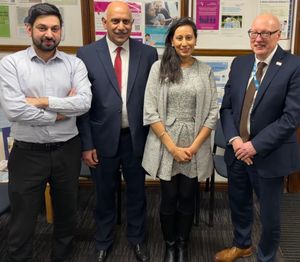
Cllr Ali, who attended the ICB meeting with Dudley MP Sonia Kumar, said: “It is unacceptable that there is a ten year gap in life expectancy between residents in the north and south of the borough.
“I am committed to working with our MP and all key partners to bring real improvements so people can live healthier, longer lives.”
Ms Kumar, a former NHS physiotherapist, added: “Having worked directly with patients, I know how important it is to have safe, high-quality healthcare that is accessible and close to home.”