Widower’s emotional video of wife’s disjointed end-of-life care prompts West Midlands NHS leaders to pledge improvements
A widower’s emotional video of his wife’s disjointed end-of-life care prompted regional NHS leaders to pledge improvements.
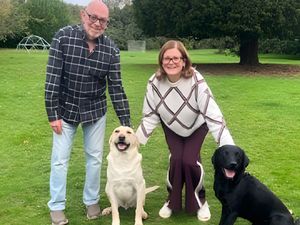
The widower was introduced to board members only as Mike who had been married to Sue for 50 years and was diagnosed with frontotemporal dementia in 2017.
He described the woman he met on a cruise liner as “elegant, caring and deeply loved”.
Sue became “rather vacant” in 2016 and her issues became “steadily worse” before she went missing in 2017 and was diagnosed.
“Every day felt like a fight to get the care she needed,” said Mike of the struggle they faced in the last five years of her life.
He described those years as “incredibly tough” when she suffered repeated infections and falls.
An emergency ambulance was called at least 15 times, many of which he said could have been avoided if she had continuity of care.
“She would come back home with greater needs and less support,” Mike said. “Discharges felt rushed.”
He added: “She was expected to fit into the system.”
The father of one and grandfather of one added that he wanted health and care leaders to focus on “joined up working and focus on what really matters.”
The room was told that Sue, a former nanny, was moved between hospitals in the final months of her life and “died alone in hospital. It was not she or we wanted.”
He urged members of the boards of both NHS Shropshire, Telford & Wrekin and NHS Staffordshire and Stoke on Trent to “not dwell on the past but learn from it.”
The patient story agenda item of the meeting in Stafford on Thursday was introduced by Heather Johnstone, the interim chief nursing officer.
The board was told that it can help them understand the impact that the lack of joined up care can have.
Lynn Cawley, chief officer of health and social care champions Healthwatch in Shropshire, said: “We have done a lot of work around end of life care, but I know there has to be a lot of change.
“Things are happening but needs to have greater impact.”
Dr Ian Chan, of NHS Shropshire, Telford and Wrekin, said Mike’s is “not an isolated story. How we work towards that is a fundamental one.”
Simon Whitehouse, the joint board’s chief executive, said they would be holding “strategy sessions” to shape the future of end of life care.
“We are committed to do the work in the right way.”
The boards were told that widower Mike is also meeting with health and social care leaders in other meetings to help the system learn from his experience.