'We can free up our GP partners': Five tips on staying healthy this winter from a Great Barr pharmacist of 30 years
The winter months often bring a wave of colds, flu and other illnesses. Offering a convenient way to get help for many health conditions are community pharmacists like Malkit Singh.
He qualified from Aston University in 1992 and took over Walkers Pharmacy in Great Barr in 1997.
For Malkit, it’s an exciting time to be a community pharmacist. He has seen “lots of positive” changes since starting his career; the most recent is the NHS’s Pharmacy First scheme.
This enables community pharmacists to supply prescription-only medicines to treat seven common health conditions - sinusitis; sore throat; earache; infected insect bites; impetigo (a bacterial skin infection); shingles; and uncomplicated urinary tract infections in women – without the need to visit a GP.
“We are moving more towards clinical pharmacy rather than just a dispensary role,” says Malkit. “Previously we were predominantly dispensing and offering advice, now checking prescriptions can be done by a technician.
“We've implemented robotic dispensing in our pharmacy. It’s picking up the products accurately and labelling those up so the technician can do some of the final checks on them.
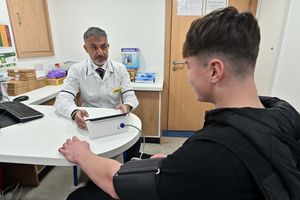
“It means we are freed up to do face-to face consultations – we’re doing blood pressure screening, we’re doing smoking cessation, we’re doing these new conditions,” he explains. “These are patients that would have had to wait to see a GP. They would have to ring in or go online and book an appointment.
“Now they can walk in, see us without an appointment and they will have a consultation with a pharmacist in a private consultation room and then the appropriate medication can then be prescribed.
“It makes it more convenient, there are no appointments, they can schedule their visit to the pharmacy around whatever they are doing on the day. I think it’s what pharmacy has been crying out for for a long time, to do more clinical work. We’re suitably trained. We undergo five years of training at university and we have vast experience as well.
“We’re in the ideal position to free up some of the time and some of the appointments for our GP partners. They’re pushed to see all their patients so if we can take some of the consultations off them, they can see more patients,” he adds.

The pharmacy is located next to Great Barr Medical Centre. “We’re regularly getting patients referred from the adjoining practice and also from other practices we’ve built up relationships with over the years,” says Malkit.
A typical day starts with patient consultations. “Where we are seeing people with sore throats, they usually come first thing in the morning. We will get four or five consultations within the first few hours. For the rest of the day we do more of the dispensary roles and dealing with patient queries,” says Malkit.
Winter can be busier than other seasons because the team is also carrying out vaccinations for flu and Covid.
“This year pharmacies have been doing the flu nasal vaccinations for children between two and three years of age. That’s been trialled for the first time this year,” says Malkit. He enjoys building relationships with his patients and ensuring they receive the right advice and treatment.

“If you’re in the same place for a long time, you get to know the patients on a more personal level. We’ve seen families grow, children grow up and have their own kids. They have that rapport with us because they are seeing the same faces – we’re at the heart of the community,” he says.
Malkit has shared five top winter health tips:
1. Visit your pharmacist first: Community pharmacists can offer prescription medicines for seven common conditions mentioned above.
2. Get your winter vaccines: Flu and Covid-19 vaccines are available at many pharmacies. These protect against serious illness and are especially important for older adults, children, pregnant women, and those with long-term health conditions.
3. Repeat prescriptions made easier: Save time by requesting repeat prescriptions on the NHS app.
4. Practise good hygiene: Wash your hands regularly, cover coughs and sneezes, and ventilate rooms to help prevent the spread of winter bugs. If you’re unwell, stay home to protect others and recover faster.
5. Eat well, stay warm and keep moving: A balanced diet, staying warm indoors (at least 18°C), and regular movement – even short walks – can help maintain your physical and mental health during the colder months.
For more information search NHS.uk/thinkpharmacyfirst.