Vaccines crisis - Why nurses will be sent into Midland homes to persuade parents to protect children from mumps, measles and chickenpox
Nurses will be send into homes to tackle alarmingly low vaccination rates among children in the West Midlands.
The region is part of a £2 million pilot scheme aiming to improve immunisation rates. It comes after figures released last year showed not a single childhood vaccine in England in 2024 met the 95 per cent target needed to ensure diseases cannot spread among youngsters.
Rates in the Black Country are as low as 79 per cent to protect children from measles, mumps & rubella, with Sandwell having the poorest take-up. The best is Dudley, but at 88 per cent it is still below target.
According to the government, new pilot will now target families who have "fallen through the cracks - including those not signed up with a GP, struggling with travel costs, childcare juggling, language barriers or other tough circumstances that stop them getting to the doctor".
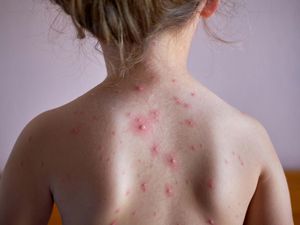
It comes as a new widespread vaccine for chicken pox was announced, which will be added to the existing MMR jabs for children.
The West Midlands is one of 12 pilot schemes for home visits. But ministers say it is not designed to replace GP vaccinations and families should continue to get their child vaccinated at their local surgery where possible.
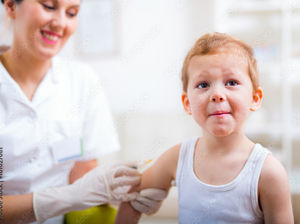
Health Secretary Wes Streeting said: "Every parent deserves the chance to protect their child from preventable diseases, but some families have a lot going on and that can mean they miss out.
"Health visitors are already trusted faces in communities across the country. By allowing them to offer vaccinations, we're using the relationships and expertise that already exist to reach families who need support most.”
"Fixing the NHS means tackling health inequalities head-on. By meeting families where they are, we're not just boosting vaccination rates - we're building a health service that works for everyone."
The year-long trial will be evaluated ahead of a potential nationwide roll out from 2027. As well as tackling MMR take-up it will also look at the four-in-one booster for polio, whooping cough, tetanus & diphtheria at the age of five.
The take-up rate for that is below average for the whole Black Country and Staffordshire and is below 80 per cent in both Sandwell and Wolverhampton.
And in Birmingham, the take up for MMR and the four-in-one jab is down at around 75 per cent.
Health visitors will get extra training on how to handle conversations with parents who may be reluctant to have their child vaccinated.
Struggling families will be identified by the NHS using GP records, health visitor notes and local databases.
Health officials warned last year that almost one in five children would be starting primary school in September without full protection against a number of serious diseases.
Here are the most recent figures you need to know for the West Midlands:
Vaccine at age five. 2024/5 figure with 2023/24 figure in brackets.
1. MMR vaccine (measles, mumps & rubella), both doses at age five:
Top: Cumbria 94.3% (94.8%)
Worcestershire 90.4% (90.6%)
Shropshire 90.3% (89.3%)
Dudley 88.5% (87.9%)
Staffordshire 88.2% (87.9%)
Telford & Wrekin 87.9% (85.5%)
Walsall 83.7% (83.2%)
Wolverhampton 80.1% (77.6%)
Sandwell 79.2% (79.4%)
Birmingham 75.5% (74.8%)
2. Four-in-one booster (polio, whooping cough, tetanus & diphtheria) at age five:
Top: Cumbria 94.3% (94.4%)
Shropshire 89.3% (88.7%)
Worcestershire 89.2% (89.5%)
Staffordshire 87.4% (87.4%)
Dudley 87.2% (87.2%)
Telford & Wrekin 86.4% (84.8%)
Walsall 81.8% (82.1%)
Wolverhampton 78.8% (76.3%)
Sandwell 76.9% (77.7%)
Birmingham 73.5% (73.9%)
3. Six-in-one vaccine (diphtheria, pertussis, tetanus, polio, disease caused by Haemophilus influenzae type B, and hepatitis B) at age five:
Top: East Riding of Yorkshire 97.6% (97.8%)
Shropshire 96.4% (95.5%)
Staffordshire 96.2% (95.6%)
Worcestershire 95.8% (96.5%)
Telford & Wrekin 95.4% (95.1%)
Dudley 94.6% (94.8%)
Walsall 92.9% (93.1%)
Wolverhampton 91.5% (90.2%)
Sandwell 91.4% (91.4%)
Birmingham 88.5% (89.0%)
The World Health Organisation (WHO) recommends at least 95 per cent of children should receive vaccine doses for each illness to achieve herd immunity.
None of the main childhood vaccines in England reached this target in 2024/25, figures from the UK Health Security Agency (UKHSA) showed.
Some 91.9 per cent of five-year-olds on average nationally had received one dose of the MMR (measles, mumps & rubella) vaccine, unchanged from 2023/24 and the lowest level since 2010/11.
Just 83.7 per cent of five-year-olds had received both MMR doses, down year on year from 83.9% and the lowest level since 2009/10.
Uptake of the first MMR dose at 24 months stood at 88.9% in 2024/25 - unchanged on the previous year, but again the lowest figure since 2009/10.
Coverage for the Hib/MenC vaccine, which protects against haemophilus influenzae type B and meningitis C, stood at 88.9% for children in England aged five, down from 89.4% in 2023/24 and the lowest level since 2011/12.
Uptake of the four-in-one pre-school booster vaccine - which protects against polio, whooping cough, tetanus and diphtheria - stood at just 81.4% among five-year-olds in England in 2024/25.