West Midlands Ambulance Service receives £23 million to cover handover delays outside hospitals
The ambulance trust covering the West Midlands has received £23 million from NHS commissioning organisations to pay for delays spent waiting outside hospitals, it has been confirmed.
A dispute between the West Midlands Ambulance Service (WMAS) and integrated care boards across the region has lasted for months and led to a delay in the signing of contracts, board papers revealed.
The WMAS has said that a mediator has now settled on a figure of £23 million, confirming a report published in the Health Service Journal (HSJ) on Wednesday (December 17).
“Our staff and volunteers are working exceptionally hard to get to patients as quickly as possible,” said a WMAS spokeswoman.
“Sadly, some patients wait much longer for a response than we would want as a result of hospital handover delays, for which we apologise.
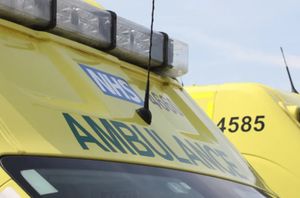
“When ambulances are delayed handing their patient over, they are unable to respond to the next call, which impacts on the care of patients in the community.
“There is a direct correlation between hospital handover delays and our ability to get to patients in the community quickly.”
Minutes of WMAS board meetings reported that two years ago at the height of the problems some 157 patients died “due to hospital handover delays”.
The trust board had forecast that more than 400,000 hours could be lost during 2025, equating to about £32m.
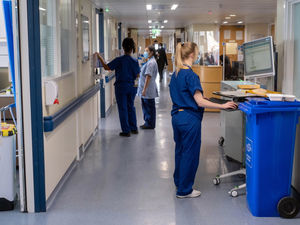
Handovers of patients at hospitals are meant to take 45 minutes or less but about a quarter of patients are in ambulances for longer, some for many hours. They are waiting as a result of demand on accident and emergency (A&E) departments.
As well as the cost of overtime payments to paramedics, the situation has also hit staff morale and resulted in a reduction in the number of calls that they can attend.
Less urgent callers have been left facing long delays before an ambulance can reach them. There has also been a big impact on WMAS finances.
A recent board meeting of one of the integrated care boards (ICBs) in the ambulance trust’s area reported that it was meeting the 45-minute handover ‘ambition’ in 74.4 per cent of cases.
Board meetings of commissioners at NHS Shropshire, Telford and Wrekin have also outlined some of the work successfully going on to cut handover delays.
Leaders have praised the work of new GP out-of-hours contract holder HealthHero in assessing patients.
The WMAS currently takes about 50 per cent of patients to hospital.
A spokeswoman said: “The rest will be dealt with at the scene or over the phone by our clinical validation team, experienced paramedics and nurses working in our control rooms.
“Our staff will always look to use urgent care services or direct referral into specialist service in hospitals rather than take patients to A&E.
“This is why we take so few patients to hospital.
“We rely on each part of the health and social care system to work together to allow our ambulances to get to patients quickly.
“We continue to work hard with our partners to find new ways to reduce the delays, so that we can save more lives.”
A spokesperson for NHS Shropshire, Telford and Wrekin confirmed that, as covered in the HSJ, it was one of the six integrated care boards in the West Midlands that reached a settlement with the WMAS.
The three West Midlands ICB clusters (Birmingham and Solihull ICB with Black Country ICB; Herefordshire and Worcestershire ICB with Coventry and Warwickshire ICB; and Shropshire, Telford and Wrekin ICB with Staffordshire and Stoke-on-Trent ICB) released a joint statement reading: “All ICBs continue to work together with WMAS to complete the final details of this year’s contract.”